-
by sayum
14 August 2026 3:21 PM







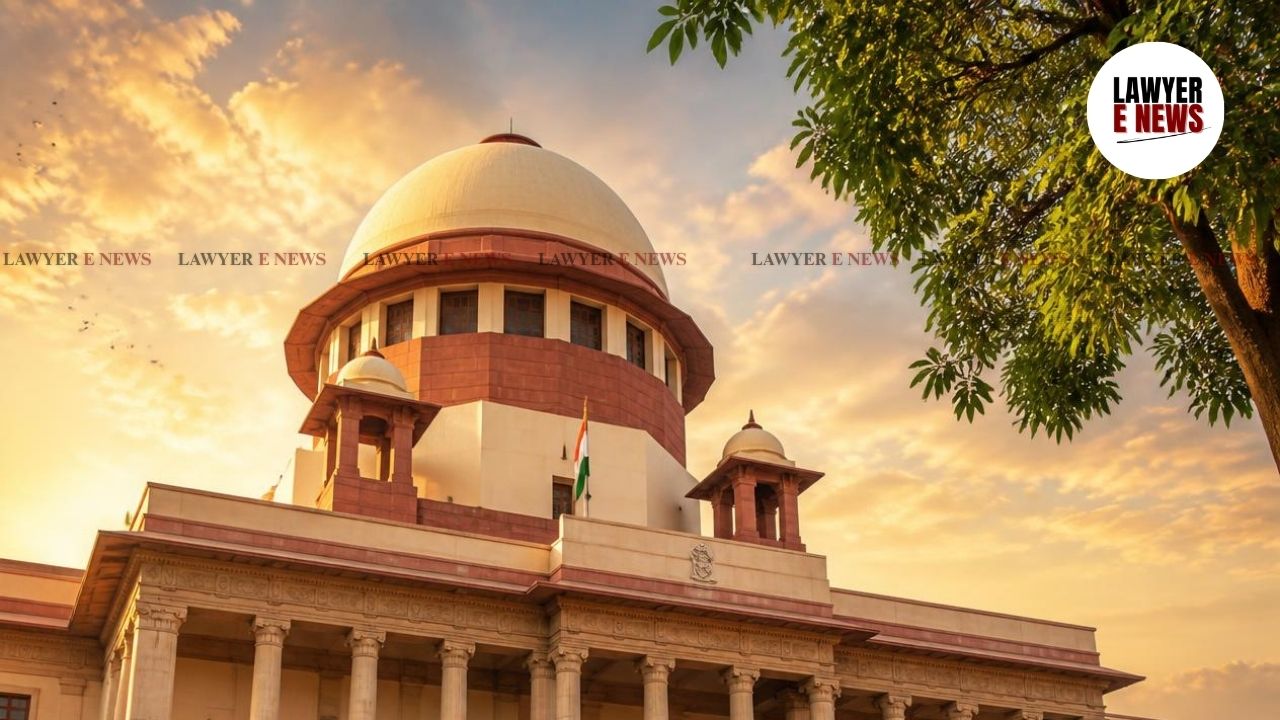
"keeping in view the age of the appellant, who is about 70 years old, and his health condition, we are inclined to modify the sentence to be served by the appellant till the rising of the Court",Supreme Court of India, in a significant ruling dated 17 July 2026, held that a convict's advanced age and deteriorating health condition are crucial mitigating factors that warrant a substantial reduction in the quantum of sentence, even in cases involving grievous physical assault.
A bench comprising Justice Sanjay Karol and Justice Vipul M. Pancholi modified the sentence of a 70-year-old man convicted under Section 326 of the Indian Penal Code (IPC) to imprisonment "till the rising of the Court," while enhancing his financial penalty to balance the scales of justice.
The appeal arose from a 2017 altercation rooted in a familial land dispute, during which the appellant allegedly hurled casteist and obscene abuses at the complainant and subsequently assaulted him with a billhook, causing a fractured nasal bone. The trial court convicted the appellant under the SC/ST Act as well as Sections 294(b), 326, and 506(ii) of the IPC, sentencing him to five years in prison. The Madras High Court later acquitted him of the SC/ST Act charges but upheld the IPC convictions, reducing the Section 326 IPC sentence to one year of imprisonment.
The primary question before the court was whether the appellant's advanced age and failing health justified a substantive modification of his custodial sentence under Section 326 of the IPC. The court was also called upon to determine whether the use of highly offensive swear words legally constitutes "obscenity" under Section 294(b) IPC, and whether mere verbal threats amount to criminal intimidation under Section 506(ii) IPC.
Age And Health Warrant Compassionate Sentencing
Addressing the conviction under Section 326 IPC, which penalises voluntarily causing grievous hurt by dangerous weapons, the court found the medical evidence to be unimpeachable. The bench noted that the complainant suffered a nasal bone fracture, which squarely falls under the definition of "grievous hurt" outlined in Section 320 IPC. The injury was inflicted using a billhook, indisputably a dangerous weapon.
Sentence Reduced To Imprisonment Till Rising Of Court
Having found no reason to interfere with the conviction itself, the Supreme Court turned its focus entirely to the quantum of punishment. The bench observed that the incident was the result of existing animosity over a land dispute rather than a premeditated, cold-blooded attack. Taking a decidedly compassionate view of the appellant's demographic realities, the court concluded that a prolonged custodial sentence was disproportionate to his current physical condition.
"However, considering the fact present incident occurred due to animosity between the appellant and complainant’s family over a land dispute, and keeping in view the age of the appellant, who is about 70 years old, and his health condition, we are inclined to modify the sentence..."
Vulgarity Does Not Automatically Equate To Obscenity
While dealing with the other charges, the court acquitted the appellant under Section 294(b) IPC, embarking on a detailed doctrinal analysis of what constitutes "obscenity." The prosecution had alleged that the appellant used severe profanities during the altercation. The Supreme Court clarified that the legal concept of obscenity is entirely distinct from mere vulgarity, abuse, or profanity, no matter how uncivil or distasteful the language might be.
The Test To Determine Obscenity
Relying on landmark constitutional precedents such as Ranjit D. Udeshi v. State of Maharashtra and recent rulings like Apoorva Arora v. State, the bench explained that to secure a conviction under Section 294(b) IPC, the words uttered must be lascivious and appeal to prurient interests. The court observed that the words must possess a specific tendency to deprave and corrupt the impressionable minds of those exposed to them, which was notably absent in the mere hurling of swear words during a heated argument.
"Let’s be clear, legally, obscenity is not synonymous with “vulgarity”, “abuse” or “profanity”... Words which are merely vulgar or abusive may evoke a feeling of disgust, revulsion or shock, but that by itself does not make them obscene in law."
Mere Threats Do Not Constitute Criminal Intimidation
The Supreme Court also set aside the appellant's conviction for criminal intimidation under Section 506(ii) IPC. The court categorically stated that the mere use of threatening words during the course of a sudden altercation is legally insufficient to attract this penal provision. To establish criminal intimidation, the prosecution is required to prove that the threat was intentional and made with the specific objective of causing alarm to the victim.
Absence Of Proof Regarding Intent To Cause Alarm
Evaluating the statements on record, the bench found nothing beyond a bald assertion that the appellant waved a weapon and issued a verbal threat before leaving the scene. The court held that there was no substantive evidence to indicate that the appellant actually intended to cause enduring alarm to the complainant or compel him into any action, rendering the charge of criminal intimidation unsustainable.
The Supreme Court partly allowed the appeal, acquitting the appellant of the charges of obscenity and criminal intimidation under Sections 294(b) and 506(ii) IPC. While upholding the conviction for causing grievous hurt under Section 326 IPC, the court heavily modified the sentence to imprisonment till the rising of the court and imposed an enhanced fine of Rs. 50,000 to be paid within two months.
Date of Decision: 17 July 2026