-
by sayum
27 August 2026 6:51 AM







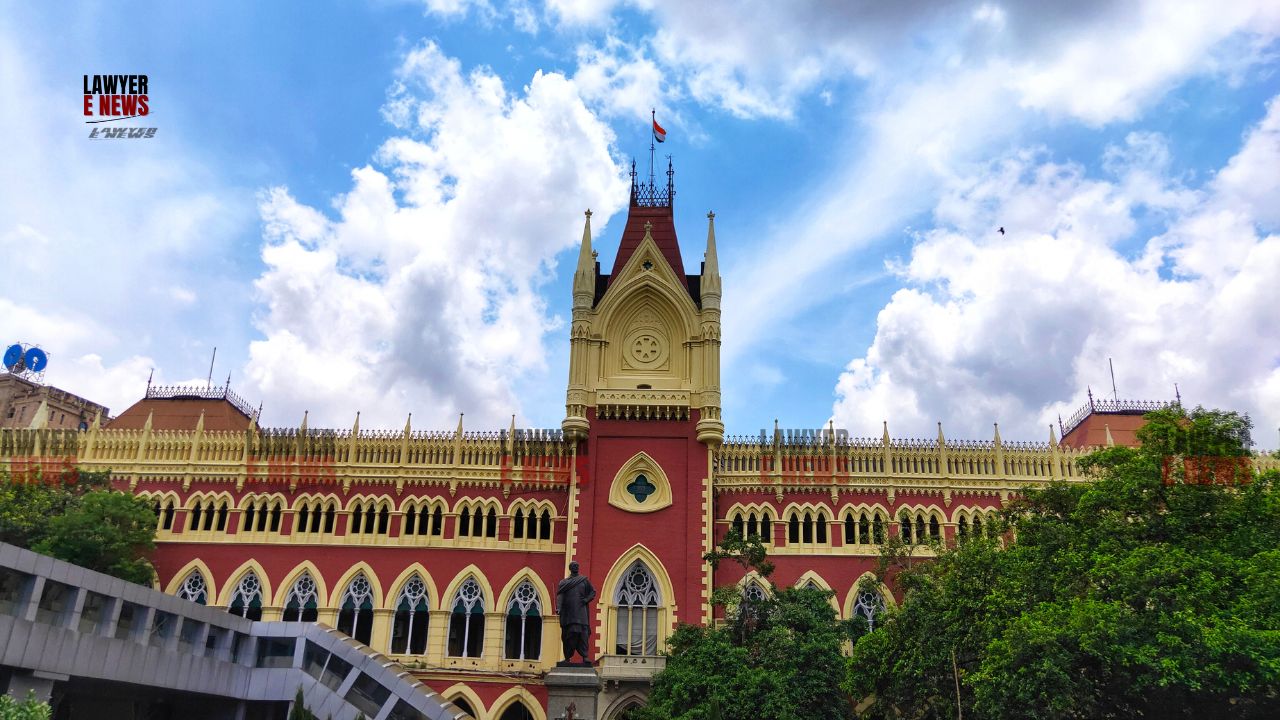
"Even assuming for the sake of argument that 90% of the total amount had already been paid, it was the responsibility of the petitioner to verify the work executed and the measurements recorded before approving or facilitating the final payment." Calcutta High Court, in a significant ruling, held that a public servant cannot evade prosecution in a corruption case merely by claiming that a majority of the illicit payments were disbursed before they assumed office.
A single-judge bench of Justice Ajay Kumar Gupta observed that an official certifying a final bill holds the strict legal responsibility to verify the executed work on the ground, noting that the certification of inflated measurements constitutes a serious and cognizable offence.
The petitioner, a former Divisional Signal & Telecom Engineer (DSTE) of the South Eastern Railway, approached the High Court challenging a Special CBI Court's order that rejected his plea for discharge. The Central Bureau of Investigation (CBI) had charged him alongside other officials and private contractors for criminal conspiracy, cheating, and corruption. The core allegation was that the petitioner certified false and inflated entries in a Measurement Book, which led to excess public funds being released for the installation of Electronic Train Indicator Boards at various railway stations.
The primary question before the court was whether a public servant could be discharged from corruption charges if the bulk of the allegedly fraudulent payments were made prior to his posting at that specific office. The court was also called upon to determine whether the continuation of criminal proceedings based on the certification of a final bill amounted to an abuse of the process of law.
Duty To Verify Measurements Before Final Payment
Addressing the petitioner's primary defence, the court examined the argument that the official had no role in the initial planning, tendering, or receipt of materials. The petitioner had heavily relied on the fact that approximately ninety percent of the payments were already cleared before he joined his post as DSTE in January 2010. However, the bench firmly rejected this logic as a valid ground for discharge from prosecution under the Prevention of Corruption Act. The court clarified that joining an office at a later stage does not absolve a public servant of their immediate statutory and administrative duties.
The judge held that public officials cannot blindly sign off on ongoing projects. The bench observed that "even assuming for the sake of argument that 90% of the total amount had already been paid," the petitioner was legally bound to evaluate the actual ground realities. The court stressed that it was the strict responsibility of the petitioner to personally verify the work executed and the measurements recorded before approving or facilitating any final financial clearance.
Certification Of False Records Is A Serious Offence
Delving into the evidentiary materials collected by the CBI, the court noted that the petitioner was directly involved in the final measurement process that caused wrongful loss to the Railways. The investigation revealed that the initial measurements recorded by a subordinate engineer were false and highly inflated compared to the actual work done. By countersigning and certifying these false entries in the Measurement Book as correct, the petitioner actively enabled the private contractors to claim excess public funds.
Characterizing the inherent gravity of the act, the court stated that "the allegation pertaining to approval and disbursement of payments based on inflated measurements constitutes a serious and cognizable offence."
Prima Facie Case Established Under IPC And PC Act
The High Court observed that the charge sheet established a clear prima facie case against the petitioner under Sections 120B, 420, 468, and 471 of the Indian Penal Code, read with Sections 13(2) and 13(1)(d) of the Prevention of Corruption Act, 1988. At the stage of considering a discharge application, a court is only required to evaluate whether sufficient grounds exist to proceed with the trial, not whether a conviction is guaranteed. The bench concluded that the direct documentary evidence collected by the investigating agency clearly indicated the petitioner's complicity in the conspiracy.
"The materials collected by CBI during the investigation prima facie indicate the petitioner’s involvement in the process leading to the final payment of inflated bills. In such circumstances, this Court is not persuaded to hold that the continuation of the proceedings amounts to an abuse of the process of law."
Scope Of Interference Under Inherent Powers
Finally, the court addressed the scope of interference under its revisional and inherent jurisdiction under Sections 401 and 482 of the Code of Criminal Procedure. The bench emphasised that a legitimate criminal trial designed to unearth the truth regarding public corruption cannot be short-circuited at the threshold when concrete evidence exists. The court held that forcing the petitioner to face trial, given his signature on the final certified bills, could not be categorized as an abuse of the legal process.
Finding the revisional application entirely devoid of merit, the High Court dismissed the petition and upheld the trial court's order rejecting the prayer for discharge. The court vacated all existing interim orders, thereby clearing the path for the CBI to proceed with the corruption trial against the railway official.
Date of Decision: 02 April 2026