
-
by sayum
26 August 2026 1:49 PM







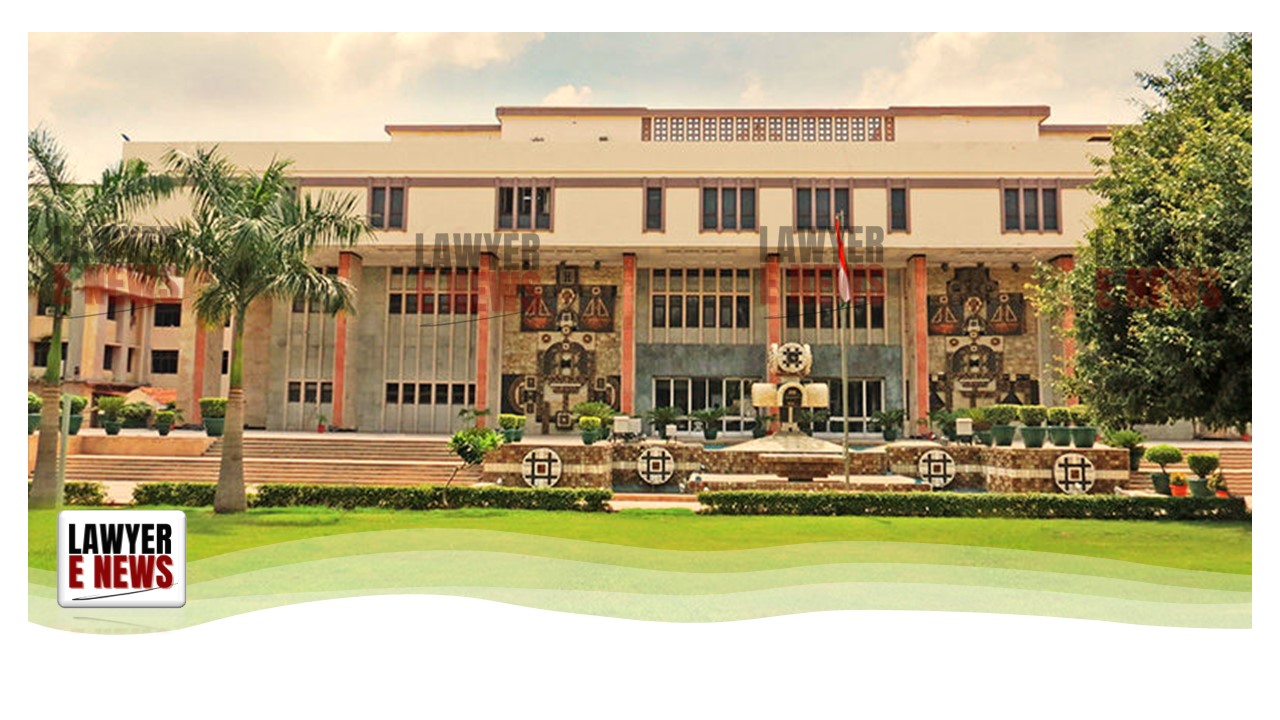
"Defendant Cannot Seek Return Of Plaint Under Order VII Rule 10 For Lack Of Territorial Jurisdiction After Issues Are Framed", High Court of Delhi, in a significant procedural ruling, held that a defendant is precluded from challenging the territorial jurisdiction of a court if such an objection is not raised at the earliest opportunity, specifically before the settlement of issues.
A single-judge bench of Justice Manoj Kumar Ohri observed that while inherent lack of subject-matter jurisdiction renders a court's order a nullity, territorial jurisdiction can be assumed by a court when the objection is waived by the party under Section 21 of the Code of Civil Procedure.
The appellant had instituted a civil suit in Delhi for the recovery of a friendly loan of Rs. 10 lakhs extended to the respondent, claiming that the loan was transferred from his Delhi bank account and the repayment cheque was dishonoured upon presentation in Delhi. The respondent filed a written statement without objecting to the territorial jurisdiction of the Delhi courts, leading to the framing of issues by the Trial Court. Subsequently, the respondent moved an application under Order VII Rule 10 of the CPC seeking the return of the plaint on the ground that the cause of action arose in Karnataka, which the Trial Court allowed, prompting the present appeal.
The primary question before the court was whether an application under Order VII Rule 10 of the CPC for the return of a plaint can be allowed when the defendant failed to object to the court's territorial jurisdiction in the written statement. The court was also called upon to determine whether the failure to raise such a jurisdictional objection prior to the framing of issues constitutes a legal waiver under Section 21 of the CPC.
Delving into the legal framework governing jurisdictional objections, the court highlighted the fundamental distinction between an inherent lack of jurisdiction and a mere defect in territorial jurisdiction. The bench noted that an application under Order VII Rule 10 of the CPC empowers a court to return a plaint at any stage of the suit if it lacks jurisdiction. However, the court emphasized that unlike subject-matter jurisdiction, which goes to the root of a court's competence and cannot be conferred by consent, territorial jurisdiction is subject to the principles of waiver enshrined in the CPC. "Neither consent nor waiver can cure the defect of inherent lack of jurisdiction, and consent of parties cannot operate to confer jurisdiction on a Court which has no competence to try it; whereas territorial jurisdiction can always be assumed by the Court when such an objection is waived by the party on the principles laid down in Section 21 CPC."
Relying upon the Supreme Court's precedent in Harshad Chiman Lal Modi v. DLF Universal Ltd., the bench elaborated on the classification of jurisdiction into territorial, pecuniary, and subject-matter categories. The court reiterated the settled legal position that objections pertaining to territorial and pecuniary limits must be raised at the very threshold of the litigation, failing which the defendant loses the right to contest the forum's competence. "The law is well settled on the point that if such objection is not taken at the earliest, it cannot be allowed to be taken at a subsequent stage."
Examining the factual matrix of the case, the court noted that the respondent, in his written statement, had explicitly responded to the jurisdiction paragraph of the plaint by stating that it was a matter of record and needed no reply. Citing the Coordinate Bench decision in Shyam Sunder Kalra v. Ravinder Kumar Jain, the court reaffirmed that allowing a jurisdictional challenge after issues have been framed defeats the statutory intent of procedural finality. The court observed that territorial defects do not render proceedings void if the parties have submitted to the court's authority. "...if not taken, such objections are waived i.e issues of pecuniary and territorial jurisdiction do not go to the root of the matter unlike the issue of lack of inherent jurisdiction or the lack of subject matter jurisdiction, when a decree cannot be passed by the Court lacking the subject matter/inherent jurisdiction."
Drawing upon another Supreme Court ruling in Bahrein Petroleum Company Ltd. v. Pappu & Ors., the bench clarified that Section 21 of the CPC provides a distinct statutory exception to the general rule that consent cannot confer jurisdiction. The court observed that independently of Section 21, a defendant's conduct in participating in the suit without demur acts as an absolute bar against belated attempts to oust the court's jurisdiction. "Section 21 is a statutory recognition of the principle that the defect as to the place of suing under Sections 15 to 20 may be waived. Independently of this section, the defendant may waive the objection and may be subsequently precluded from taking it."
Ultimately, the High Court concluded that since the respondent failed to raise the territorial objection at the first instance or during the framing of issues, the objection was legally deemed to be waived. Consequently, the court allowed the appeal, set aside the impugned order of the Trial Court returning the plaint, and directed the restoration of the civil suit to its original number for further adjudication.
Date of Decision: 25 March 2026





