Mere Unwanted Staring At A Woman's Chest In Office Does Not Constitute Voyeurism Under Section 354-C IPC: Bombay High Court State Cannot Justify Espionage FIR Based Solely On Custodial Disclosure Without Corroborative Evidence: Punjab & Haryana High Court Grants Bail Mere Issuance Of Letter Of Intent Without Formal Work Order Does Not Create Concluded Contract Or Arbitration Agreement: Supreme Court Executing Court Cannot Modify Terms Of Compromise Decree Merely Because Implementation Is Impracticable: Supreme Court Adjudicating Authority Only Needs To Check For 'Plausible' Pre-Existing Dispute Under Section 9 IBC, Not Its Success On Merits: Supreme Court Arguing Against Settled Law To Show Skill Wastes Court Time; Giving Up Such Arguments A Professional Virtue: Supreme Court Limitation Under Section 468 CrPC Is Computed From Date Of Filing Complaint, Not Date Of Cognizance: Supreme Court MSCS Act | Co-operative Society Can't Acquire Corporate Debtor Under IBC If Not In 'Same Line Of Business' As Per Its Bye-Laws: Supreme Court Multi-State Co-op Societies Can Only Invest In Entities With Substantially Similar Core Business Under Bye-Laws: Supreme Court High Court Cannot Usurp Governor's Statutory Discretion To Grant Extraordinary Pension Under 1981 Rules: Supreme Court Litigants Can Challenge Non-Appealable Interlocutory Orders In Final Appeal Under Section 105 CPC: Supreme Court Plaintiff Cannot File Fresh Suit For Title If Relief Was Omitted In Earlier Injunction Suit Arising From Same Dispute: Supreme Court Plaintiff's Failure To Enter Witness Box Draws Rebuttable Presumption, Not Fatal To Suit If Rebutted By Cogent Evidence: Supreme Court Sale Deeds Executed During Pendency Of Specific Performance Suit Hit By Doctrine Of Lis Pendens: Supreme Court EWS Certificates Must Relate To Correct Financial Year; Courts Should Not Routinely Interfere In Online Recruitment Rejections: Supreme Court Court Can Lift 'Veil Of Partnership' To Evict Tenants Using Reconstitution As Cloak For Unlawful Sub-Letting: Supreme Court State Cannot Fix Lower Dearness Relief Rate For Pensioners Than Dearness Allowance For Serving Employees: Supreme Court Prolonged Separation Indicates Matrimonial Bond Broken Beyond Repair: Supreme Court Upholds Divorce Over Wife's Cruelty Right To Contest Elections Distinct From Right To Vote, Co-Operative Societies Can Set Threshold Eligibility Conditions: Supreme Court Court Can Draw Adverse Inference Against Party Withholding Best Evidence, Has No Duty To Seek Production: Supreme Court Limitation | Delay Condonation Cannot Be An Act Of Generosity: Supreme Court Refuses To Condone 31-Year Delay To Challenge Decree Sentence Suspension In Murder Cases Only Under Exceptional Circumstances; Presumption Of Innocence Erased Upon Conviction: Supreme Court

Non-Speaking Orders Violate Natural Justice: Rajasthan High Court Quashes Penalty Imposed on Mining Leaseholder"

03 November 2024 4:50 PM

By: Deepak Kumar


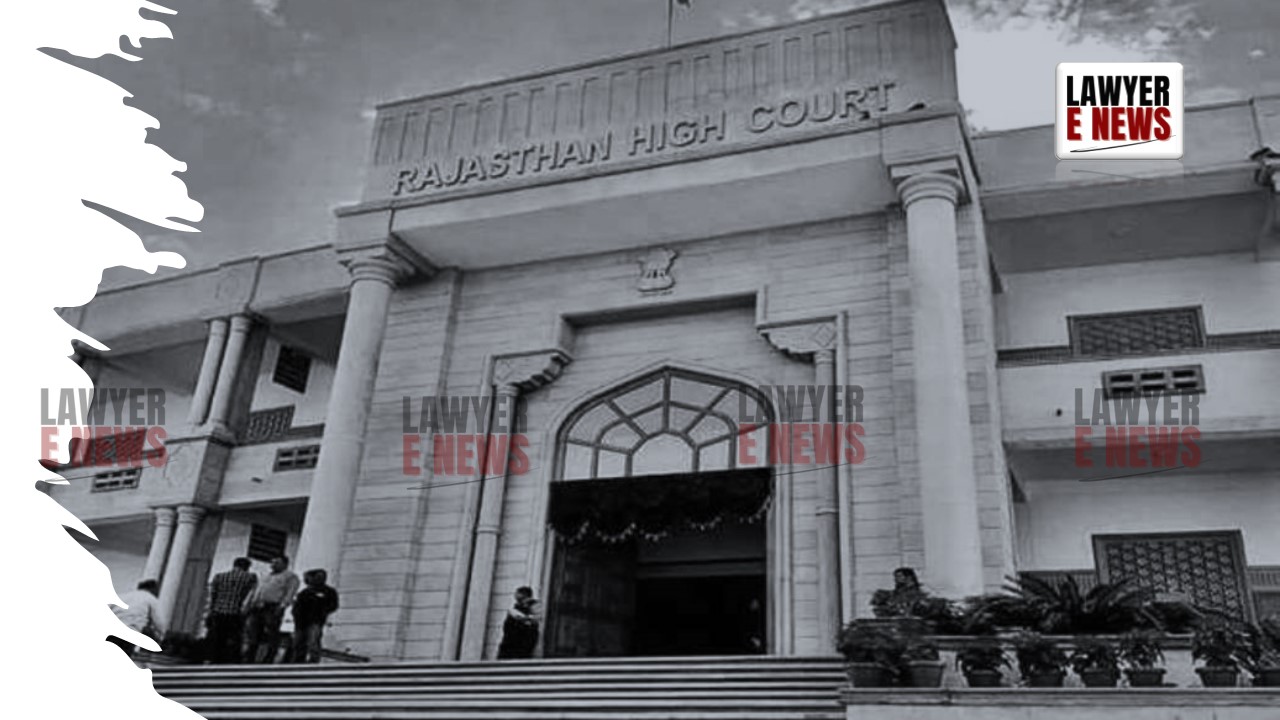
On October 8, 2024, the Rajasthan High Court set aside a penalty order imposed on Smt. Somoti, a mining leaseholder, for alleged illegal excavation. The Court ruled that the penalty was issued in a non-speaking order, violating the principles of natural justice. The case was remitted back to the Mining Department for reconsideration after providing a fair hearing.
Smt. Somoti, who held a mining lease for masonry stone in Bharatpur, Rajasthan, was accused of excavating beyond her allocated area. Following an inspection, a penalty of Rs. 31,50,840 was imposed in February 2013. Despite appealing, her challenges were dismissed, leading to the present writ petition.
The petitioner argued that the penalty order was a non-speaking one, as her detailed reply to the notice was not addressed. The lack of reasoning in the decision violated the principles of natural justice and transparency.
The Court emphasized that any quasi-judicial authority must provide reasoned orders, citing the Supreme Court's ruling in M/s Kranti Associates Pvt. Ltd. vs. Masood Ahmed Khan (2010). The Court noted that the petitioner's reply to the notice was disregarded without proper examination, and the penalty order merely labeled her response as unsatisfactory without elaboration.
The Court held that issuing a penalty order without providing clear reasons is a violation of natural justice. The decision-making process must be transparent and based on an objective evaluation of the facts and submissions.
The Court quashed the impugned orders and directed the Mining Department to reconsider the matter after granting the petitioner a fair hearing.
The Rajasthan High Court’s decision underscores the importance of transparency and accountability in quasi-judicial decisions. The case was remitted for a fresh decision, ensuring that the petitioner’s response is duly considered.

Order Date: October 8, 2024
Smt. Somoti vs. State of Rajasthan & Ors..

 

Latest Legal News