-
by sayum
28 August 2026 2:11 PM







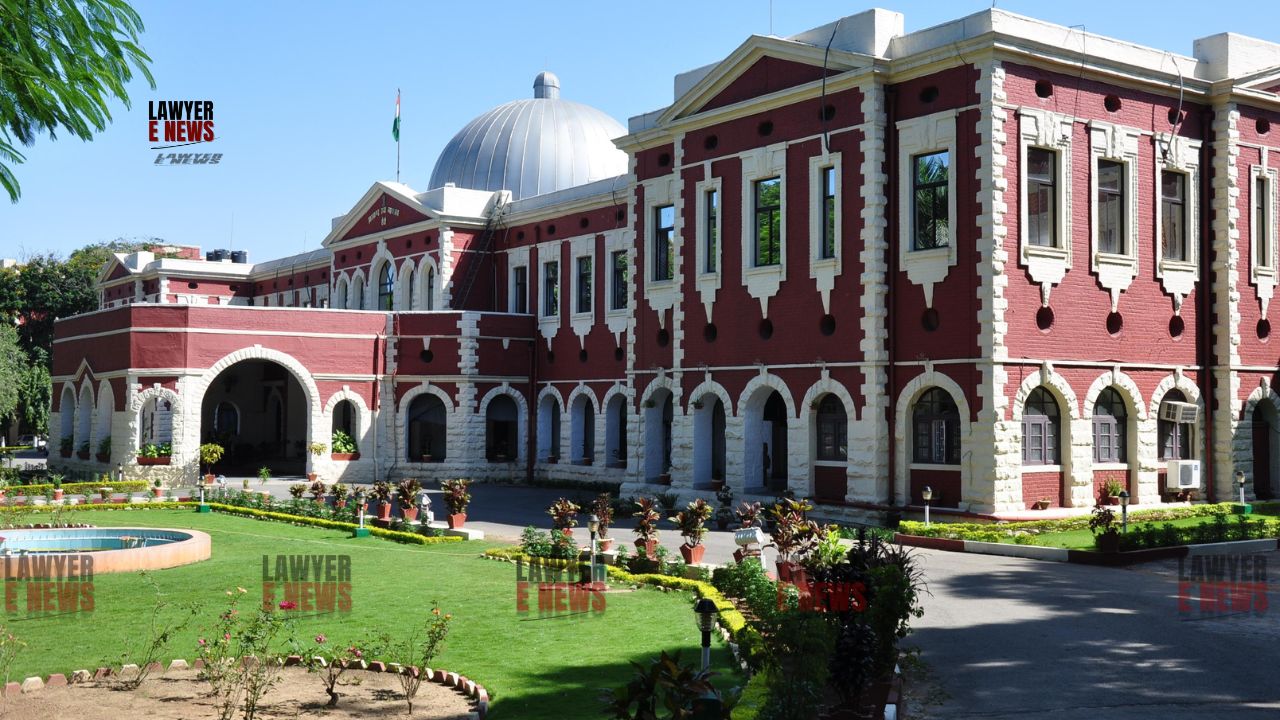
"Non-examination of the Investigating Officer is not fatal to the prosecution case if the eyewitnesses are credible, trustworthy, and of 'sterling quality' and if ocular evidence is reliable and corroborated by other evidence," Jharkhand High Court, in a significant judgment, has reiterated that the non-examination of an Investigating Officer (I.O.) does not automatically create a dent in the prosecution's case.
A bench of Justice Sujit Narayan Prasad and Justice Deepak Roshan observed that if the testimony of eyewitnesses is otherwise reliable and consistent with medical evidence, the absence of the I.O. carries no consequence unless the defense can demonstrate specific prejudice caused by such non-examination.
The case originated from a land dispute in 1992 where the informant’s father was brutally assaulted and killed by the appellants and their family members using arrows, lathis, and tangis. While the trial court convicted the appellants under Sections 302/34 and 307 of the IPC, it awarded a sentence of only ten years for the murder charge. The appellants challenged their conviction before the High Court, while a separate criminal revision was initiated for the enhancement of the sentence as the awarded punishment was below the statutory minimum.
The primary questions before the court were whether the non-examination of the Investigating Officer was fatal to the prosecution's case and whether the evidence of a witness who turned partially hostile could still be relied upon. The court was also called upon to determine if a sentence of ten years under Section 302 IPC was legally permissible and whether the High Court could enhance it to life imprisonment.
Hostile Witness Testimony Not To Be Discarded In Toto
The court first addressed the issue of P.W.-3, an injured witness who was declared hostile after failing to identify the specific assailants in court. The bench observed that the law is well-settled that merely because a witness is declared hostile, their entire evidence is not liable to be thrown away. The court noted that the testimony of a hostile witness is acceptable to the extent it is corroborated by other reliable witnesses or medical evidence.
In the present case, the court found that P.W.-3’s initial statement regarding the occurrence, the place of incident, and the fact that he sustained an arrow injury was fully supported by the medical report of P.W.-11. Citing the Supreme Court’s ruling in Attar Singh v. State of Maharashtra, the bench held that the part of the hostile witness's evidence which inspires confidence can be used to support the prosecution’s version.
Non-Examination Of Investigating Officer Not Fatal In Absence Of Prejudice
Delving into the central legal contention regarding the Investigating Officer, the High Court emphasized that the absence of the I.O. in the witness box does not destroy the prosecution's case if the eyewitnesses are of "sterling quality." The bench noted that the defense had argued that the failure to examine the I.O. prevented them from proving that the informant party were the aggressors or that the place of occurrence was different.
"The non-examination of the Investigating Officer does not in any way create any dent in the prosecution case, much less affect the credibility or otherwise trustworthy testimony of the eye witness."
The court relied upon a string of Supreme Court precedents, including Ram Gulam Chaudhary v. State of Bihar and Bahadur Naik v. State of Bihar, to hold that if there are witnesses who have given credible evidence as to the place of occurrence, their testimony cannot be discarded merely because the I.O. was not examined. The court found that the inquest report and the testimonies of P.W.-2 and P.W.-8 clearly established the place of occurrence near the courtyard of the accused.
Evidentiary Value Of Injured Eyewitnesses
The bench underscored the high evidentiary value of injured witnesses, noting that their presence at the scene of the crime is naturally established by their injuries. Citing State of M.P. v. Mansingh, the court observed that statements of injured witnesses are not to be discarded lightly unless compelling reasons exist. Since P.W.-8 (the informant) and P.W.-3 both sustained arrow wounds which were surgically removed at the hospital, their presence and their account of the assault were deemed "extremely valuable evidence."
"The importance of injured witness in a criminal trial cannot be overstated. Unless there are compelling circumstances or evidence placed by the defence to doubt such a witness, this has to be accepted as extremely valuable evidence."
Minimum Punishment Under Section 302 IPC Is Life Imprisonment
The High Court expressed concern over the trial court's decision to award only ten years of rigorous imprisonment for a conviction under Section 302 IPC. The bench noted that Section 302 of the IPC provides for only two types of punishment: death or imprisonment for life. A sentence of ten years is not permissible under the law for the offense of murder.
High Court’s Power To Enhance Sentence
The court highlighted that the High Court enjoys the power to enhance a sentence either in exercise of its revisional jurisdiction under Section 397 read with Section 401 CrPC or its appellate jurisdiction. Referencing Govind Ramji Jadhav v. State of Maharashtra, the bench stated that it is a duty of the court to ensure that the "punishment fits the crime." Since the minimum sentence for murder is life imprisonment, the ten-year sentence was quashed as being "contrary to law."
The High Court dismissed the criminal appeal filed by the convicts and upheld their conviction under Sections 302/34 and 307 IPC. However, acting on the criminal revision, the court enhanced the sentence for the murder charge from ten years to rigorous imprisonment for life. The bail bonds of the appellants were cancelled, and they were directed to surrender before the trial court to serve the remainder of their enhanced sentence.
Date of Decision: 10 June 2026