-
by sayum
29 August 2026 3:15 PM







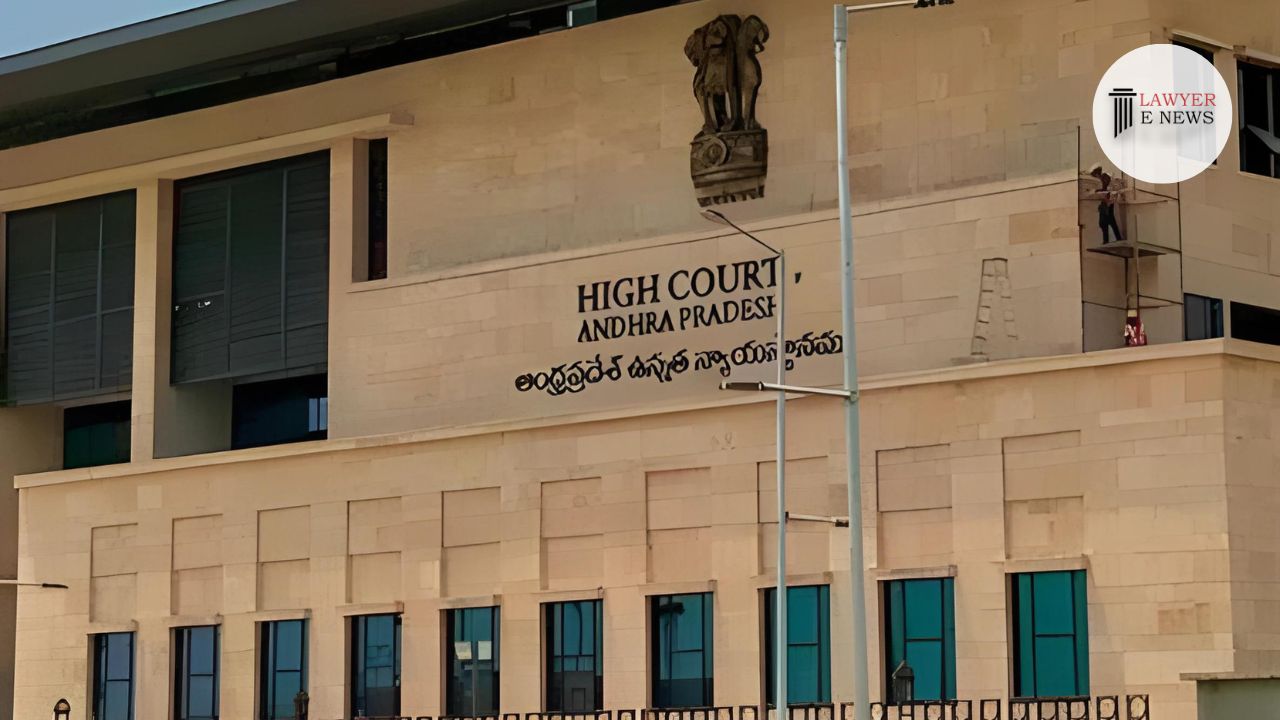
Andhra Pradesh High Court, through Hon’ble Dr. Justice Y. Lakshmana Rao, allowed a petition under Section 438 of the Bharatiya Nagarik Suraksha Sanhita, 2023 and granted pre-arrest bail to Accused No. 3 in Crime No. 85 of 2025, Dwaraka Police Station, Visakhapatnam. The case involves the alleged large-scale mobilisation of ₹6.32 crore by Sneha Mutually Aided Co-operative Society Ltd. (“Sneha MACS”) from members of the public, particularly from the Scheduled Caste community, and default in repayment.
According to the prosecution, Sneha MACS was founded by Accused No. 1 as Chairman and Accused No. 2 (his wife) as President, operating under the slogan “Pay Back to Society”. The society allegedly lured depositors—mostly from the Scheduled Caste community—into investing, through agents, with promises of lucrative returns.
The de-facto complainant alone invested ₹37.7 lakh, while total deposits collected allegedly amounted to ₹6.32 crore. The society defaulted on repayment, leading to registration of offences under Sections 420, 406, 411, 414, 120B r/w 34 IPC, Sections 21(1)(2)(3) & 23 of the TBUDS Act, 2019, and Sections 3 & 4 of the Prize Chits and Money Circulation Schemes (Banning) Act, 1978.
Accused No. 3, the present petitioner, served as Director/CEO only between April 2022 and October 2024, and claimed that the majority of deposits were mobilised before his tenure. He further asserted that he personally invested ₹2 crore from his retirement benefits and his family’s earnings, making him a victim rather than a beneficiary of the alleged scam.
“Petitioner Also Lost ₹2 Crores; He Is a Victim, Not a Beneficiary”
The petitioner, a 71-year-old retired Canara Bank officer suffering from kidney, thyroid, and diabetic ailments, argued that:
He had cooperated with the investigation, appearing under Section 41-A BNSS notices and providing documents.
Seizure of computers, deposit receipts, and other materials was complete.
He had a fixed residence and property in Visakhapatnam, eliminating any risk of absconding.
His tenure as CEO was short, and transactions stopped in June 2024.
The State and de-facto complainant opposed bail, alleging that as CEO he actively attracted deposits and assured repayment during a September 2024 meeting, thus sharing responsibility with Accused Nos. 1 and 2. They claimed his influence could intimidate witnesses.
“Investigation Shows No Siphoning by Petitioner”
Justice Lakshmana Rao, after examining the Preliminary Enquiry Report, noted a key distinction:
“The investigation does not point out towards the Petitioner/Accused No. 3 that he has siphoned the deposits to his selfish goals.”
The report revealed that Accused Nos. 1 and 2 and their relatives purchased extensive immovable properties from depositors’ funds. In contrast, the petitioner attended inquiry proceedings, submitted written statements, and pointed to Accused No. 1 as primarily responsible. The Court emphasised that custodial interrogation was unwarranted given his cooperation and health condition.
Holding that the petitioner’s limited tenure, full cooperation, and lack of personal gain weighed in his favour, the Court granted pre-arrest bail with stringent conditions, including:
Personal bond of ₹50,000 with two sureties.
Weekly appearance before the SHO every Saturday until filing of the charge sheet.
No inducement or threat to witnesses.
No travel outside the district without permission.
Surrender of passport or affidavit if none.
The Court concluded: “Considering the limited tenure of the Petitioner… his age… his cooperation… and the nature of allegations… this Court deems it appropriate to grant pre-arrest bail… subject to stringent conditions.”
Date of Decision: 24 July 2025