-
by sayum
10 August 2026 4:11 AM







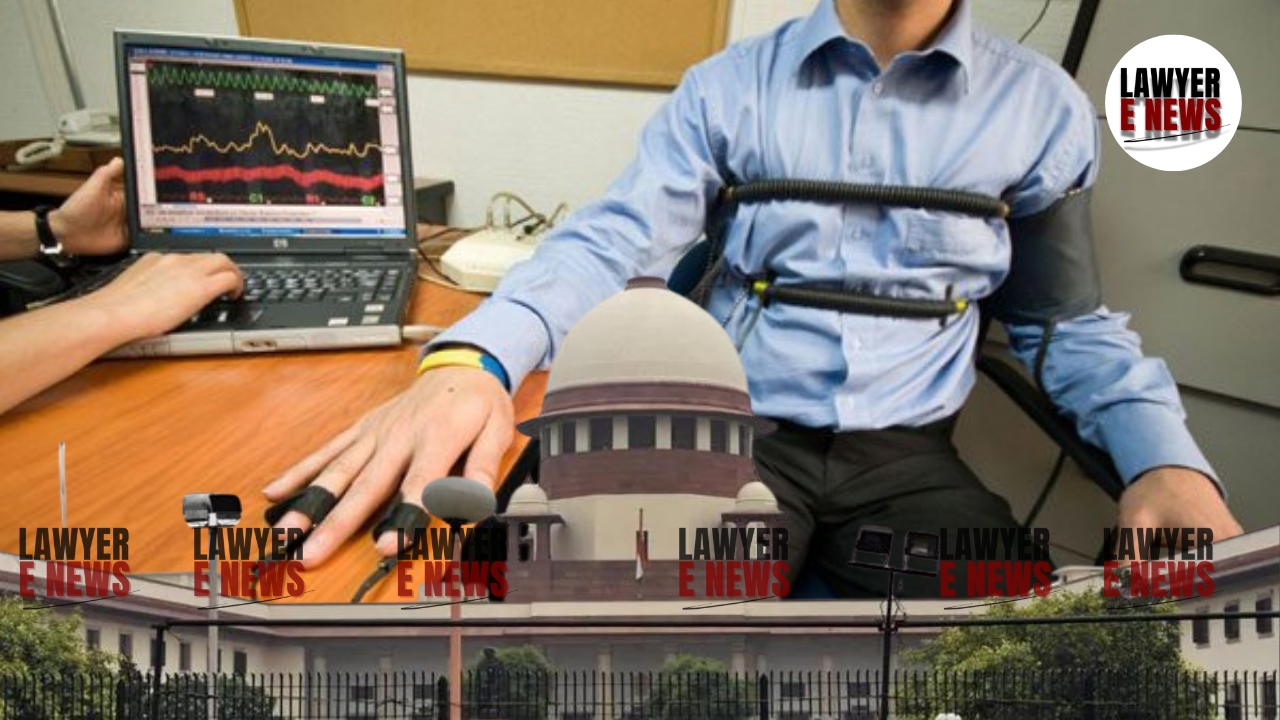
"Involuntary Narco-Analysis Violates Articles 20(3) & 21; Cannot Be Used Even During Bail Hearing" - Supreme Court of India, in a constitutionally significant decision, set aside a direction passed by the Patna High Court permitting narco-analysis of the accused during a bail proceeding. The Court, speaking through Justice Sanjay Karol and Justice Prasanna B. Varale, held that the High Court's order was "in direct contravention of the fundamental protections enshrined under Articles 20(3) and 21 of the Constitution."
Quashing the High Court’s order the bench categorically held: “Under no circumstances is an involuntary or forced narco-analysis test permissible under law.”
“Such a submission and its acceptance, is in direct contravention to the judgment of this Court in Selvi v. State of Karnataka, being hit by the protections under Articles 20(3) and 21.”
High Court Cannot Direct Narco-Analysis While Deciding Bail: “Not a Forum for Mini-Trials”
The case arose from the Patna High Court’s November 2023 interim order, passed during a bail hearing under Section 439 CrPC, accepting the Investigating Officer’s proposal to conduct narco-analysis tests on all accused, including the appellant. The Supreme Court found this action constitutionally impermissible, and procedurally erroneous.
Referring to its earlier ruling in Sangitaben Shaileshbhai Datana v. State of Gujarat, the Court underscored:
“By ordering the abovementioned tests and venturing into the reports of the same with meticulous details, the High Court has converted the adjudication of a bail matter to that of a mini trial. This assumption of the function of a trial court is deprecated.”
The bench criticized the use of invasive scientific techniques at the stage of bail, noting that judicial discretion must be grounded in settled principles of criminal law, not investigative enthusiasm.
Selvi Still Governs the Field: Involuntary Tests Are Constitutionally Barred
Reaffirming the landmark judgment in Selvi & Ors. v. State of Karnataka (2010) 7 SCC 263, the Supreme Court reiterated that narco-analysis, polygraph, and brain-mapping tests, if administered involuntarily, infringe upon the right against self-incrimination and the right to personal liberty.
Justice Karol observed: “Articles 20 and 21 of the Constitution are non-derogable and sacrosanct rights to which the judiciary cannot carve out exceptions.”
He further emphasized: “Conducting such tests in the absence of consent violates substantive due process—an essential element required for restraining one’s personal liberty. Permitting such tests may lead to a disproportionate exercise of police powers.”
Voluntary Narco-Test? Only With Safeguards—And Not A Right
The Court also clarified an important jurisprudential ambiguity—whether an accused can claim a narco-analysis test as a matter of right.
Rejecting the view of the Rajasthan High Court in Sunil Bhatt v. State, which had held that an accused has a statutory right to undergo narco-analysis under Section 233 CrPC (right to lead defence evidence), the Court firmly stated: “There is no indefeasible right with the accused to undergo a narcoanalysis test.”
Quoting from Selvi, the bench added: “Consent to undergo these tests must be truly voluntary—free of threats, inducements or deception by the investigators. The mere appearance of consent is not enough.”
However, the Court left open the possibility of voluntary narco-analysis, subject to strict compliance with NHRC guidelines, including judicial supervision and informed legal representation:
“Even when the subject has given consent… test results by themselves cannot be admitted as evidence… but any information or material that is subsequently discovered with the help of voluntarily administered test results can be admitted in accordance with Section 27 of the Evidence Act.”
Evidentiary Threshold: Narco-Test Cannot Form Sole Basis of Conviction
On the admissibility and evidentiary value of narco-analysis results, the Court categorically held that no conviction can rest solely on such results, even when conducted voluntarily.
Citing Vinobhai v. State of Kerala and Manoj Kumar Soni v. State of M.P., the judgment stated: “Disclosure statements hold significance as a contributing factor… but they are not so strong a piece of evidence sufficient on their own to bring home the charges beyond reasonable doubt.”
Hence, while information derived from a voluntary narco test may be admissible under Section 27 of the Evidence Act, it must be corroborated with other evidence. Narco-analysis alone cannot form the sole basis of conviction.
Court Appeals to Investigators: Uphold Rights, Even in Difficult Cases
The judgment concluded by stressing that while modern investigative tools are essential, they cannot override constitutional guarantees. The judiciary, it warned, must remain vigilant against excesses, even when faced with serious allegations like in this case involving the disappearance of the appellant's wife.
The Court appreciated the assistance of Senior Advocate Gaurav Agrawal, who served as Amicus Curiae, and observed: “While the need for modern investigative techniques may be true, such investigative techniques cannot be conducted at the cost of constitutional guarantees under Articles 20(3) and 21.”
Appeal Allowed, Narco-Test Direction Set Aside
The Supreme Court ultimately allowed the appeal: “We have no doubt that the impugned Order cannot be sustained. Consequently, the Order dated 9th November 2023… is hereby set aside.”
It directed that the appellant’s bail application be decided on its own merits, without reference to any proposed narco-analysis.
Date of Decision: 9 June 2025