-
by sayum
09 August 2026 1:53 PM







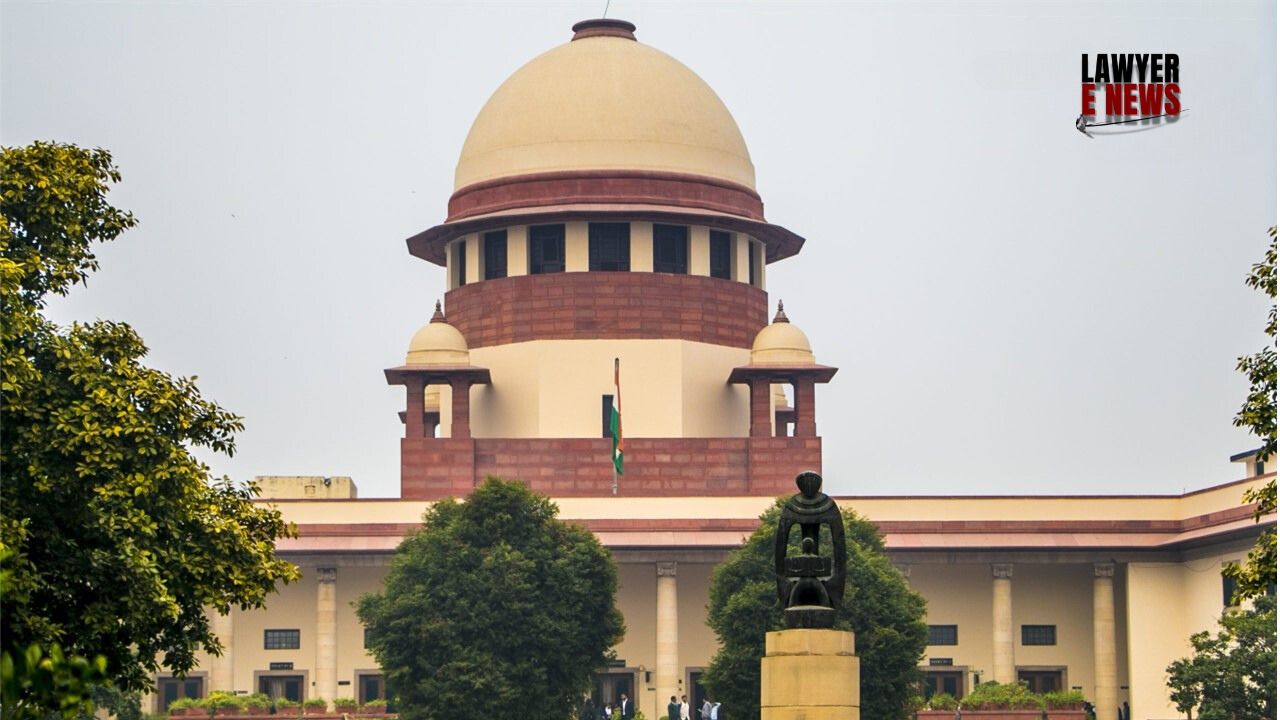
“Suppression of Parallel Proceedings Amounts to Abuse of Process; Supreme Court Imposes Exemplary Costs in Environmental Appeal”, Supreme Court of India delivered a critical judgment in Arun Kumar Sharma & Others versus State of Madhya Pradesh & Others (Civil Appeal Nos. 3263-3264 of 2025), dismissing appeals against the grant of permissions for the establishment of a petrol pump. The Court ruled that all statutory environmental requirements had been duly complied with, and the litigation was found to be a strategic attempt by the appellants to hinder the commercial interests of a rival business. The Court observed, “Access to justice is inextricably connected to maintaining integrity in the process of invocation and conduct of remedial proceedings before Courts and Tribunals,” emphasising the importance of bona fide litigation in environmental disputes.
The dispute arose from the establishment of a petrol pump at Khasra No. 109/1/2 (S), Bhopal, Madhya Pradesh. The appellants filed an original application before the National Green Tribunal (NGT), seeking the cancellation of the ‘Consent to Establish’ under the Water and Air Acts issued by the Madhya Pradesh Pollution Control Board and the No-Objection Certificate (NOC) issued by the District Collector. The core allegations included violations of environmental siting norms, particularly proximity to residential areas, schools, and hospitals, and alleged procedural irregularities under Rule 144 of the Petroleum Rules, 2002.
The respondents obtained requisite permissions from all competent authorities, including PESO, the Pollution Control Board, and the District Collector. A joint committee, constituted by the NGT, found that the petrol pump was compliant with environmental guidelines and located more than 50 meters away from sensitive sites.
The first key legal issue was whether the NGT had jurisdiction to entertain challenges under the Petroleum Rules, 2002. The Supreme Court categorically held,
“NGT’s jurisdiction under Section 14 read with Schedule I of the NGT Act, 2010, extends only to the enactments specified therein. Matters pertaining to the Petroleum Rules, 2002, do not fall within its purview,” affirming the correctness of the NGT’s conclusion on limited jurisdiction.
On the environmental siting guidelines, the Court referred to the Joint Committee’s factual report and reiterated,
“The Joint Committee has found no school, hospital, or designated residential area within 50 meters of the petrol pump site, as per the Central Pollution Control Board Guidelines dated 07.01.2020.”
The Court further examined the legitimacy of the appellants’ claim about nearby unauthorised colonies and noted,
“The NGT was justified in holding that the existence of unauthorised colonies, without designated status under local laws, does not violate the siting criteria laid down under CPCB guidelines.”
On the issue of parallel proceedings, the Supreme Court found that the appellants, during the pendency of their civil appeals before the Court, instituted a writ petition before the Madhya Pradesh High Court challenging the same NOC on different grounds under the M.P. Nagar Tatha Gram Nivesh Adhiniyam, 1973, without disclosing this fact to the Supreme Court. The Court remarked,
“The minimum that the appellants could have done, and indeed should have done, is to inform this Court about initiation of fresh proceedings before the High Court, particularly when civil appeals on identical subject-matter were pending consideration.”
The Court was also critical of the appellants’ mala fide intent and observed, “There is reason to believe that the proceedings before the NGT were initiated to subserve the business interest of appellant no. 3, who operates a rival petrol pump.”
Rejecting the appeals, the Supreme Court declared, “Having considered the grounds and relief sought in the original application before the NGT and contrasted them with the writ petition, we hold that the appellants have suppressed necessary facts and have engaged in parallel proceedings with ulterior motives.”
The Court directed, “In this view of the matter, the civil appeals are dismissed with costs quantified at ₹50,000, payable to the Supreme Court Advocates-on-Record Association within four weeks.”
However, the Court clarified that the pending writ petition in the High Court would proceed independently:
“We have not examined the issue relating to violation of the M.P. Nagar Tatha Gram Nivesh Adhiniyam, 1973, raised in the writ petition pending before the High Court. The said writ petition shall be heard and disposed of on its own merits, uninfluenced by this judgment.”
Summing up, the Supreme Court’s ruling underscores that environmental forums must not be misused for commercial rivalry. The judgment reiterates that the NGT is limited to environmental statutes and cannot adjudicate matters under the Petroleum Rules. The Court firmly stated,
“Frivolous environmental litigation lacking bona fides, and conducted in concealment of parallel remedies, cannot be permitted to clog judicial processes.”
This ruling stands as a precedent for disallowing abusive environmental litigation designed to harass business rivals under the guise of public interest.
Date of Decision: 14 July 2025