-
by sayum
24 August 2026 6:22 AM







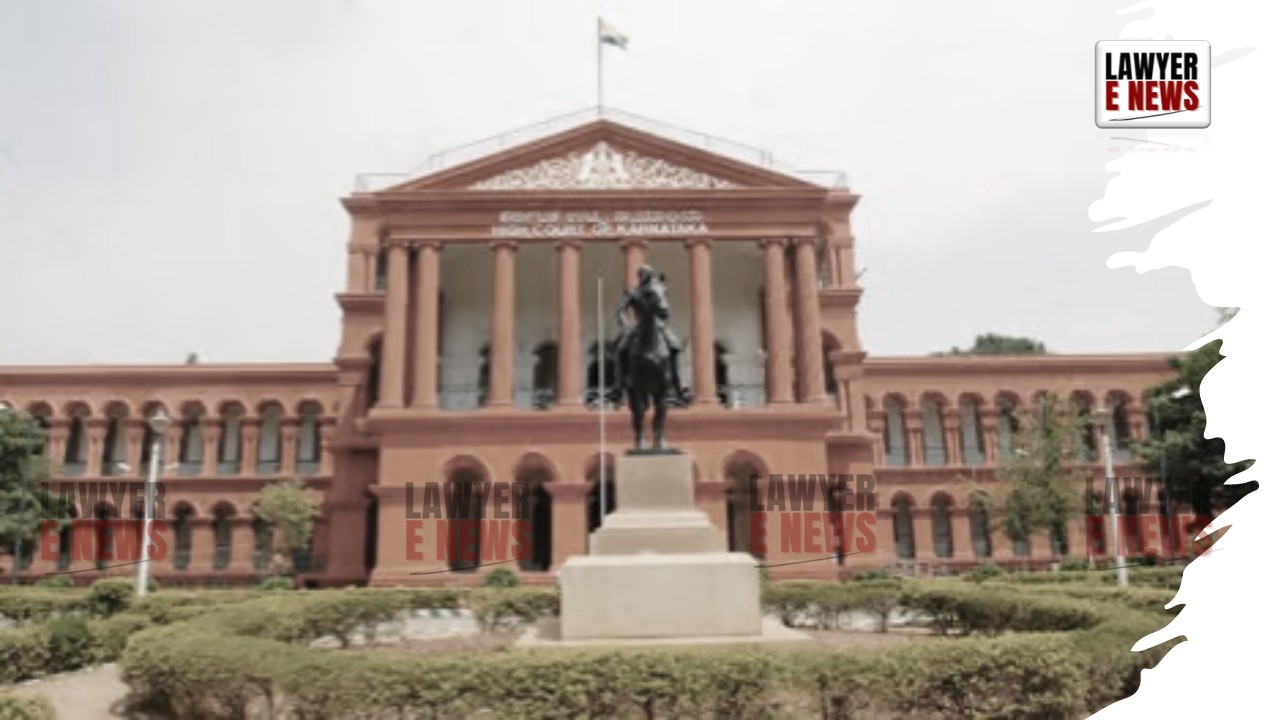
In a strong reaffirmation of the constitutional right to personal liberty and speedy trial, the High Court of Karnataka on 12 January 2026 granted bail to Accused No. 11 – Prakash @ Neni in a murder conspiracy case, observing that prolonged incarceration without tangible progress in trial offends Article 21 of the Constitution.
Justice Shivashankar Amarannavar, while allowing Criminal Petition No. 15099 of 2025, held that the petitioner's alleged role in the offence — merely conveying the movement of the deceased to the principal accused — was significantly less grave than that of others already granted bail.
The Court stated, “The overt act alleged against the petitioner is that he intimated the movement of the deceased to the main accused. He was not present at the scene of crime, nor was he armed. His role is not of direct participation in the assault.” On this basis, it found no justification to keep him in continued custody, particularly in light of the long delay in trial.
“Parity in Law Cannot Be Denied by Delay in Justice” – Bail Granted as Co-Accused with Greater Involvement Already Enlarged
The Court noted that Accused Nos. 8 and 9, who were present at the scene but unarmed and uninvolved in the assault, had already been granted bail. The petitioner’s role was found to be even lesser, and the Court ruled that denying him bail would defeat the principle of parity in criminal jurisprudence.
In a direct finding on this point, the Court observed:
“Petitioner is placed similarly to that of accused Nos. 8 and 9. Therefore, he is entitled for grant of bail on the ground of parity.”
The judgment adds weight to the growing judicial consensus that parity in bail must be maintained unless clear and cogent reasons exist to differentiate.
“Trial Delay Cannot Be the Reason to Continue Pre-Trial Custody – Right to Speedy Trial is a Fundamental Right”
The petitioner had been in judicial custody since 28 July 2021, a period exceeding four and a half years, without the trial nearing conclusion. Out of 111 witnesses listed in the charge sheet, only a few, including CWs 1 to 3, 18 to 20, had been examined. The prosecution had yet to examine more than 80 witnesses.
The Court noted with concern that the delay was not attributable to the petitioner, and in fact, witnesses were not being secured by the prosecution on scheduled dates. The trial court had previously been directed to conduct day-to-day proceedings but even that order had to be relaxed due to non-cooperation by the prosecution.
Invoking the Supreme Court’s ruling in Praveen Rathore v. State of Rajasthan, 2023 SCC OnLine SC 1268, Justice Amarannavar held:
“Considering the fact that still 80 more witnesses are to be examined, trial will take some reasonable time. Continued incarceration, therefore, is no longer justified.”
Suppression of Previous Bail Denial Not Fatal Where Change in Circumstances Exists
While the prosecution opposed the petition on the ground that the petitioner had suppressed earlier dismissal of bail in Crl.P. No. 11080/2024, the Court found that the change in circumstances, namely longer custody and trial stagnation, outweighed procedural lapses.
The Court made it clear that: “Though earlier petitions were dismissed, present circumstances show substantial change. Suppression alone cannot outweigh the right to liberty when Article 21 is implicated.”
“Liberty Cannot Be Held Hostage to the Slow Pace of Prosecution”
In conclusion, the Court allowed the bail petition, directing that the petitioner be released on execution of bond, subject to the usual conditions, including non-tampering of witnesses, regular attendance before the trial court, and non-involvement in any further offence.
The order serves as a reminder that undertrials cannot be indefinitely detained simply due to sluggish investigation or procedural delays. The High Court has unequivocally reiterated that liberty is the rule, and pre-trial detention is the exception, particularly when the accused has no direct or violent role in the alleged offence.
Date of Decision: 12 January 2026