Delay in Test Identification & Absence of Motive Fatal to Prosecution: Allahabad High Court Acquits Man for Murder Tokre Koli or Dhor Koli – Both Stand on Same Legal Footing: Bombay High Court Slams Scrutiny Committee for Disregarding Pre-Constitutional Records Consent Is No Defence When Victim Is Under 16: Delhi High Court Upholds Rape Conviction Granting Pre-Arrest Bail in Minor Rape Cases Would Send a Harmful Societal Signal: Delhi High Court Refuses Anticipatory Bail to Accused Citing POCSO’s Rigorous Standards Void Marriage No Shield Against Cruelty Charges: Karnataka High Court Affirms Section 498A Applies Even In Deceptive and Void Marital Relationships Consolidation Authorities Cannot Confer Ownership Or Alter Scheme Post Confirmation Without Due Process: Punjab & Haryana High Court Reaffirms Civil Court’s Jurisdiction Over Void Post-Scheme Orders Daughter’s Right Extinguished When Partition Effected Prior to 2005 Amendment: Madras High Court Trial Courts Cannot Direct Filing of Challan After Conviction — Punjab & Haryana High Court Quashes Directions Against DSP Veer Singh Rule 4 Creates Parity, Not a Parallel Pension Pipeline: Rajasthan High Court Denies Dual Pension to Ex-Chief Justice Serving as SHRC Chairperson Right to Be Heard Must Be Preserved Where Claim Has a Legal Basis: Orissa High Court Upholds Impleadment of Will Beneficiary in Partition Suit Long-Term Ad Hocism Is Exploitation, Not Employment: Orissa High Court Orders Regularization Of Junior Typist After 25 Years Of Service PIL Cannot Be a Tool for Personal Grievances: Supreme Court Upholds Municipal Body’s Power to Revise Property Tax After 16 Years Omission of Accused’s Name by Eyewitness in FIR is a Fatal Lacuna: Supreme Court Acquits Man Convicted of Murder Correction In Revenue Map Under Section 30 Isn’t A Tool To Shift Plot Location After 17 Years: Supreme Court Quashes High Court’s Remand Casteist Abuses Must Be In Public View: Supreme Court Quashes SC/ST Act Proceedings Where Alleged Insults Occurred Inside Complainant’s House Resignation Bars Pension, But Not Gratuity: Supreme Court Draws Sharp Line Between Voluntary Retirement and Resignation in DTC Employee Case

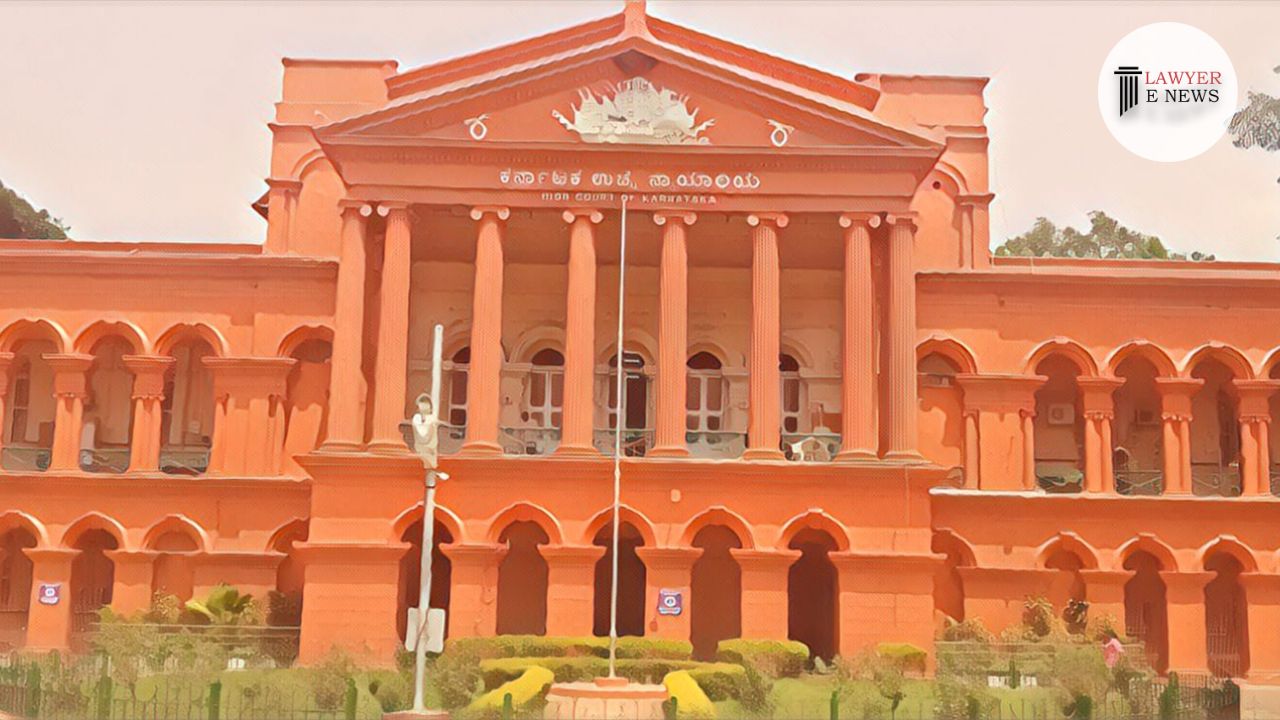
Mere Recovery of Amount Not Sufficient to Constitute Offence Under Prevention of Corruption Act: Karnataka High Court Upholds Acquittal

07 May 2024 8:19 AM

By: Admin


In a significant judgment, the Karnataka High Court dismissed a criminal appeal filed by the State, reaffirming the acquittal of an Enforcement Officer in a bribery case. The Court held that mere recovery of bribe money is insufficient to constitute an offence under the Prevention of Corruption Act, 1988 (PC Act), without proof of demand and acceptance of illegal gratification.

The central legal issue in this appeal revolved around the sufficiency of evidence required to convict under Sections 7 and 13 of the PC Act. The Court emphasized that proving demand and acceptance of illegal gratification is essential to establish offences under these sections.

The respondent, an Enforcement Officer in the Department of Employees’ Provident Fund Commissioner, Mysuru, was accused of demanding and accepting a bribe of Rs.5,000 from a complainant. The Trial Court had earlier acquitted the respondent, leading to the State's appeal. The prosecution's case rested on the evidence of a pre-trap panchanama, a trap mahazar, and testimonies of witnesses, including the complainant.

In its detailed assessment, the Court scrutinized the inconsistencies in the testimonies of the prosecution witnesses, particularly regarding the signal given by the complainant during the trap operation. The Court observed contradictions and lack of corroboration in the prosecution's evidence. It underscored the principle that mere recovery of the bribe amount, without establishing demand and acceptance, is insufficient for conviction under the PC Act. The Court cited several judgments of the Supreme Court to buttress its findings, emphasizing the need for careful scrutiny of evidence in corruption cases due to their societal and personal implications.

The High Court, upholding the Trial Court's decision, dismissed the appeal, finding no grounds to interfere with the acquittal. The Court's affirmation of the acquittal underscores the necessity of clear and corroborated evidence to prove charges of corruption.

Date of Decision: 13th February 2024

State of Karnataka Vs. L Dorairaj

Latest Legal News