-
by sayum
01 August 2026 2:00 PM







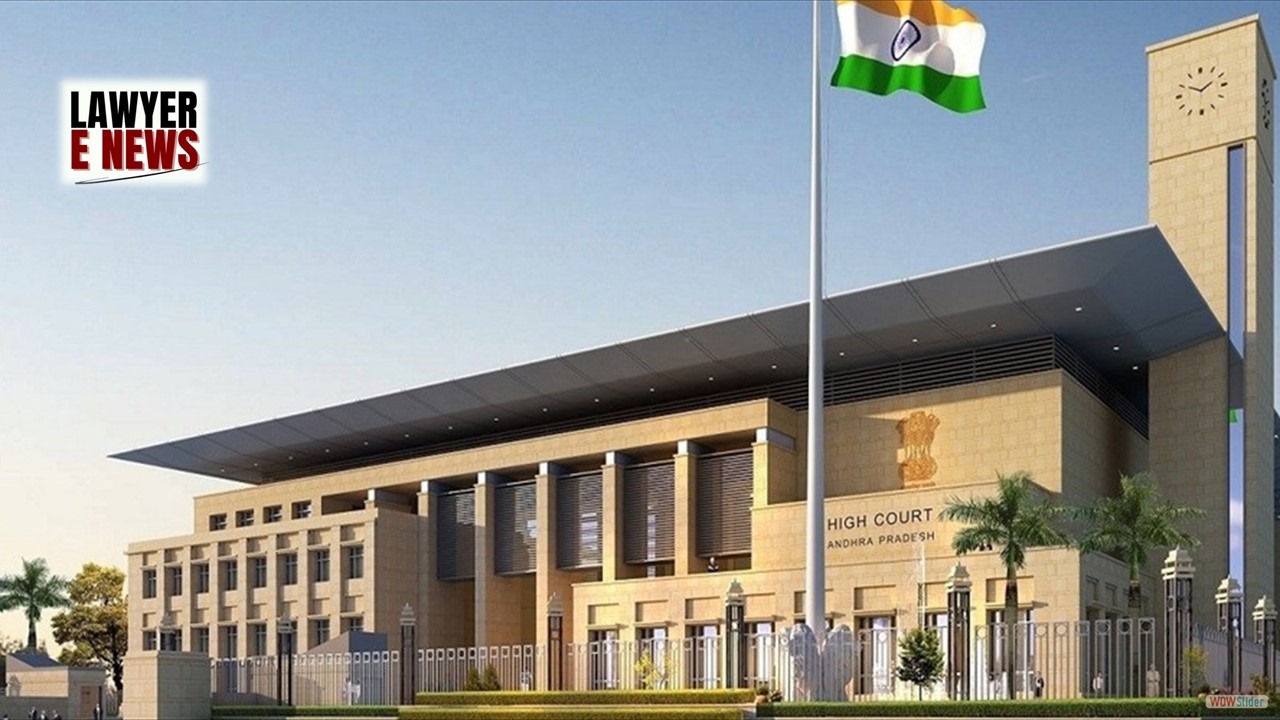
Andhra Pradesh High Court, presided over by Justice Venuthurumalli Gopala Krishna Rao, ruled in favor of a contractor in The Chief Engineer & Others v. Y.V. Swami Reddy (Appeal Suit No. 223 of 2005), upholding his entitlement to recover ₹3,85,371 from the government. However, the Court modified the interest rate awarded by the trial court, reducing it from 12% to 6% per annum. The case stemmed from a dispute over unpaid amounts related to a road construction contract and alleged deficiencies in the contractor's work.
The plaintiff, Y.V. Swami Reddy, a registered contractor, was awarded a contract to construct a B.T. road from Parumanchala to Tudicherla under an agreement dated April 28, 1997, with an estimated cost of ₹20,00,000. The work was completed by March 16, 1998, within the stipulated time. Additional road widening work under a supplemental agreement was also completed but remained unpaid. The government withheld payments totaling ₹3,85,371, comprising:
₹1,85,371 as a security deposit,
₹50,000 as an earnest money deposit,
₹50,000 withheld for unrelated work (Package No. 3), and
₹1,00,000 for additional work under the supplemental agreement.
The government alleged substandard work and cited a Quality Control Wing report to justify the deductions. The contractor filed a recovery suit in O.S. No. 7 of 2001 before the Senior Civil Judge, Nandikotkur, claiming the unpaid amount with 18% interest per annum. On December 17, 2004, the trial court ruled in favor of the contractor, awarding ₹3,85,371 with 12% interest per annum from the suit's filing date to the decree and 6% thereafter. The government appealed, challenging both the award and the interest rate.
Justice Rao, after reviewing the evidence, upheld the trial court’s findings that the government failed to prove its allegations of substandard work. The Quality Control Wing report, relied upon by the defendants, was not corroborated by any independent evidence or witness testimony. Furthermore, the government did not dispute that the contractor completed the work under the main agreement and the supplemental agreement.
The Court noted that the government’s written statement admitted the contractor executed work valued at ₹20,99,996 under the main contract and ₹1,00,000 under the supplemental agreement. Despite this, the government failed to clear the payments or provide evidence of deficiencies to justify withholding the amounts.
The Court held that: “The alleged deficiency of work and substandard work as alleged by the defendants is not at all proved by the defendants by producing cogent evidence.”
While affirming the contractor’s entitlement to the principal amount of ₹3,85,371, the High Court reduced the interest rate. The trial court had awarded 12% interest from the date of the suit until the decree, which the government argued was excessive given the absence of an agreement specifying interest and the declining bank lending rates.
The Court invoked Section 34 of the Code of Civil Procedure, 1908, which provides judicial discretion to award interest at a reasonable rate. Relying on precedents like DDA v. Joginder S. Monga (AIR 2004 SC 4242), the Court observed:
“The appellate court has the power to reduce the interest rate if it finds the rate awarded by the trial court to be unconscionable or usurious. The steep fall in bank lending rates justifies reducing the post-suit interest to 6% per annum.”
Accordingly, the Court revised the interest rate to 6% per annum from the date of the suit until realization.
The High Court upheld the contractor’s claim for ₹3,85,371, affirming that the government’s deductions and withholding of payments were unjustified. However, the Court modified the interest rate to 6% per annum, aligning with the prevailing economic conditions. The appeal was allowed in part, with no costs awarded to either party.
Decision Date of Decision: January 2, 2025