-
by sayum
14 August 2026 3:21 PM







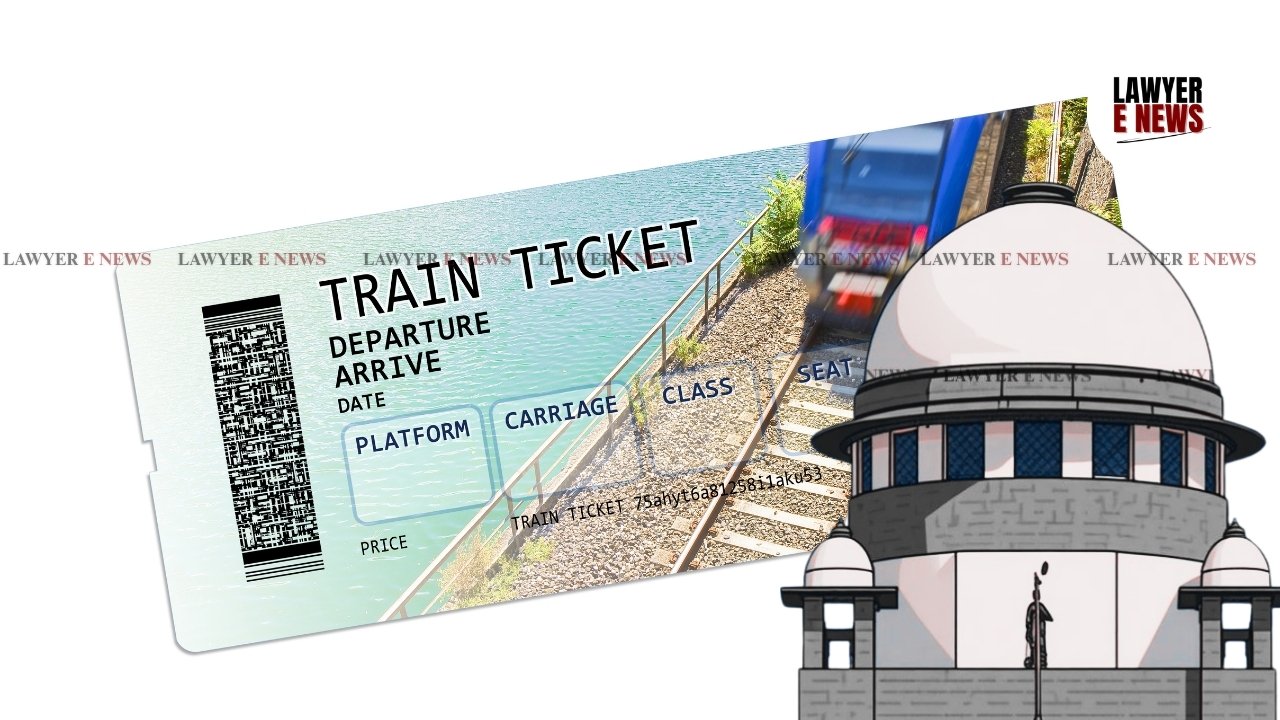
Supreme Court, in a significant ruling dated July 17, 2026, held that the mere non-recovery of a train ticket from a deceased passenger does not automatically nullify their status as a bona fide passenger to deny statutory compensation claims. A bench comprising Justice Sanjay Karol and Justice Nongmeikapam Kotiswar Singh observed that the initial burden of proof on the claimant can be successfully discharged by filing a sworn affidavit detailing the relevant facts of the journey.
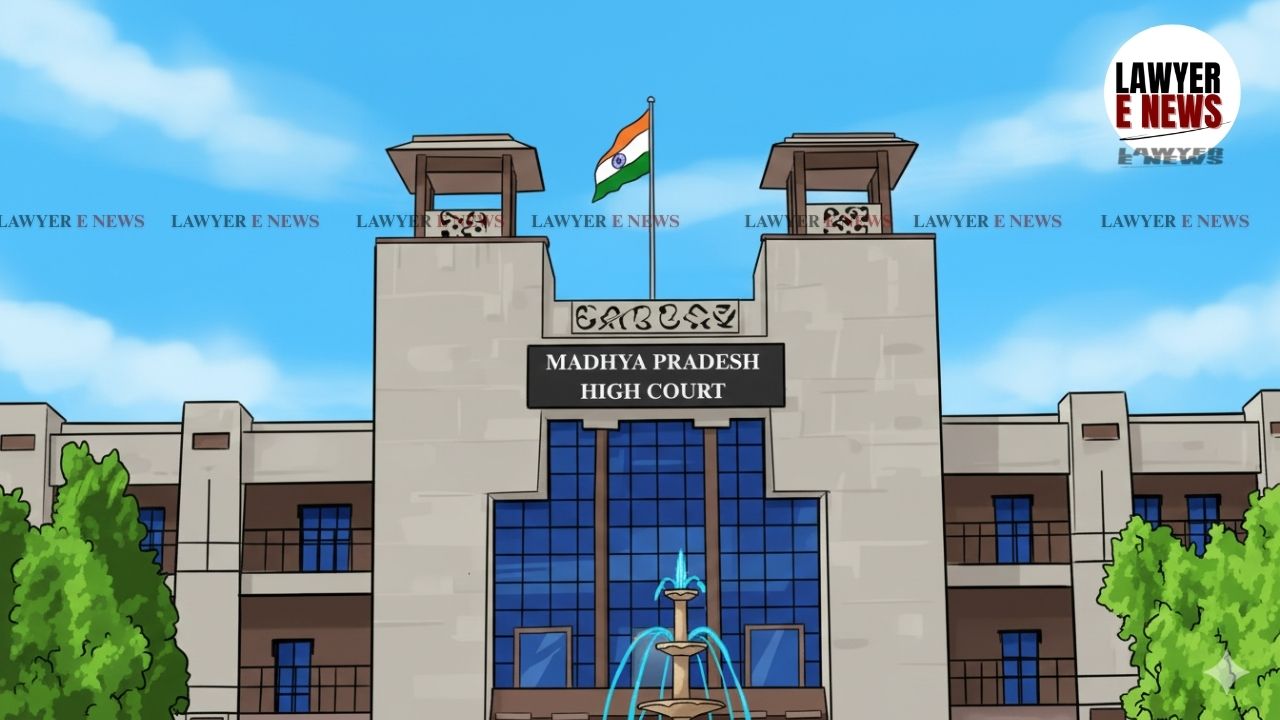
The appellant's husband died instantaneously in November 2015 after accidentally falling from a running train en route from Raipur to Ahmedabad. She approached the Railway Claims Tribunal seeking compensation, which was dismissed on the ground that the deceased's ticket was untraceable, a finding later upheld by the Madhya Pradesh High Court. The appellant had submitted an affidavit explaining that her husband's luggage, which contained his valid travel ticket, was misplaced and never recovered by the police following the untoward incident.
The primary question before the court was whether the non-recovery of a physical ticket precludes a deceased victim from being considered a bona fide passenger under the Railways Act, 1989. The court was also called upon to determine the standard of proof required by a dependent claimant to establish the bona fides of a deceased passenger in the event of an "untoward incident."
Section 124A Is A Beneficial Provision
The court comprehensively examined Section 124A of the Railways Act, 1989, noting that it establishes a regime of "no-fault liability" meant to expeditiously provide compensation to victims of untoward incidents. Emphasizing the overarching welfare state principles embedded in Article 38 of the Constitution of India, the bench held that such beneficial legislations must receive purposive and liberal construction. The court emphasized that the legislative intent is to make the remedy functional, rather than adopting a literal or restrictive approach.
"Courts and Tribunals should always take a view that retains the objective of the Section as being accessible compensation with an underlying humanitarian perspective."
Affidavit Sufficient To Discharge Initial Burden
Relying on the precedent established in Union of India v. Rina Devi and affirmed in Doli Rani Saha v. Union of India, the bench reiterated that the physical presence of a valid ticket is not the singular method to establish the bona fide nature of a passenger. The court clarified that while the initial burden rests on the claimant, it can be discharged by filing an affidavit stating the factual matrix. Once this is done, the burden shifts to the Railways, and the issue must be adjudicated based on the attending circumstances.
Standard Of Proof Is Preponderance Of Probabilities
The bench specifically differentiated the evidentiary standards required in civil compensation claims from criminal proceedings. The court observed that the governing standard to establish foundational facts—such as travelling on a valid ticket and an accident leading to death—is the "preponderance of probabilities and not beyond reasonable doubt, as in criminal trials." Since the appellant had filed a clear affidavit detailing her husband's journey, the court found that she had successfully discharged her burden.
Systemic Failure In Enforcing Railway Manuals
The judgment devoted substantial attention to the Indian Railway Commercial Manual and the Operating Manual for Indian Railways, highlighting the systemic failure to control overcrowding and ticketless travel. The court noted that Section 55 of the 1989 Act and Section 11 of the Railway Protection Force Act, 1957 impose legally enforceable duties on the Railways to execute rigid access control at platforms. The bench observed that had these provisions been dutifully followed, official records of the deceased's ticket check would exist, thereby preventing the family's protracted litigation.
Passengers Share Responsibility For Safety
While holding the Railway Administration accountable for operational lapses, the Supreme Court also remarked on the fundamental duty of passengers to prioritize their own physical safety. The bench observed that despite the widely known dangers of overcrowded trains, people continue to take extreme risks to catch moving trains. The court poignantly noted that while such choices are often driven by economic and practical considerations, "practical considerations must give way to the preservation of life."
"We may suggest that the class connotation be attached to the coach and not to the passenger, in recognition of the history of class divisions in our country and the same being offensive to the spirit of the Constitution of India."
Discontinuation Of Discriminatory Nomenclature
In a highly significant obiter dicta, the bench took strict exception to the continued use of the term "second class passenger" within railway manuals and operational frameworks. The court stated that while the term is ostensibly linked to the financial expenditure incurred for the travel, it carries an inherent and regressive class connotation. The bench suggested that such terminology should exclusively denote the physical coach rather than humanising the passenger through a lens that reflects India's history of social divisions.
Setting aside the concurrent dismissals by the Railway Claims Tribunal and the High Court, the Supreme Court allowed the appeal and held that the claimant was entitled to relief. Based on the amended provisions of the Railway Accidents and Untoward Incidents (Compensation) Rules, 1990, the court directed the Union of India to pay a compensation of Rs. 8,00,000 to the appellant within four weeks, failing which the amount would attract an 8% interest.
Date of Decision: 17 July 2026