-
by sayum
29 July 2026 3:29 PM







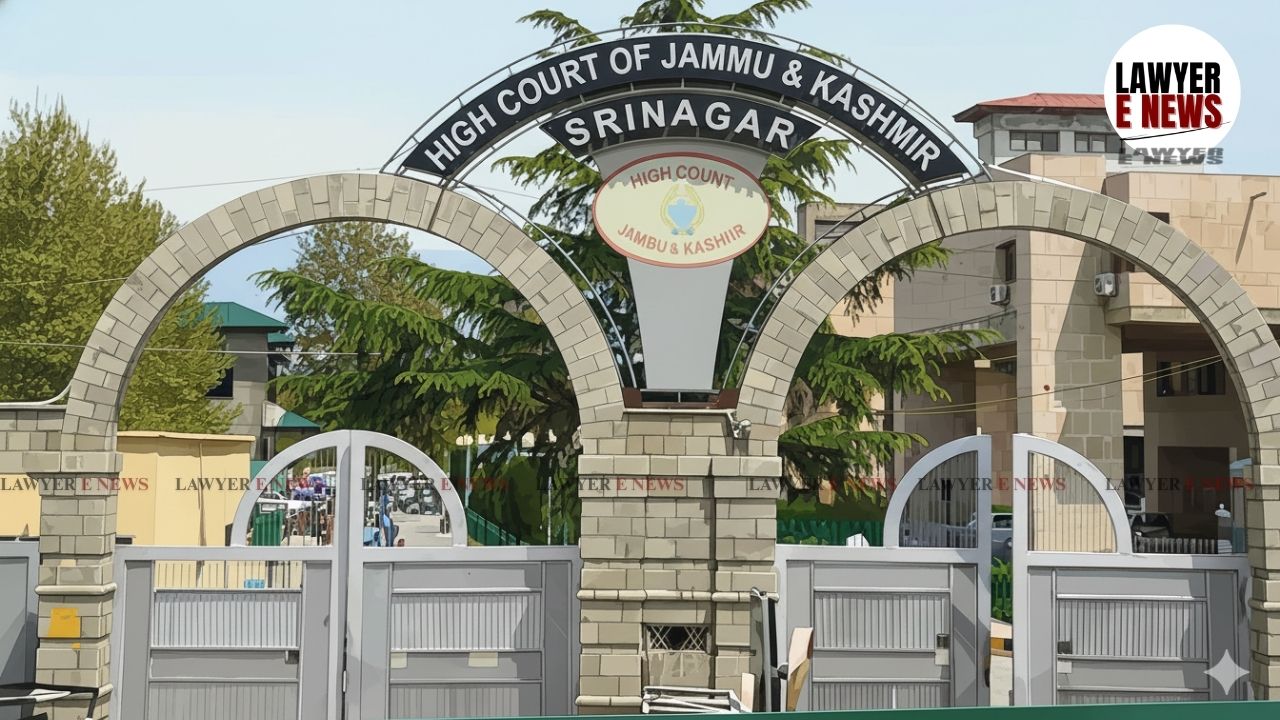
"The Court also observed that reasons are soul of orders... a judgment without reasons causes prejudice to the person against whom it is pronounced, as the litigant is unable to know the ground which weighed with the Court in rejecting his claim." High Court of Jammu & Kashmir and Ladakh, in a significant ruling, held that a Magistrate cannot reject a police closure report and order further investigation in a cryptic manner without assigning specific legal reasons.
A bench of Justice M A Chowdhary observed that the judicial exercise of rejecting a Final Closure Report requires a detailed discussion of the evidence collected to determine if an offence is made out or if the investigation was conducted unfairly.
The case originated from a dispute between relatives over a partitioned boundary of land, leading to an FIR under Sections 452, 323, 427, 506, and 34 of the IPC. Following an investigation, the police filed a Final Closure Report asserting that no offence was made out. However, the complainant filed a protest petition alleging that the Investigating Officer had changed witness statements due to the influence of a senior police officer related to the petitioners. The learned Special Mobile Magistrate (Sub Judge), Poonch, accepted the protest petition and directed further investigation without detailing any lacunae in the police report.
The primary question before the Court was whether a Magistrate can reject a police closure report and order further investigation without assigning any cogent reasons or analyzing the evidence on record. The Court was also called upon to determine if a "cryptic" order passed on a protest petition is sustainable under the inherent jurisdiction of the High Court.
Magistrates Obligated To Pass Speaking Orders While Rejecting Closure Reports
The Court observed that while a Magistrate has the power to reject a closure report, such an order must not be passed in a cryptic manner. The bench emphasized that the Magistrate is under a legal obligation to discuss the evidence already collected by the police and assign specific reasons as to why the report was not considered legal or satisfactory.
The Court noted that the learned Magistrate in the present case failed to point out any infirmity in the investigation or explain how the closure report was deficient. Justice Chowdhary remarked that the court below had not taken the "pains" to look into the evidence collected or assign any reasons for its rejection, which resulted in grave prejudice to the petitioners.
"Reasons are soul of orders"
Incumbency On Court To Verify Allegations Of Tampering With Statements
Dealing with the complainant's allegation that the Investigating Officer (I.O.) had changed witness statements under external influence, the High Court held that the Magistrate should have adopted a more rigorous approach. Instead of accepting bald assertions, the Magistrate ought to have summoned the witnesses whose statements were allegedly tampered with.
The Court observed that it was incumbent upon the learned Magistrate to confront the witnesses with their recorded statements to satisfy judicial conscience regarding whether the I.O. had indeed recorded their depositions improperly. Failure to do so before ordering further investigation rendered the Magistrate's decision unsustainable.
Recording Of Reasons Essential For The Dispensation Of Justice
Relying on the Supreme Court's precedent in Assistant Commissioner Vs. M/s Shukla and Brothers (2010), the High Court reiterated that the recording of reasons is an essential feature of the dispensation of justice. A litigant who approaches the court is entitled to know the grounds for the grant or rejection of their prayer to facilitate further legal challenges.
The bench held that a judgment without reasons causes significant impediments for a litigant in taking appropriate grounds before a higher court. Since the impugned order lacked any justification or analysis of the factual and legal aspects involved, it was deemed to be an abuse of the process of law.
Order Without Reasons Is Unsuitable and Liable To Be Set Aside
The Court expressed "great regret" that the impugned order had been passed without any reason whatsoever. It held that an order allowing a protest petition and directing further investigation must be supported by justified reasons to be legally valid.
The High Court allowed the petition and set aside the order passed by the Special Mobile Magistrate, Poonch. The matter has been remanded back to the Magistrate to pass a fresh order in accordance with the law after providing an opportunity of hearing to all parties involved.
Date of Decision: 03 July 2026