Monetary Claims in Matrimonial Disputes Cannot Survive Without Evidence: Kerala High Court Rejects ₹1.24 Crore Claim for Lack of Proof Oral Partition Can Defeat Coparcenary Claims, But Not Statutory Succession: Madras High Court Draws Sharp Line Between Section 6 And Section 8 Substantial Compliance with Section 83 Is Sufficient—Election Petition Not to Be Dismissed on Hypertechnical Grounds: Orissa High Court Oral Family Arrangement Can’t Be Rewritten By Daughters, But Father’s Share Still Opens To Succession: Madras High Court Rebalances Coparcenary Rights Section 173(8) of CrPC | Power to Order Further Investigation Exists—But Not to Dictate How It Should Be Done: Rajasthan High Court Constitution Does Not Envisage a Choice Between Environmental Protection and Rule of Law: Supreme Court Lays Down Due Process Framework for Eviction from Assam Reserved Forests Coercion Is Not Always Physical — Within Families, Subservience To Elder's Authority May Constitute Undue Influence: Supreme Court Order 7 Rule 11 CPC | Plaint Alleging Fraud in Family Partition Cannot be Rejected at Threshold; ‘Conciliation Award’ Requires Strict Statutory Compliance: Supreme Court Execution Court Cannot Decide Validity of Partition Deed:  Supreme Court Clarifies Jurisdictional Divide Between Civil and Execution Courts Constructive Res Judicata Cannot Defeat Explicit Liberty to Sue: Supreme Court Upholds Right to Challenge Family Partition Deed Despite Earlier Proceedings Photocopy Is Not Proof – PoA Must Be Proven Before Property Can Be Sold: Supreme Court Holds Sale Deeds Void for Want of Valid Power of Attorney Serious Charges Alone Cannot Justify Indefinite Custody: Supreme Court Grants Bail in Pune Crash Conspiracy Case Final Decree in Partition Suit Must Be Fully Stamped to Be Executable: Calcutta High Court Grants Liberty to Decree Holder to Cure Defect Issuance of Cheque by Accused Voluntarily on Behalf of Brother Attracts Liability Under Section 138 NI Act: Delhi High Court Section 23 Protects Trust, Not Technicalities: Karnataka High Court Annuls Gift by 84-Year-Old Father Misquoting IPC Sections Doesn’t Vitiate Chargesheet: Kerala High Court Section 187(2) BNSS | Absence of Accused While Granting Extension to File Challan Vitiates Order: Punjab & Haryana High Court Grants Default Bail in NDPS Case" Reports Prepared During Criminal Proceedings Not Per Se Admissible In Consumer Proceedings Unless Duly Proved In Accordance Consumer Protection Act: NCDRC Declaration of Account as Fraud Without Supplying Basis of Allegation Violates Audi Alteram Partem: Calcutta High Court Quashes Article 22(2) | Detention Without Magistrate’s Authority Beyond 24 Hours Is Constitutional Breach: Delhi High Court Grants Bail in MCOCA Case Service Tax on Individual Advocate? Not When Notifications Say ‘Nil’: Bombay High Court Quashes Demand and Bank Lien Plea That Property Belongs Exclusively To One Spouse Despite Joint Title Is Barred Under Section 4 Benami Transactions Act: Madras High Court

Madras High Court Quashes Candidature Rejection, Upholds Right to Protest as Fundamental Right

07 May 2024 8:19 AM

By: Admin


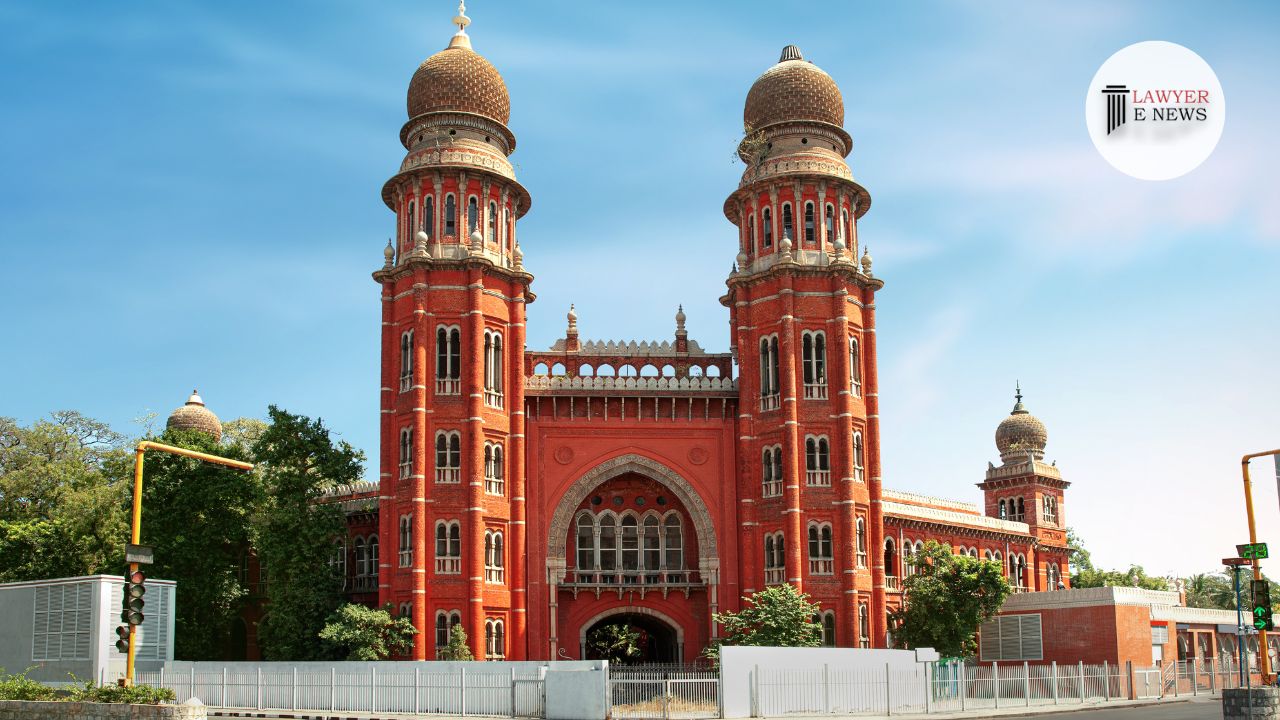
In a significant legal development, the Madras High Court, in a bench led by the Honourable Mrs. Justice L. Victoria Gowri, quashed the rejection of a petitioner’s candidature for the post of Grade II Police Constable. The judgment, delivered on August 1, 2023, upholds the petitioner’s right to protest as a fundamental right and emphasizes an employer’s discretion in considering antecedents while making appointments.

The case centered around the petitioner’s alleged involvement in a criminal case related to a protest organized against the NEET examination. The petitioner, who participated in the protest as a student, faced criminal charges under Sections 143, 188, 353, 295, and 297 of the Indian Penal Code. However, the High Court had previously quashed the case, asserting that the protest did not involve violent activities.

Justice L. Victoria Gowri noted, “The right to protest for a common cause is a fundamental right which is available to each and every citizen of this Country.” The Court’s decision was influenced by a precedent set by the case of Sathish Chandra Yadav Vs. Union of India, where it was highlighted that employers possess the authority to consider antecedents even if a candidate truthfully discloses a concluded criminal case.

The Court clarified that acquittal in a criminal case does not automatically guarantee a candidate’s appointment and that the nature of the job must also be taken into account. The bench observed that the petitioner’s participation in the protest should not lead to a criminal implication affecting his job application.

Quashing the impugned order, the Court directed the authorities to issue an appointment order to the petitioner, allowing him to proceed for training as a Grade II Police Constable. The judgment reaffirms the significance of safeguarding the right to protest while recognizing an employer’s prerogative to consider antecedents in appointment decisions.

The case was represented by Mr. R. Karunanidhi for the petitioner and Mr. P. Veera Kathiravan, Additional Advocate General, assisted by Mr. N. Muthuvijayan for the respondents.

Date of Decision: 01.08.2023

Arunkanth  VS Tamil Nadu Uniformed Services

Latest Legal News