-
by kapil
17 October 2026 6:26 AM







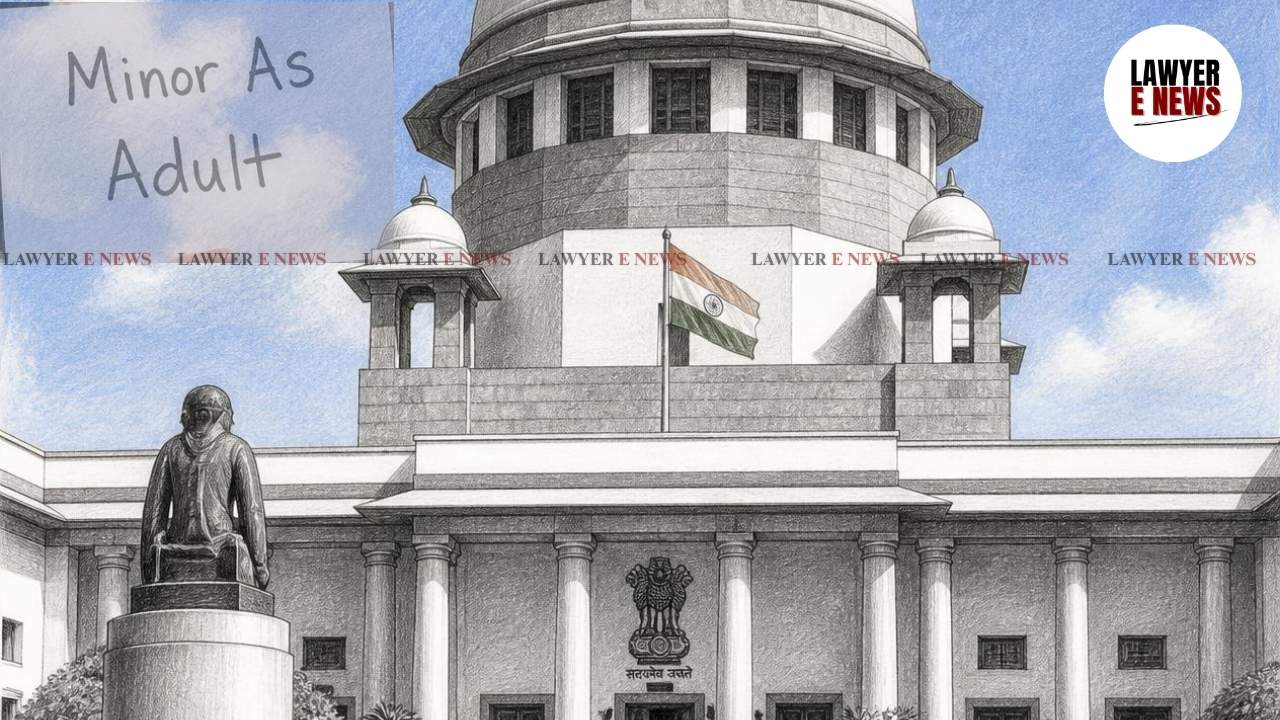
"The doctrine of adverse possession does not reward longevity of occupation alone. It protects only such possession as is accompanied by a conscious and hostile assertion of ownership in denial of the rights of the true owner." Supreme Court, in a judgment delivered on September 10, 2026, has clarified that long and continuous possession of property, without a clear, hostile assertion of ownership, is insufficient to constitute adverse possession.
A bench comprising Justice Prashant Kumar Mishra and Justice Shree Chandrashekhar held that the burden of proving the hostile character of possession remains squarely on the party asserting it.
Distinction Between Possession and Title
The Court emphasized that while revenue records like Jamabandis and Khasra Girdawaris are relevant for determining the nature of possession, they do not create or extinguish title. The bench noted that these entries are primarily maintained for fiscal purposes and cannot, by themselves, constitute conclusive evidence of ownership. Ownership must be established through substantive evidence of title.
No Automatic Maturity Into Adverse Possession
The bench observed that where possession is referable to a permissive origin, such as an arrangement for religious or charitable purposes, it does not automatically mature into adverse possession over time. The Court reiterated that the doctrine of adverse possession requires clear and unequivocal evidence of a hostile act that denies the title of the true owner to the knowledge of the latter.
Strict Requirement of Hostile Animus
The Court held that the absence of pleadings regarding the commencement of hostile possession is not a mere technical defect. Unless the specific point in time at which the possession became hostile is identified and proven, the statutory period of limitation under the Limitation Act, 1963, does not begin to run. Long occupation without the element of 'hostile animus' will necessarily fail to ripen into ownership.
"Unless the element of hostility is affirmatively established, the plea [of adverse possession] must necessarily fail."
Errors in Applying Legal Principles
The Supreme Court found that the lower courts had erred by conflating long, uninterrupted possession with adverse possession. By treating the revenue entry "gair marusi bila lagan bawaja Dharam Arth" as conclusive proof, the courts below had ignored the requirement of proving an overt act of hostility. The High Court was therefore justified in its interference under Section 100 of the CPC, as the concurrent findings were vitiated by an erroneous application of settled legal principles.
Rejection of Contradictory Pleas
The bench also observed that the appellants had simultaneously asserted title based on both dedication and adverse possession. The Court noted that these doctrines proceed on fundamentally different legal premises, as adverse possession assumes that title initially vested in another person. The failure of the appellants to reconcile these distinct pleas further rendered their case legally inconsistent.
Final Directions and Outcome
Ultimately, the Supreme Court affirmed the High Court’s judgment, which had set aside the lower court decrees. The Court clarified that while the revenue entries in question were an important piece of evidence, their legal effect must be determined in conjunction with surrounding circumstances. Finding no merit in the appeal, the Court dismissed the matter, maintaining that the appellants had failed to establish a superior title to the suit property.
Date of Decision: 10 September 2026