-
by sayum
19 August 2026 5:31 AM







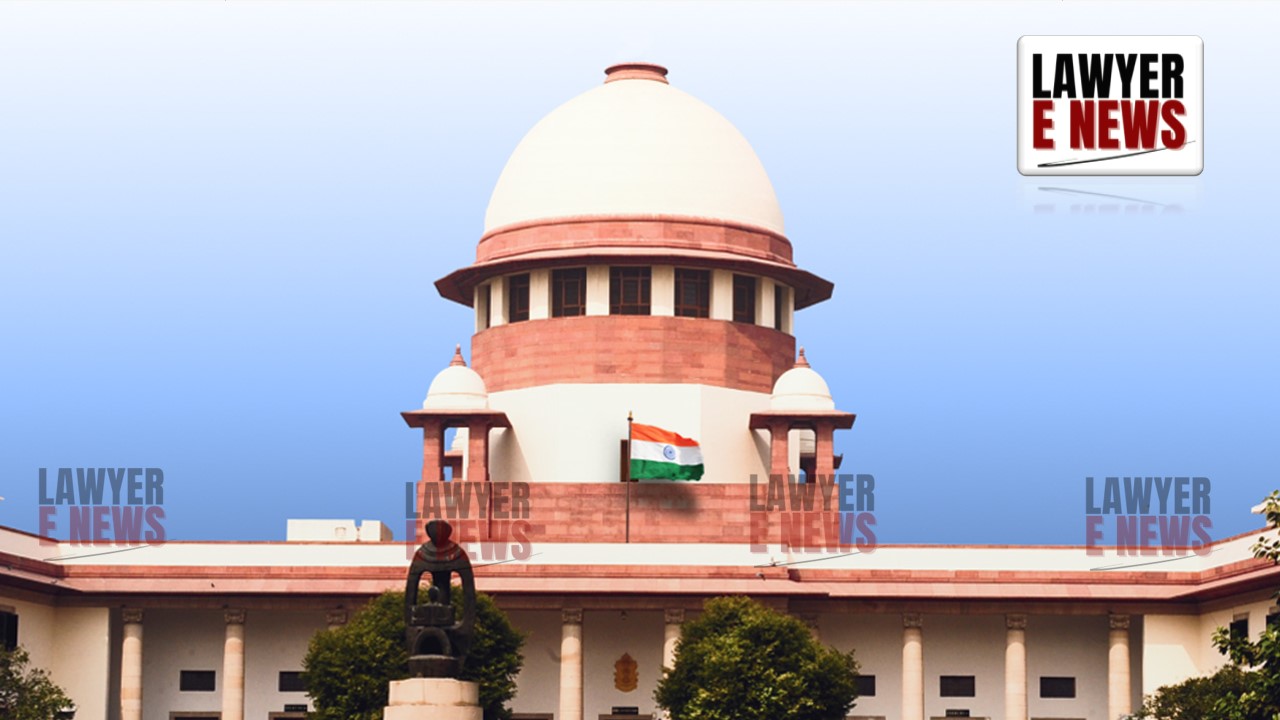
"The maxim 'Nemo debet bis vexari' prevents a litigant who has had an opportunity of proving a fact in support of his claim or defence and chosen not to rely on it from afterwards putting it before another tribunal." Supreme Court held that a party who allows independent suits for the cancellation of sale deeds to be dismissed for default is precluded from challenging those same deeds during execution proceedings.
A bench comprising Justice Dipankar Datta and Justice Augustine George Masih observed that while a dismissal for default does not technically operate as res judicata under Section 11 of the Code of Civil Procedure (CPC), permitting a litigant to reagitate the same issue collaterally would amount to an abuse of the process of the court. The bench emphasized that the judicial process cannot be used to revive claims that were consciously abandoned in earlier proceedings.
The appellants had obtained a decree for specific performance regarding an immovable property in Hyderabad and subsequently initiated execution proceedings to obtain possession. However, the respondents, who were third parties to the original suit, resisted the execution by filing an objection petition under Order XXI Rules 99 to 101 of the CPC, asserting independent title through registered sale deeds executed in 1990. The crux of the dispute lay in the fact that the appellants had previously instituted two separate suits to cancel these very sale deeds but had allowed them to be dismissed for default and failed to pursue their restoration.
The primary legal question before the court was whether the dismissal of the appellants' earlier suits for default barred them from contesting the validity of the respondents' title during the execution of the specific performance decree. The court was also called upon to determine if such conduct attracts the principles of public policy against relitigation and whether the executing court is bound to re-examine issues that the decree-holder had previously failed to prosecute.
Addressing the technical plea of res judicata, the Court clarified that Section 11 of the CPC requires a matter to have been "heard and finally decided" on its merits to operate as a bar. Since the appellants' earlier suits for the cancellation of the sale deeds were dismissed for default rather than on merits, the bench noted that the strict statutory requirements of res judicata were not satisfied. However, the Court maintained that this does not grant a litigant an unfettered right to reopen the same dispute in a different forum. "Dismissal of a suit for default, not being a decision on merits, cannot ordinarily be regarded as a final adjudication so as to attract the strict application of Section 11, CPC."
The Court placed heavy reliance on the wider legal principle of nemo debet bis vexari, which protects parties from being troubled twice for the same cause of action. The bench observed that the appellants had a full opportunity to prove the invalidity of the respondents' sale deeds in the 1990 suits but chose to abandon those proceedings. By allowing the dismissal and the subsequent restoration applications to attain finality, the appellants lost the right to raise the same facts before the executing court. "The maxim 'Nemo debet bis vexari' prevents a litigant who has had an opportunity of proving a fact in support of his claim or defence and chosen not to rely on it from afterwards putting it before another tribunal."
The bench further characterized the appellants' conduct as an abuse of the process of the court, noting that they had "played fast and loose" with the judicial system. The Court found it significant that the appellants were fully aware of the respondents' claims and the existence of the registered sale deeds, yet they failed to implead the respondents in the specific performance suit. Instead, they attempted to secure a decree behind the backs of the title-holders and then sought to use the execution process to bypass the consequences of their failed cancellation suits. "It is an abuse of the process of the court and contrary to justice and public policy for a party to relitigate the same issue which has already been tried and decided earlier against him."
In its doctrinal analysis, the Court drew a parallel with the public policy underlying Order XXIII Rule 1 of the CPC, which precludes a plaintiff from filing a fresh suit on the same cause of action after abandoning an earlier one without court permission. Justice Datta noted that even if the bar under Order XXIII or Section 11 is not strictly applicable to execution proceedings, the underlying principle of finality—interest reipublicae ut sit finis litium—must prevail. The bench held that the appellants could not be allowed to reap the benefits of a decree against third parties whose title they had already failed to challenge effectively in direct proceedings. "The principle underlying Rule 1 of Order XXIII of the Code is that when a plaintiff once institutes a suit in a court and thereby avails of a remedy given to him under law, he cannot be permitted to institute a fresh suit in respect of the same subject-matter again after abandoning the earlier suit."
Finally, the Court observed that prior to the 2018 amendment to the Specific Relief Act, the grant of specific performance was a matter of equitable discretion. The bench concluded that the appellants’ lack of bona fides and their tactical non-prosecution of the cancellation suits disentitled them to any equitable relief in the execution stage. The Supreme Court upheld the High Court’s decision to dismiss the appellants' challenge, thereby protecting the respondents' possession. "In the exercise of equitable jurisdiction, this Court cannot ignore such conduct where a party plays fast and loose with the court."
The appeal was dismissed, with the Supreme Court affirming that while the High Court's reasoning was brief, the ultimate conclusion was correct due to the appellants' conduct and the principles of judicial finality.
Date of Decision: 25 March 2026