-
by sayum
25 August 2026 6:16 AM







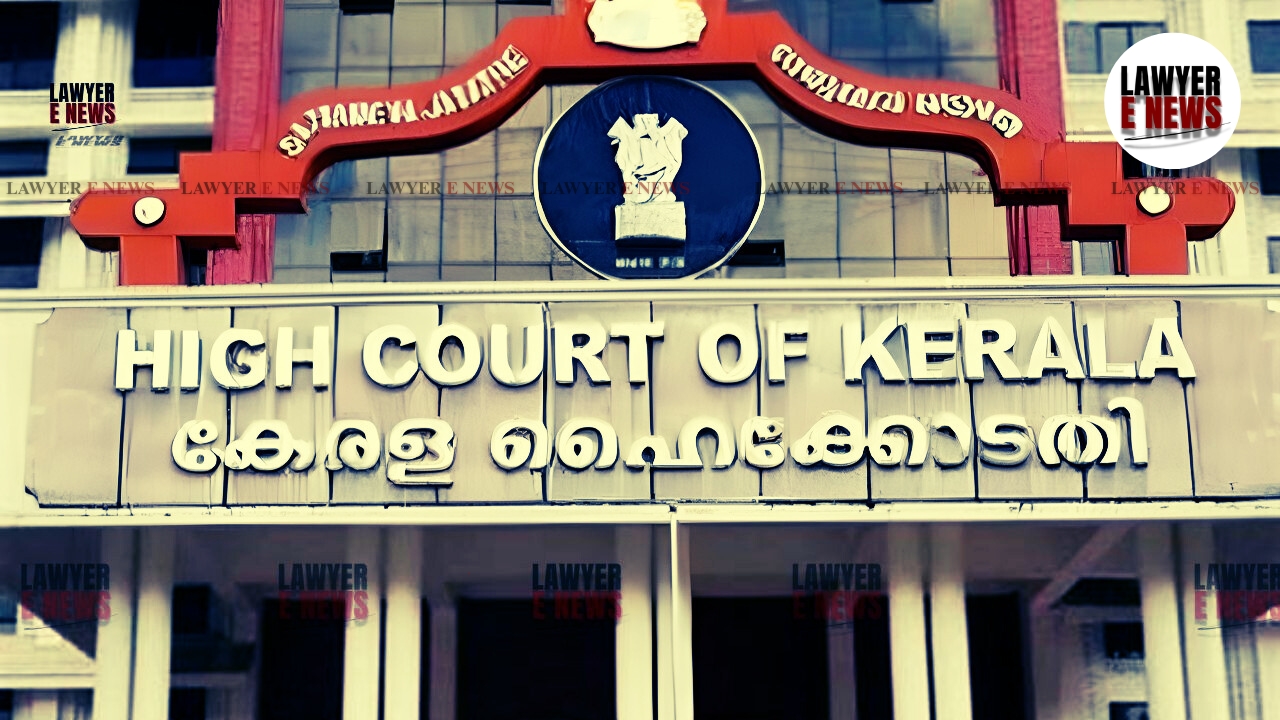
“No Expectation of Privacy, No Prima Facie Case – Criminal Prosecution Cannot Continue Without Foundational Facts”, In a decisive ruling that reaffirms the boundaries of voyeurism law and the scope of inherent judicial powers, the Kerala High Court quashed criminal proceedings against three individuals accused of voyeurism under Section 354C of the Indian Penal Code, holding that the act of photographing a woman while she was laying clothes for drying does not constitute a ‘private act’ under the meaning of the law.
Justice G. Girish held that the ingredients of voyeurism were not made out from the complaint, protest statement, or witness depositions. The Court observed that the prosecution was initiated without sufficient legal basis, and continuing the case would amount to an abuse of process.
“It has to be stated that the statement given by the complainant before the learned Magistrate was hopelessly insufficient to show that the petitioners committed the offence envisaged under Section 354C IPC,” the Court concluded.
“Voyeurism Requires Expectation of Privacy – Not Every Photograph Is an Offence”
The allegation, as per the complaint filed by Rema Devi, was that Accused Nos. 1 to 3, along with a press photographer, took her photographs while she was laying clothes for drying after bathing, outside her house on 09.09.2015. She contended this was a violation of her privacy and constituted voyeurism under Section 354C IPC and Section 66E of the Information Technology Act.
However, the Court found no allegation that the complainant’s private parts were exposed or she was in a state of undress, nor any assertion that she was engaged in a “private act” within the meaning of Explanation I to Section 354C IPC.
“There is absolutely no indication in the statement of the complainant that she had been engaging in a private act... or that she was not properly dressed,” the Court noted.
The Court clarified that a private act must occur in circumstances where the victim reasonably expects privacy, such as nudity, use of a lavatory, or sexual acts—none of which were alleged in this case.
“Even the Complainant Admits She Didn’t Know What Photo Was Taken”
Scrutinising the sworn statement given by the complainant before the Magistrate, the Court observed:
“She stated that the first petitioner flashed light upon her face, and that she saw the other accused and a photographer there. She further stated she did not enquire for what purpose the photographer came there, nor did she know which photo he had taken.”
The Court concluded that no direct accusation of photographing her private parts or acts was made, and even if a photograph had been taken, the content and context did not suggest voyeurism or violation of Section 66E IT Act.
“Contradictions and Shifting Versions Undermine Credibility of Complaint”
Justice Girish took note of serious inconsistencies between the initial complaint, the police investigation, and the protest complaint filed later.
Twice, the Poovar Police investigated the case and filed refer reports stating that the complaint was false, possibly motivated by enmity over a building dispute, as the accused had earlier objected to an unauthorized lodge construction by the complainant.
Despite these findings, the complainant filed a protest complaint, upon which the Magistrate took cognizance.
“By the time she filed the protest complaint, a radical change was made... stating that all the accused were present at the time of the photograph. Such a contradiction fatally affects the credibility of the allegations,” the Court held.
Even witness statements were inconsistent with the complainant’s own account—one spoke of ‘bathing dress’, while another claimed to see a drenched woman running into the house. Neither matched the complainant’s version.
“Since even the complainant had not stated such facts, the witness versions are unreliable,” the Court observed.
“No Case Under Section 66E IT Act Without Image of ‘Private Area’”
As for the charge under Section 66E of the Information Technology Act, the Court reminded that the section applies only when there is unauthorized capture, transmission or publication of images of private areas, specifically naked or undergarment-clad genitals, pubic area, buttocks or female breasts.
“The statement given by the complainant does not contain any indication that the petitioners had taken a photograph of her private area,” the Court held.
High Court: Prosecution Without Prima Facie Case Is Abuse of Process
Justice Girish reiterated the High Court’s inherent power under Section 482 Cr.P.C to quash proceedings where continuance would amount to harassment or serve no purpose of justice.
“The petitioners are compelled to face criminal prosecution in the absence of sufficient grounds... the prayer of the petitioners to terminate the proceedings deserves to be allowed.”
Criminal Proceedings Quashed – Petition Allowed in Full
Allowing the petition, the Court ruled:
“The proceedings against the petitioners/accused Nos.1 to 3 in C.C No.555/2018 on the files of the Judicial First Class Magistrate Court-II, Neyyattinkara, are hereby quashed.”
This judgment affirms the importance of judicial scrutiny in cases invoking serious offences like voyeurism, particularly where allegations are vague, contradictory, or unsupported by foundational facts. It also reinforces that privacy-related offences require strict adherence to statutory definitions and evidentiary thresholds.
Date of Decision: 02 February 2026