
-
by sayum
26 August 2026 1:49 PM







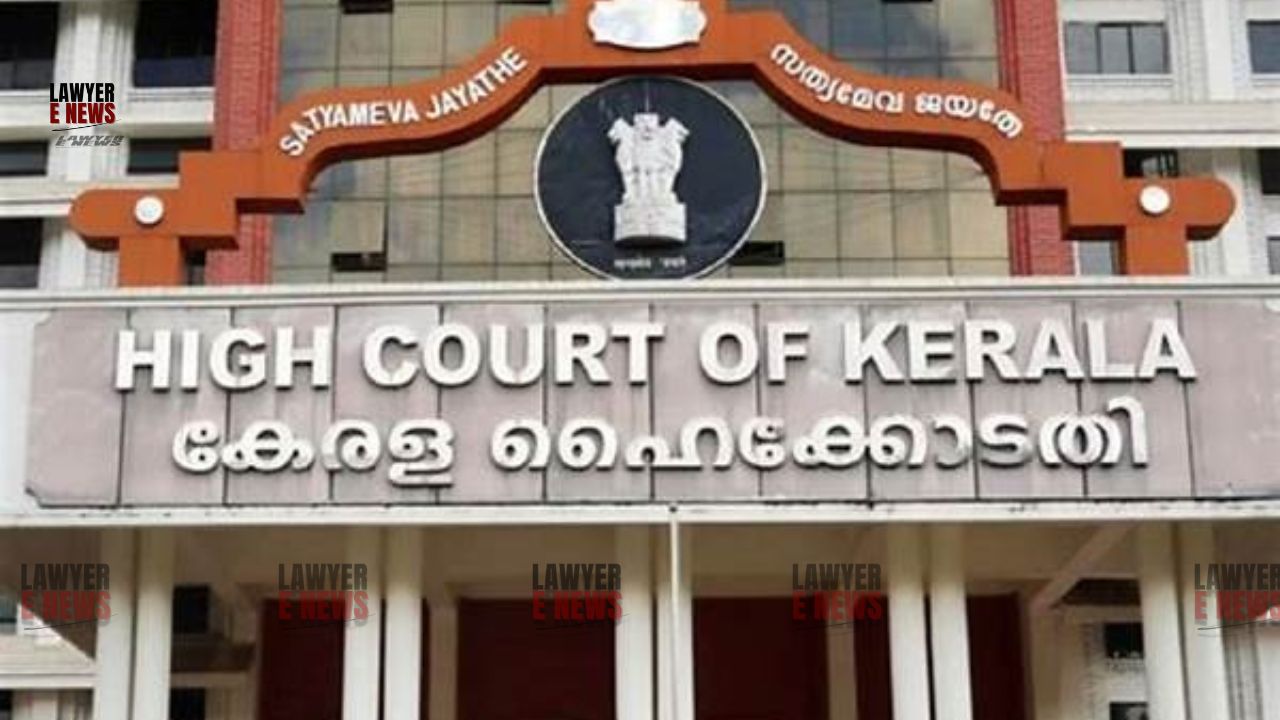
“Last Seen Together Is A Weak Piece Of Evidence”, Kerala High Court recently set aside the conviction of a man accused of murdering a 4½-year-old child, holding that the prosecution failed to establish a complete chain of circumstantial evidence and that the sole testimony supporting the “last seen together” theory was unreliable.
“The failure of PW2 to disclose such a material fact at the earliest point of time casts a serious doubt on his conduct and renders his testimony suspicious,” the Court observed while disbelieving the key witness relied upon by the prosecution.
Division Bench comprising Dr. Justice A.K. Jayasankaran Nambiar and Justice Jobin Sebastian allowed the criminal appeal and acquitted the accused who had earlier been convicted by the Additional Sessions Court, Kollam for offences under Sections 302 and 201 of the Indian Penal Code.
The High Court held that the prosecution failed to prove an unbroken chain of circumstances pointing exclusively to the guilt of the accused, entitling him to the benefit of doubt.
Background Of The Case
The prosecution case related to the death of Shamsudeen, a 4½-year-old boy, who went missing on 07 January 2006 from Karunagappally in Kollam district.
Initially, a case was registered for man missing under Section 57 of the Kerala Police Act after the child’s cousin lodged a complaint. Two days later, the body of the child was discovered in a waterlogged marshy area near the locality.
Following investigation by local police and later by the CBCID, the accused Noushar was charged with offences under Sections 302 (murder), 377 (unnatural offence) and 201 (causing disappearance of evidence) IPC.
After trial, the Sessions Court acquitted him of the charge under Section 377 IPC but convicted him under Sections 302 and 201 IPC, sentencing him to life imprisonment along with fines.
Challenging this conviction, the accused filed the present criminal appeal before the High Court.
Case Based Entirely On Circumstantial Evidence
The High Court noted at the outset that the case rested entirely on circumstantial evidence, with no eyewitness to the alleged crime.
Reiterating the settled principles laid down by the Supreme Court in Sharad Birdhichand Sarda v. State of Maharashtra, the Court observed that in cases based on circumstantial evidence:
“The circumstances so proved must form a complete chain that unerringly points to the guilt of the accused and must exclude every possible hypothesis consistent with innocence.”
Unless such a chain is established, conviction cannot be sustained.
Doubts Over “Last Seen Together” Evidence
The principal circumstance relied upon by the prosecution was the claim that the deceased child was last seen entering the verandah of the accused’s house shortly before he went missing.
This circumstance was based solely on the testimony of PW2, a neighbour.
However, the High Court found serious inconsistencies in the conduct and testimony of this witness.
The Court noted that although PW2 allegedly saw the child entering the accused’s house, he did not disclose this crucial information to anyone—not to the child’s family members, neighbours, or even to his own wife (PW3)—despite actively participating in the search for the missing child.
“If PW2 had in fact seen the child entering the house immediately prior to his disappearance, it is natural to expect that he would have disclosed this crucial information either to the family members or at least to his wife.”
The Court held that such silence regarding a vital fact seriously undermined the credibility of the witness.
Additionally, the Court observed that PW2 and his wife had alleged that the accused attempted to molest PW3 earlier the same day, creating a possible motive for false implication.
In these circumstances, the Court concluded that the testimony of PW2 was unsafe to rely upon without independent corroboration.
“Last Seen” Alone Cannot Sustain Conviction
Even assuming that the child was last seen in the company of the accused, the High Court emphasized that this circumstance alone cannot form the basis for conviction.
Referring to the Supreme Court decision in Kanhaiya Lal v. State of Rajasthan, the Court reiterated:
“The circumstance of last seen together does not by itself and necessarily lead to the inference that it was the accused who committed the crime. There must be something more establishing connectivity between the accused and the crime.”
The Court also relied on the recent Supreme Court judgment in Padman Bibhar v. State of Odisha (2025), which held that “last seen together” is a weak piece of evidence unless supported by other incriminating circumstances.
False Explanation By Accused Not Sufficient
The prosecution argued that the accused had left his workplace on the day of the incident citing a false reason, which indicated suspicious conduct.
However, the High Court held that mere falsity of explanation cannot be treated as proof of guilt in the absence of other incriminating evidence.
The Court observed that the accused’s false explanation about attending a function could not automatically lead to the inference that he intended to commit the alleged crime.
Alleged Motive Of Sexual Assault Not Proved
Another important weakness in the prosecution case was the failure to establish the alleged motive.
The prosecution had claimed that the accused sexually assaulted the child before killing him, and a charge under Section 377 IPC was framed.
However, the post-mortem examination and chemical analysis revealed no signs of sexual assault, and nothing incriminating was detected in the swabs and samples collected during autopsy.
The High Court therefore held that the alleged motive remained completely unproved, which further weakened the prosecution case based on circumstantial evidence.
Recovery Of Tyre And Liquor Bottles Held Inconclusive
The prosecution relied on several additional circumstances, all of which were found to be weak by the Court.
A tyre allegedly used by the child for playing was recovered from the accused’s compound more than eight months after the incident, and not pursuant to any disclosure statement under Section 27 of the Evidence Act.
The Court held that recovery from an open place in a populated locality after such a long delay carried little evidentiary value.
Similarly, the prosecution’s attempt to show that the accused had purchased liquor on the day of the incident was also rejected. The Court noted that the liquor shop salesman who identified the accused admitted that thousands of customers visited the shop daily, making such identification doubtful.
Even otherwise, the Court observed that purchase of liquor does not establish that the accused administered liquor to the child.
Forensic Evidence Failed To Link Accused
The prosecution also relied on forensic evidence showing blood stains on a dhoti allegedly worn by the accused and samples collected from his house.
However, the Forensic Science Laboratory report revealed that the origin of the blood could not be determined due to insufficient quantity.
The Court held that in the absence of proof that the blood was human or belonged to the deceased, the forensic evidence did not advance the prosecution case.
After analysing the entire evidence, the High Court concluded that the prosecution failed to establish a complete chain of circumstances connecting the accused to the crime.
“The circumstances proved are too feeble and inconclusive to form the basis of a conviction. The prosecution has failed to establish a complete and unbroken chain of circumstances leading only to the guilt of the accused.”
Accordingly, the Court allowed the appeal, set aside the conviction and sentence imposed by the Sessions Court, and ordered the immediate release of the accused if not required in any other case.
Date of Decision: 03 March 2026





