Registrar Has No Power To Cancel Registered Sale Deeds: Madras High Court Reaffirms Civil Court’s Exclusive Jurisdiction MP High Court Refuses to Quash FIR Against Principal of Sacred Heart Convent High School in Forced Conversion Case Employees Of Registered Societies Cannot Claim Article 311 Protection: Delhi High Court Clarifies Limits Of Constitutional Safeguards In Private Employment Maintenance Cannot Be Doubled Without Cogent Reasons, Wife's Education And Earning Capacity Relevant Factors: Gujarat High Court A Foreign Award Must First Be "Recognised" Before It Becomes A Decree: Bombay High Court A Registered Will Does Not Become Genuine Merely Because It Is Registered: Andhra Pradesh High Court Rejects Suspicious Testament Compensation Under Railways Act Requires Proof of Bona Fide Passenger – Mere GRP Entry and Medical Records Cannot Establish ‘Untoward Incident’: Delhi High Court Tenancy Rights Cannot Be Bequeathed By Will: Himachal Pradesh High Court Declares Mutation Based On Tenant’s Will Void Preventive Detention Cannot Be Based On Mere Apprehension of Bail: Delhi High Court Quashes PITNDPS Detention Order Probate Court Alone Has Exclusive Jurisdiction To Decide Validity Of Will – Probate Petition Cannot Be Rejected Merely Because A Civil Suit Is Pending: Allahabad High Court PwD Candidates Cannot Be Denied Appointment After Selection; Authorities Must Accommodate Them In Suitable Posts: Supreme Court Directs SSC And CAG To Appoint Candidates With Disabilities When Registered Partition Deed Exists, Plea Of Prior Oral Partition Cannot Override It:  Madras High Court Dismisses Second Appeal Municipal Bodies Cannot Demand Character Verification Of Residents: Calcutta High Court Strikes Down Surveillance Condition In Building Sanction State Cannot Exploit Contractual Workers For Perennial Work: Punjab & Haryana High Court Grants Pay Parity To PUNBUS Drivers And Conductors Police Inputs Cannot Create New Building Laws: Calcutta High Court Strikes Down Security-Based Conditions Near Nabanna 'Raising A Child As Daughter Does Not Make Her An Adopted Child': Punjab & Haryana High Court Once Leave Under Section 80(2) CPC Is Granted, Prior Notice to Government Is Not Mandatory: Orissa High Court Restores Trial Court Decree State Cannot Use Article 226 To Evade Compliance With Court Orders: Gauhati High Court Dismisses Union’s Petition With Costs ED Officers Accused Of Assault By ₹23-Crore Scam Accused – FIR Survives But Probe Shifted To CBI: Jharkhand High Court High Courts Should Not Interfere In Academic Integrity Proceedings At Preliminary Stage: Kerala High Court Power Of Attorney Holder With Personal Knowledge Can Depose In Cheque Bounce Cases: Kerala High Court Sets Aside Acquittal Agreement Cannot Dissolve Hindu Marriage, But Can Prove Mutual Separation”: J&K & Ladakh High Court Denies Maintenance

Late Payment Surcharge Claims Dismissed; Non-Meritorious Litigations Discouraged: Supreme Court

07 May 2024 8:19 AM

By: Admin


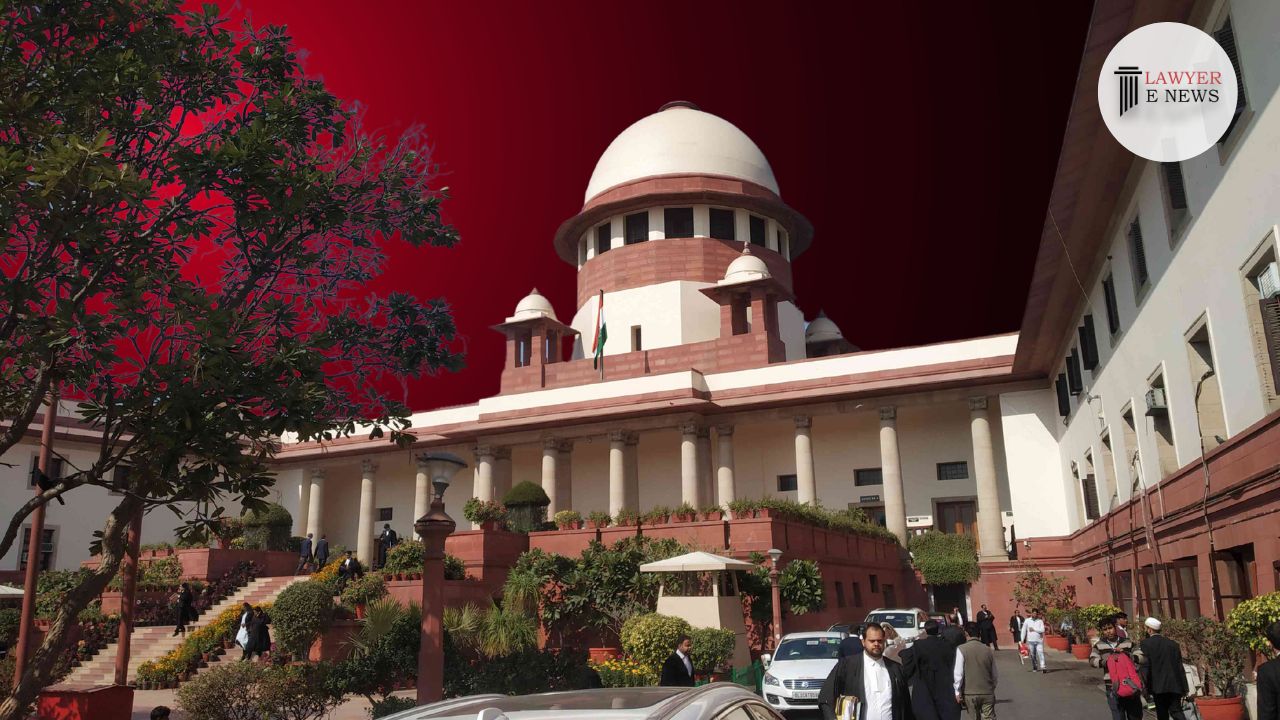
The Supreme Court of India, in a landmark judgment on March 18, 2024, dismissed the application by Adani Power Rajasthan Limited (APRL) seeking a Late Payment Surcharge (LPS) from Rajasthan Discoms under the Electricity Act, 2003. The bench comprising Justices Aniruddha Bose and Sanjay Kumar emphasized the importance of discouraging repetitive and non-meritorious litigation by imposing costs on APRL.

The judgment addressed the legal point concerning the claim of LPS by APRL from Rajasthan Discoms, as per a Power Purchase Agreement dated 28.01.2010. The Court meticulously analyzed the interpretation of Article 8.3.5 of the PPA, especially in the light of the non-payment of LPS following a change in law clause.

APRL’s claim for Rs. 1376.35 crore as LPS was grounded in the alleged shortage of domestic coal, compelling the use of costlier imported coal. The company claimed this as a ‘change in law’ situation under the PPA, warranting compensation for additional costs incurred.

The Court’s detailed assessment included a review of the specific clauses of the PPA and their application to the case. Previous findings by RERC, APTEL, and the Supreme Court were taken into account. The Court observed, “In the event of delay in payment of a Monthly Bill by the Procurers beyond its Due Date, a Late Payment Surcharge shall be payable by such Procurers to the Seller at the rate of two percent (2%) in excess of the applicable SBAR per annum...” However, it was concluded that the LPS issue had been satisfactorily resolved in the previous judgment, and there were no grounds for a new review or reinterpretation.

The application filed by APRL seeking LPS was dismissed by the Supreme Court. The Court imposed costs of Rs. 50,000 on APRL to be remitted to the Supreme Court Legal Aid Committee, underlining the intent to deter similar non-meritorious litigations.

Date of Decision: March 18, 2024

Jaipur Vidyut Vitran Nigam Ltd. & Ors. Vs. Adani Power Rajasthan Ltd. & Anr.

Latest Legal News