At the Stage of Framing Charge, Presumption Suffices; Suicide Note and Grave Suspicion Enough: Allahabad High Court Refuses to Quash Charge Under Section 306 IPC 173 CrPC | Framing of Charge Marks End of Investigation—Complainant Cannot Reopen Probe Merely by Citing Police Lapses: Bombay High Court Recovery Alone Cannot Prove Guilt: Andhra Pradesh High Court Acquits Accused in Murder Case Photos, Videos Must Go: Supreme Court Binds Warring Spouses to Clean Up Social Media in Matrimonial Settlement Standard for Bail Under Section 319 CrPC Is Higher Than Framing of Charge, But Short of Conviction: Supreme Court Grants Bail to Accused Summoned Mid-Trial State Cannot Arbitrarily Deny Subsidies to 'New Industrial Units' by Retrospectively Applying Expansion Caps: Supreme Court Companies Act | Offence Under Section 448 Is Covered Under Section 447: Supreme Court Bars Private Complaint Without SFIO Nod “See-To-It” Obligation Is Not A Guarantee Under Indian Law: Supreme Court Clarifies Scope Of Section 126 ICA In IBC Disputes Mere Employment of Litigant’s Relatives in Police or Court Doesn't Prove Judicial Bias: Supreme Court Sets Aside Transfer of Criminal Case Reserved Candidate Availing Relaxed Standards in Prelims Cannot Migrate to General Quota for Cadre Allocation: Supreme Court Mere Vesting Does Not Mean Possession: Supreme Court Rules ULC Proceedings Abated For Failure To Serve Mandatory Notice To Actual Occupants Contempt of Courts Act | Natural Justice in Administrative Action: Supreme Court Directs West Bengal Govt to Re-Adjudicate Teachers' Arrears Claims Live-In Relationship with Married Man Not a ‘Relationship in the Nature of Marriage’ Under Domestic Violence Act: Bombay High Court Applies Supreme Court Guidelines Income Tax Act | Substitution of Shares held as Stock-in-Trade upon Amalgamation constitutes Taxable Business Income if Commercially Realisable: Supreme Court Judges Cannot Enact Their Own Protocols During Bail Hearings: Supreme Court Sets Aside Sweeping Age Determination Directions In POCSO If There Is Knowledge That Injury Is Likely To Cause Death, But No Intention Falls Under Section 304 Part II:  Supreme Court High Court Ignored POCSO’s Statutory Rigour, Committed Grave Error in Granting Bail: Supreme Court Cancels Bail of Gang-Rape Accused Section 22 HSA | Co-Heirs Have Statutory Right of Pre-Emption Even in Urban Property: Punjab & Haryana High Court 138 NI Act | Issuance of Separate Cheques Gives Rise to Independent Causes of Action, Even if Drawn for Same Underlying Transaction: Supreme Court

Land Dispute Case Dismissed as Plaintiffs' Claims Held Barred by Law Filed After 21 Years

07 May 2024 8:19 AM

By: Admin


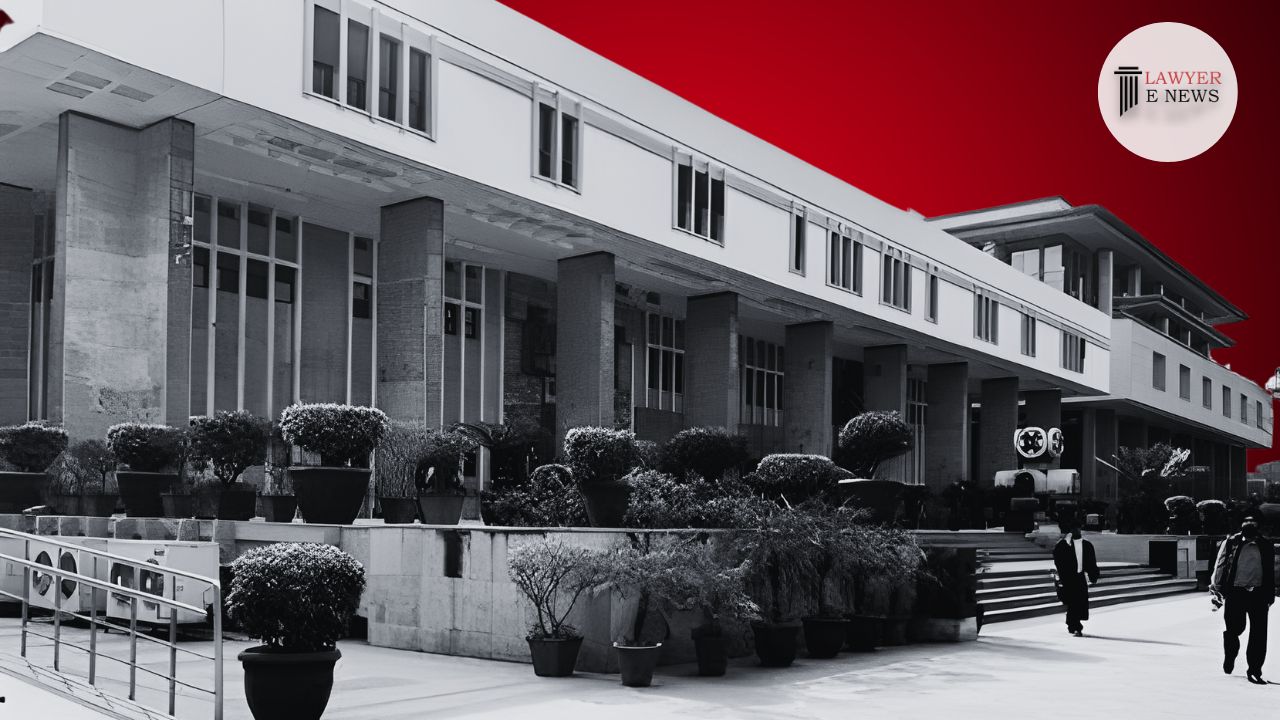
In a recent judgment, the Delhi High Court dismissed a land dispute case, ruling that the plaintiffs' claims were barred by law. The judgment, delivered by Justice Anup Jairam Bhambhani on July 6, 2023, concluded that the plaintiffs failed to establish a valid cause of action and that the reliefs sought in the plaint were clearly prohibited by law.

The court emphasized that the subject property, purchased by defendant No.2 through a registered sale deed in 1992, belonged to her as the sole and absolute owner. The plaintiffs, who alleged that the funds of their partnership firm were used for the purchase, could not substantiate their claim with sufficient evidence. The court noted that there was no mention in the plaint of when or how the partnership firm's funds were utilized for the property acquisition.

Moreover, the court addressed the plaintiffs' contention that the defendant No.2 fell within an exception to the definition of a benami transaction. However, the court found no allegation or evidence to support the claim that defendant No.2 was a partner of the firm. The court clarified that being the wife of a partner does not automatically confer partnership status, as partnership arises from a contract and not the status of the parties involved.

Regarding the plaintiffs' argument of an oral family settlement subsequently reduced to writing, the court highlighted that there was no averment in the plaint establishing defendant No.2's participation in the oral settlement or her signature on the settlement deed. The court emphasized the importance of recognizing a woman's autonomous status and her absolute ownership rights under the law.

The court further held that the plaintiffs' suit, filed in 2018, was time-barred under Article 59 of the Limitation Act, as it was filed more than 21 years after the execution of the sale deed in 1992. The court observed that the plaintiffs failed to provide any basis for extending or excluding the limitation period.

Justice Anup Jairam Bhambhani, while allowing the application under Order VII Rule 11 of the Civil Procedure Code, rejected the plaint and disposed of the suit. The judgment underscored that the plaintiffs' claims lacked merit and were unequivocally barred by law.

Date of Decision: July 6, 2023

SHRI CHARANJEET SINGH & ANR. vs SHRI HARVINDER SINGH & ANR.

Latest Legal News