
-
by sayum
26 August 2026 1:49 PM







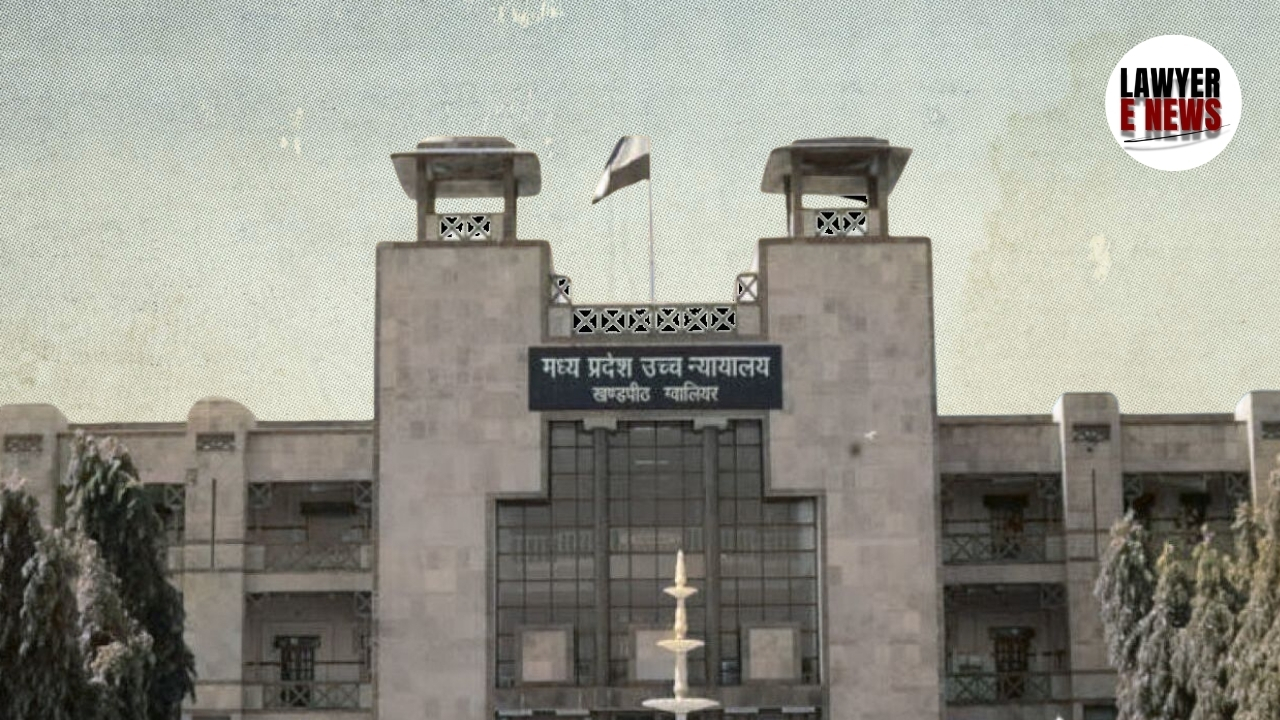
“To convict for abetment of suicide, there must be a clear act of instigation or intentional aid — quarrels or family disputes are not sufficient to constitute abetment” – In a detailed ruling that reiterates the stringent threshold for proving abetment of suicide, the Madhya Pradesh High Court at Jabalpur has held that mere existence of enmity, land rivalry or allegations of harassment cannot, by themselves, establish the offence under Section 306 of the Indian Penal Code unless there is direct evidence of instigation or intentional aid.
Justice Rajendra Kumar Vani observed that the link between the alleged harassment and the act of suicide must be immediate, direct and intentional, failing which the charge of abetment collapses.
“To sustain conviction under Section 306 IPC, there must be a positive act of instigation or intentional aid by the accused… mere quarrels or disputes are not sufficient,” the Court declared, while affirming the acquittal of five accused in the case.
“Prosecution Failed to Prove Mens Rea — Deceased Was Hypersensitive to Routine Discord”
The case arose from the suicide of Arvind Yadav, who was found hanging from a tree three days after a panchayat meeting over a land dispute between his family and the respondents. His father, Devidin Yadav, alleged that the accused had persistently harassed his son, driving him to suicide.
Rejecting these allegations, the Court noted that there was no complaint, FIR, or evidence of direct provocation preceding the death. The post-mortem report revealed no external injuries apart from a ligature mark, negating any claim of assault.
Justice Vani further observed that independent witnesses described the deceased as an “emotionally sensitive person” who would “get disturbed even by harsh words.” The Court remarked that personal sensitivity cannot be equated with legal instigation, observing:
“Human sensitivity of each individual differs. Different people behave differently in the same situation. The deceased being hypersensitive to ordinary discord cannot make others criminally liable.”
“Abetment Requires Intentional Aid or Instigation — Legal Proof, Not Suspicion, is the Touchstone”
Analysing Section 107 IPC, which defines “abetment,” the Court reiterated that instigation, conspiracy, or intentional aid are indispensable components of the offence. In the absence of such elements, conviction under Section 306 cannot stand.
“There has to be instigation by a person to do a thing; engagement in a conspiracy; or intentional aid by act or illegal omission. Without these, the conviction under Section 306 IPC cannot be sustained.”
The Court cited several Supreme Court precedents including S.S. Cheena v. Vijay Kumar Mahajan (2010) 12 SCC 707 and M. Mohan v. State (AIR 2011 SC 1238), underscoring that an active or direct act is required to push the deceased to the brink of suicide, and mere harassment or hostility is not enough.
“When Land Dispute Becomes the Trigger, Not the Cause: No Proximate Link Established”
Significantly, the High Court found that the land dispute between the two families, and the stay order passed by the Revenue Authority just two days before the incident, might have caused distress to the deceased, but this distress was self-generated, not induced by any act of the accused.
“The fact that a stay order had been passed against the deceased’s family could well have caused mental distress, but this cannot be stretched to constitute abetment,” the Court clarified.
The Bench concluded that the absence of proximate instigation or direct aid meant that the causal chain between the accused’s conduct and the suicide was broken.
Acquittal Affirmed — No Evidence of Abetment or Mens Rea Found
Holding that the trial court’s findings were legally sound, the High Court dismissed the appeal filed by the deceased’s father, affirming that the presumption of innocence stood unshaken.
“The prosecution failed to prove any direct or indirect act of instigation or mens rea. Suspicion cannot substitute proof. The trial court’s acquittal is based on a plausible view of evidence and warrants no interference.”
The Court thus upheld the acquittal of respondents under Section 306 read with Section 34 IPC, affirming that “in criminal law, conjecture is no substitute for proof, and emotion cannot replace intention.”
Date of Decision: 09 October 2025





