-
by sayum
27 August 2026 7:40 AM







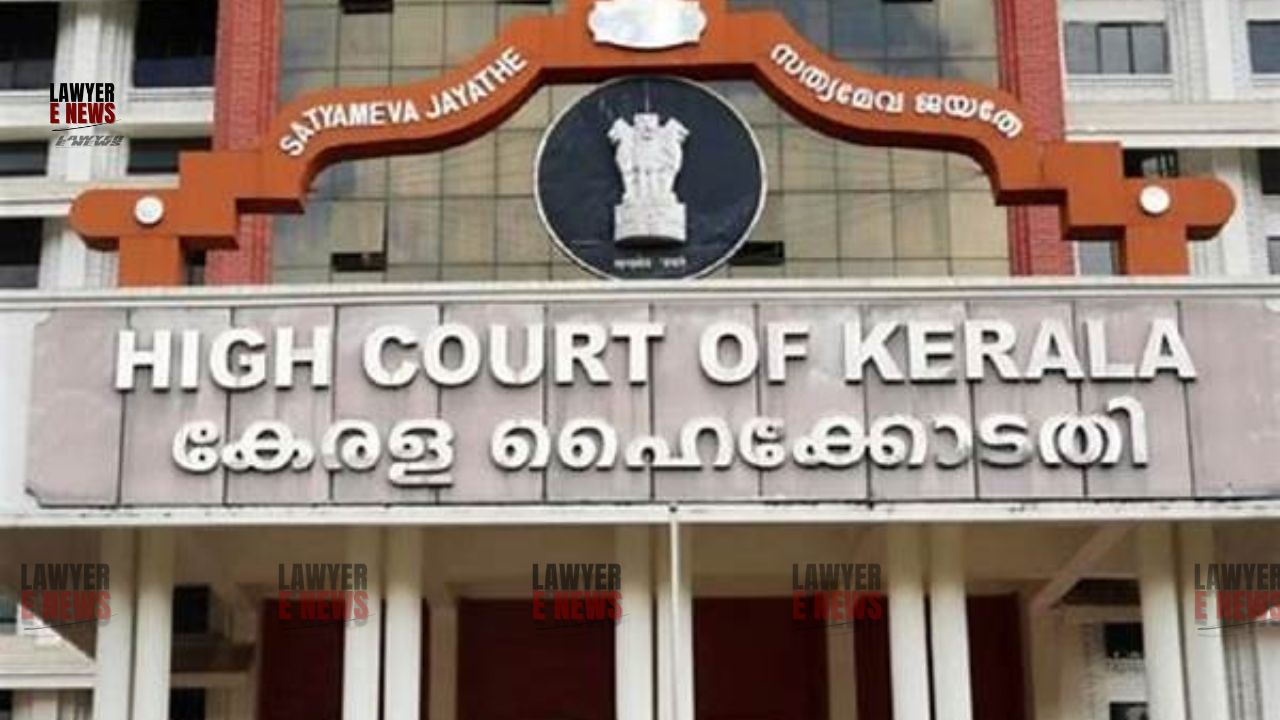
"Lok Ayukta And Upa-Lokayukta Cannot Be Regarded As Courts Or Tribunals, But Are Best Described As Sui Generis Quasi-Judicial Authorities" In a significant constitutional ruling on the accountability machinery of Kerala, the High Court of Kerala at Ernakulam upheld the validity of amendments to the Kerala Lok Ayukta Act, 1999 that converted the binding "declaration" of the Lok Ayukta into a mere "recommendation" and replaced the Governor with the State Legislative Assembly as the "competent authority" in relation to the Chief Minister.
A Division Bench of Chief Justice Soumen Sen and Justice Syam Kumar V.M., deciding a batch of Public Interest Litigations, held that the Lok Ayukta is a sui generis quasi-judicial authority — neither a court nor a tribunal — and therefore the legislature's re-calibration of consequences flowing from its reports does not violate the doctrine of separation of powers, judicial independence, or the basic structure of the Constitution.
However, in a crucial intervention to save the amended statute from becoming a dead letter, the Court read the concept of "deemed acceptance" into Section 14(2) of the amended Act, holding that if the competent authority does not reject the Lok Ayukta's recommendation within 90 days of receipt, the recommendation shall be deemed accepted and the further procedure under the Act shall immediately trigger.
The petitions were filed by Ramesh Chennithala, a sitting MLA from Haripad constituency, and N. Prakash, a Kerala resident, challenging the Kerala Lok Ayukta (Amendment) Act, 2022 (Act 7 of 2024), which came into force on March 2, 2024. The amendments altered two critical provisions of the KLAA: Section 2(d), which redefined "competent authority" in relation to the Chief Minister from "the Governor acting in his discretion" to "the State Legislative Assembly," and Section 14, which changed the heading from "Public Servant to vacate office if directed by Lok Ayukta" to "Recommendation of the Lok Ayukta or Upa Lok Ayukta and action thereon," replacing the binding declaration with a recommendation subject to executive examination. Both petitioners argued that the amendments were unconstitutional and sought their quashing.
The central legal questions before the Court were: whether the Lok Ayukta exercises judicial or quasi-judicial powers having the trappings of a court such that its determinations cannot be subjected to executive review; whether replacing a binding declaration with a recommendation amounts to an administrative review of a judicial or quasi-judicial order in violation of separation of powers; whether the basic structure doctrine is available to challenge an ordinary statute; and whether, in the absence of a "deemed acceptance" clause in the amended Section 14(2), the entire amended provision becomes unworkable.
The Nature of the Lok Ayukta: Sui Generis, Neither Court Nor Tribunal
The petitioners' most forceful argument was that the Lok Ayukta, presided over by a retired Judge of the Supreme Court or the Chief Justice of a High Court, exercises powers having all the trappings of a court — including the power to summon witnesses, receive evidence on affidavit, and conduct proceedings that are deemed judicial proceedings under Section 193 IPC — and that its declaration therefore partook of the character of a judicial order immune from executive revision.
The Court examined this argument at length, relying heavily on the Supreme Court's ruling in Justice Chandrashekaraiah (Retd) v. Janekere C. Krishna, (2013) 3 SCC 117. The Supreme Court had there held that while the Lok Ayukta discharges quasi-judicial functions during investigation, it cannot be regarded as a court or tribunal. "The report of the Lok Ayukta does not determine the rights of either the complainant or the person complained against," the Kerala High Court extracted from that ruling, holding it to be the governing principle.
The Division Bench emphatically agreed: "The mere fact that the Lok Ayukta follows a procedure resembling adjudication does not ipso facto elevate it to the status of a court or tribunal exercising plenary judicial power and for this reason, it occupies a distinct position as a sui generis quasi-judicial authority under the statutory scheme."
On Executive Review Not Being an Appellate Power
The petitioners contended, relying on Amrik Singh Lyallpuri v. Union of India, that "there cannot be administrative review of a decision taken by a judicial or a quasi-judicial authority which has the trappings of a court," and that the amendment was thus unconstitutional. The Court rejected this analogy decisively. It held that the cases of Madras Bar Association, M.P. High Court Bar Association and Amrik Singh Lyallpuri all deal with executive encroachment upon core judicial functions, particularly in the context of tribunals exercising powers previously vested in constitutional courts. "The present case does not involve such a transfer or dilution of judicial power," the Court held.
The Court further held that "the substitution of a binding declaration with a recommendation, coupled with an obligation on the competent authority to record and communicate reasons, cannot be construed as conferring appellate powers on the executive or as an impermissible encroachment into the judicial domain."
On Harmonisation With Constitutional Provisions Under Articles 163 and 164
A significant constitutional justification for the amendment was advanced by the Advocate General: the pre-amended Section 14, which mandated automatic resignation of the Chief Minister upon acceptance of the Lok Ayukta's declaration, was itself constitutionally incongruous because under Articles 163 and 164 of the Constitution, Ministers hold office during the pleasure of the Governor, and the continuance in office of a Minister cannot be made mechanically contingent upon the report of a statutory authority. The Court accepted this reasoning. "The constitutional scheme relating to Ministers, as embodied in Articles 163 and 164 of the Constitution, makes it abundantly clear that Ministers hold office during the pleasure of the Governor, and their continuance in office cannot be rendered mechanically contingent upon the findings or recommendations of a statutory authority." The amendment, the Court held, was therefore an exercise in harmonisation rather than subversion.
On the Basic Structure Doctrine Not Being Available Against Ordinary Legislation
The petitioners invoked the basic structure doctrine — separation of powers and judicial independence — to assail the amendments. The Court, relying on a detailed review of the law from Indira Nehru Gandhi v. Raj Narain to Anjum Kadari v. Union of India, reaffirmed the settled position that "the constitutional validity of a statute can be challenged only on grounds of lack of legislative competence, violation of Part III, or violation of any other constitutional provision." "The basic structure doctrine is not available to challenge the validity of ordinary legislation as a statute." Since the petitioners could not demonstrate any infraction of a specific constitutional provision, the challenge failed.
On Judicial Review Remaining Available
The Court also scotched the petitioners' apprehension that the amendment would place the Lok Ayukta's findings beyond the reach of law. It held that "any arbitrary, mala fide, or unreasonable decision taken by the competent authority in response to a recommendation of the Lok Ayukta remains amenable to judicial review." Further, the amended statute itself obligates the competent authority to record reasons for not acting on a recommendation, making it accountable and subject to review. "The statutory scheme, as amended, preserves fairness at both stages — at the level of inquiry and at the level of executive response."
Reading "Deemed Acceptance" Into Section 14(2)
In the most consequential remedial holding of the judgment, the Court noticed a critical lacuna: the amended Section 14(2) prescribed a 90-day window for the competent authority to act on the recommendation, but unlike Section 13(1) of the Karnataka Lokayukta Act, 1984, there was no provision for "deemed acceptance" if the recommendation was not rejected within that period. This, the Court held, would render the entire amended provision otiose because Section 12(5) of the KLAA — which gives the Lok Ayukta the power to accept or make a special report to the Governor — could never be triggered, making all other provisions redundant.
Invoking the principle that "where the alternative lies between either supplying by implication words which appear to have been accidentally omitted, or adopting a strict construction which leads to absurdity or deprives certain existing words of all meaning, it is permissible to supply the words," the Court read into Section 14(2) the words of "deemed acceptance." It held: "in the event the report is not rejected within 90 days from the date of receipt of the report, it shall be deemed to have been accepted on the expiry of the said period and the procedure under Section 12(5) shall immediately trigger." The Court noted that even the Advocate General had fairly conceded that this provision needed to be read into the statute for it to be effective.
On Appointment of Retired Chief Justice — A Word to the Legislature
The Court expressed discomfort with another aspect of the amendment under Section 3(2), which replaced the requirement of appointing a retired Chief Justice of a High Court as Lok Ayukta with a retired Judge of a High Court. "We could not find any rational basis for such changes being made in Section 3(2)," the Court observed, and recommended that the Legislature consider restoring the requirement of appointment of a retired Chief Justice of a High Court as Lok Ayukta.
The writ petitions were disposed of with the clarification that the challenge to the constitutional validity of Sections 3 and 14 as amended fails. The Court read "deemed acceptance" into amended Section 14(2) to the effect that non-rejection of the Lok Ayukta's recommendation within 90 days shall amount to acceptance, triggering the procedure under Section 12(5) of the Act.
Date of Decision: March 31, 2026