-
by sayum
02 October 2026 8:27 AM







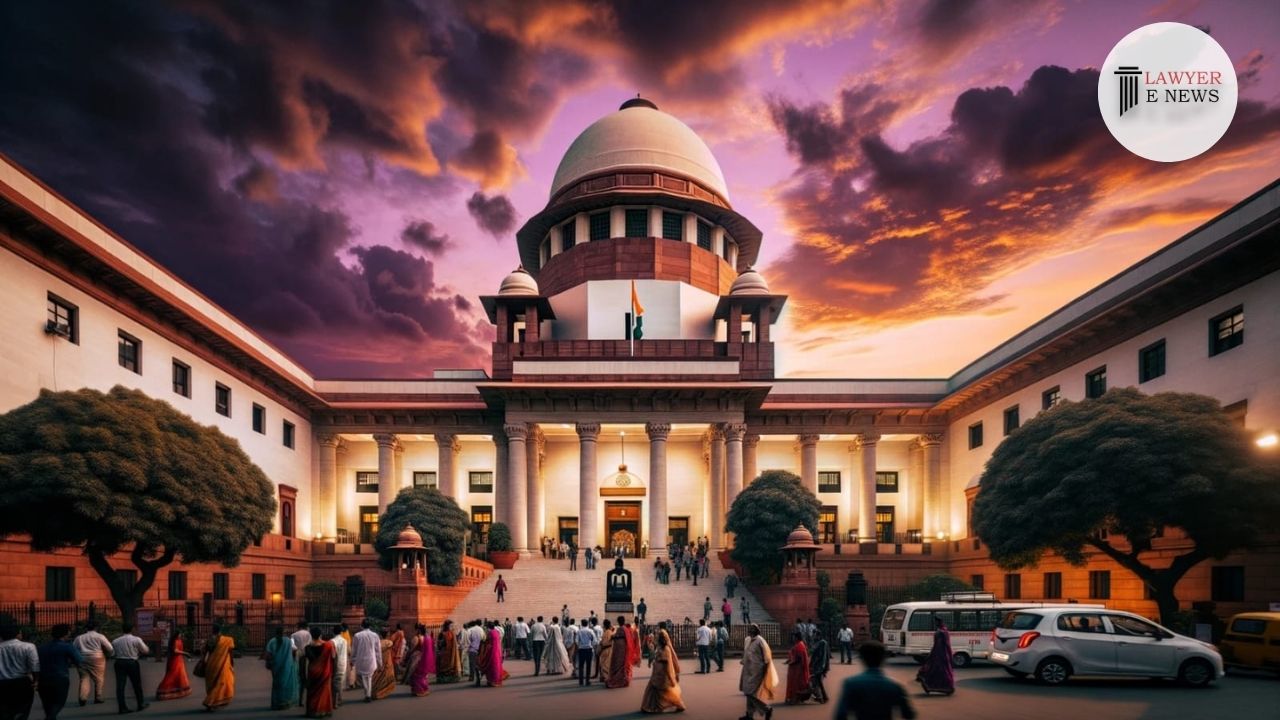
In a significant development in the long-standing property dispute case between two brothers, the Supreme Court of India has upheld the High Court’s judgment in favor of the late Gurcharan Singh (the Respondent). The dispute centered around the alleged sale of a portion of inherited property by one of the brothers, Faqir Singh, to Gurcharan Singh.
The bench comprising Hon’ble Justice Sanjay Karol and Hon’ble Justice Abhay S. Oka pronounced their judgment on 24th July 2023, dismissing the appeals filed by the late Gurbachan Singh (the Appellant) and his legal representatives.
The court noted that Gurcharan Singh had purchased a piece of land measuring 4 marlas from Faqir Singh through a validly executed sale deed in 1978. The Appellant claimed that the sale was not valid, as Faqir Singh did not have exclusive title or possession over the property. However, the court found substantial evidence to prove the partition of the property by their father, Suchet Singh, during his lifetime. This evidence confirmed Gurcharan Singh’s rightful ownership and possession of the disputed property.
In its judgment, the court emphasized that Gurcharan Singh, being a co-sharer and owner of the property, had every right to protect his possession if established. The court stated, “The judgments of the courts below were a result of complete misreading of the evidence,” and upheld the High Court’s decision, declaring Gurcharan Singh as entitled to possession of the specific portion sold to him.
The Appellant’s contention that a co-share purchaser does not have a right to possession was deemed inapplicable in this case due to the evidence of property partition, and the court rejected the reliance on precedent that did not align with the present circumstances.
The judgment further clarified that in second appeals arising from Punjab or Haryana, courts are not required to frame substantial questions of law under Section 100 of the Civil Procedure Code, as Section 41 of the Punjab Courts Act, 1918 governs the jurisdiction. Therefore, the High Court’s judgment did not need to formulate substantial questions of law.
The court, while acknowledging the general restraint in interfering with findings of fact in second appeals, found justification in this case, as the lower courts had ignored material evidence relating to property partition.
The judgment is likely to put an end to the protracted legal battle and provide closure to the parties involved. With the High Court’s ruling upheld by the Supreme Court, Gurcharan Singh’s rightful ownership and possession of the disputed property stand confirmed.
Date of Decision: 24th July 2023
GURBACHAN SINGH (DEAD) THROUGH LRS vs GURCHARAN SINGH (DEAD) THROUGH LRS AND ORS.