-
by sayum
29 August 2026 3:15 PM







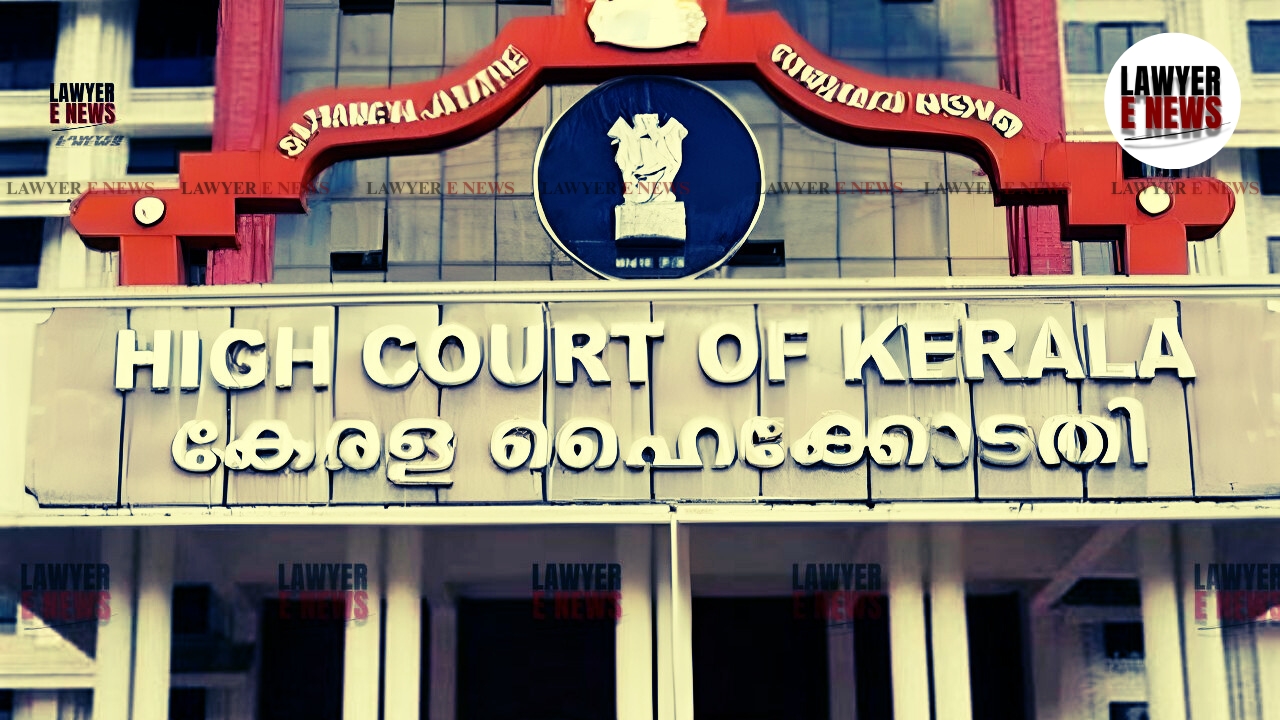
“Where a statute does not provide for compulsory insurance or the extent thereof… the parties are free to choose their own terms of contract… contracting out, so far as reimbursement of interest is concerned, is not prohibited by a statute.” - High Court of Kerala setting aside the Commissioner for Workmen’s Compensation’s direction that the principal employer pay 12% interest on ₹4,23,580 awarded for a fatal site accident, and holding instead that the insurer must pay the interest as well. The Court accepted that parties may contract out of interest liability (per New India Assurance Co. Ltd. v. Harshadbhai Amrutbhai Modhiya, (2006) 5 SCC 192), but found—on facts—that no such clause existed in the original 2005 policy; a “Condition No.10” relied on below appeared only in a later, 2006-printed cover page and could not govern the 2005 risk.
Vinod, a plumbing helper to the second appellant (a subcontractor at the first appellant’s building site), fell from the 8th floor and died on April 12, 2005. His parents sought compensation before the Commissioner (W.C.C. No. 31/2006). The Commissioner directed the insurer to deposit ₹4,23,580 as compensation, but saddled the principal employer with 12% interest from the date of accident till deposit. The principal employer and subcontractor appealed, arguing that their March–June 2005 policy covered the workmen and contained no term excluding the insurer’s liability for interest; they also attacked the Commissioner’s reliance on a “Condition No.10” that, they said, was never part of the policy then in force.
The Court framed a narrow but decisive issue: who bears interest when the policy schedule is on record but the insurer claims an exclusion clause? It recited the settled principle flowing from Harshadbhai Modhiya: parties may contract out of interest liability in a Workmen’s Compensation/Employees’ Compensation policy; if a valid exclusion exists, the employer pays interest; if no exclusion, the insurer pays interest along with compensation. The controversy thus turned on authenticity and timing of the alleged exclusion clause.
The record was murky. The appendix showed that only policy schedules were marked as exhibits; the cover page with terms was missing. A cover page later found in the Commissioner’s record displayed “Condition No.10” excluding interest, but the High Court noted it was a fresh print, signed by a different officer, carrying a 2006 print legend—not the 2005 standard form. Despite directions, the Commissioner’s office could not trace the contemporaneous cover page; the insurer said it keeps files for ten years and could not produce the 2005 set. The appellants, however, produced an original cover page (Annexure-II) corresponding to their 2005 policy, showing only nine conditions—none excluding interest.
Finding that the Commissioner “wrongly relied on a subsequently added condition” that did not exist when the risk incepted, the High Court held that the insurer’s post-2006 form could not defeat the insured’s rights under the 2005 policy. In short, no valid exclusion clause was proved to exist in the policy governing the accident date; the Commissioner’s interest direction against the employer was legally unsustainable.
Justice Girish’s analysis proceeds in three steps. First, the Court accepts the legal possibility of contracting out: “Where a statute does not provide for compulsory insurance or the extent thereof… the parties are free to choose their own terms of contract… contracting out, so far as reimbursement of interest is concerned, is not prohibited by a statute,” quoting Harshadbhai Modhiya. Second, it scrutinises the record, noting the conspicuous absence of the 2005 terms, the provenance of the “2006-printed” cover page, the insurer’s inability to produce the legacy file, and the appellants’ Annexure-II showing only nine conditions. Third, it applies the timing rule: “The subsequent incorporation of a clause… exempting the Insurance Company from the liability to pay interest… cannot have retrospective effect to bind the policy issued on 21.03.2005.”
On that foundation, the Court modifies the award. The Commissioner’s direction making the principal employer pay 12% simple interest on ₹4,23,580 from April 12, 2005 till deposit is set aside. The insurer is directed to pay that interest as well, in addition to the compensation already directed. The Court also records that the principal employer is currently under insolvency proceedings and directs that compliance communications be addressed to the competent insolvency professional.
Kerala High Court has drawn a clean line between what the parties could have contracted and what they actually contracted. While Harshadbhai Modhiya permits an insurer to exclude interest liability by clear policy terms, a later-printed form cannot be foisted retroactively upon a prior year’s policy. In the absence of a contemporaneous exclusion, interest follows the insurer along with the compensation.
Date of Decision: August 12, 2025