-
by sayum
10 August 2026 4:11 AM







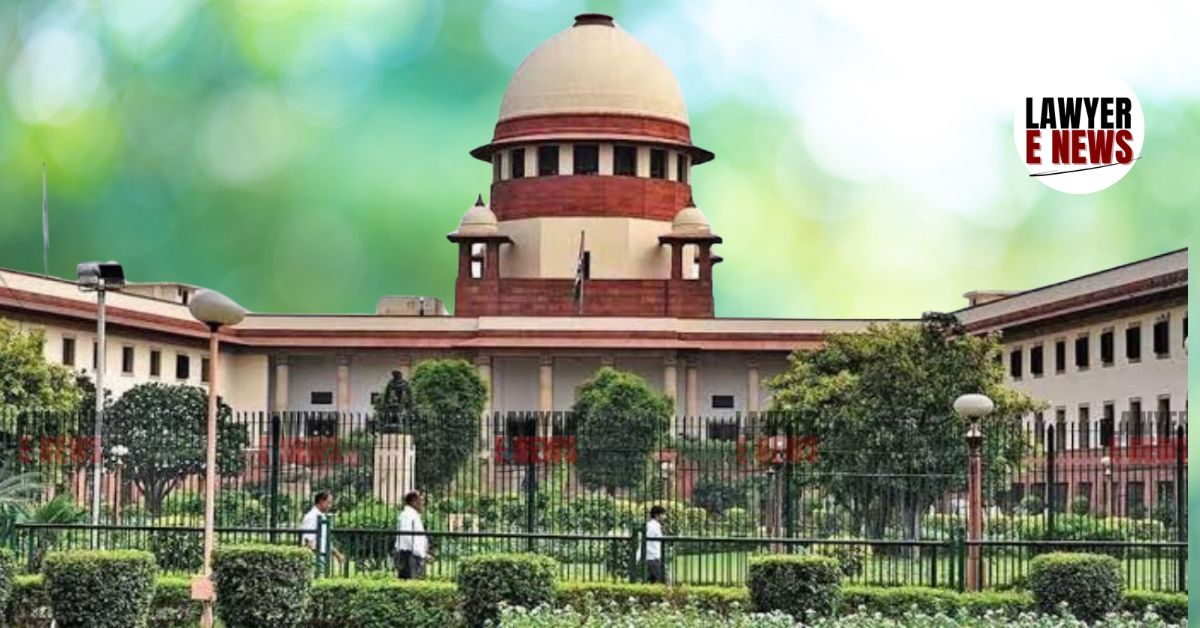
“Once sentence is served, even an illegal immigrant can’t be kept in prison — only in detention centres”, In a pivotal order passed by Supreme Court unequivocally held that “no person, whether a citizen or an illegal immigrant, can be kept in a prison after completing their sentence.” A Bench comprising Justices J.B. Pardiwala and R. Mahadevan directed the release on bail of foreign nationals detained in West Bengal prisons beyond three years of sentence completion, citing their continued incarceration as unjust and constitutionally impermissible.
The judgment, though ultimately tagged with a larger pending batch of cases, carved out immediate relief on humanitarian and constitutional grounds, drawing attention to the State’s failure to establish proper detention infrastructure.
The petitioners, including noted human rights activist Maja Daruwala, challenged the continued imprisonment of declared foreign nationals who had completed their sentences under the Foreigners Act, 1946. Specifically, they sought relief against Clause 4 of a West Bengal Government Memorandum dated 06.03.2007, which authorized continued detention pending deportation — even in regular prisons — of such individuals.
Despite having served their sentences, these foreign nationals remained incarcerated for years due to the absence of dedicated detention centres in West Bengal. The State had promised to construct such a facility, but completion was still pending.
Whether a foreign national can be held in a regular prison after serving sentence pending deportation?
The Court’s answer was a categorical no. It held:
“Once he is tried, sentenced and has undergone the sentence, he cannot be kept in a prison… he being an illegal immigrant has to be kept in a correctional home/detention centre in its true sense.”
The Court found the State’s failure to create a proper detention facility constitutionally untenable:
“Unfortunately, the State of West Bengal does not have a correctional home or a detention centre and in such circumstances, although an illegal immigrant has undergone the entire period of sentence, yet he is being detained in prison awaiting deportation.”
While deferring final adjudication and tagging the matter with Jaffar Ullah v. Union of India (W.P. No. 859/2013), a larger case pending before a three-judge Bench, the Court issued immediate directions:
“If there is any illegal immigrant as on date in any of the prisons within the State of West Bengal, who has undergone the entire sentence and is still confined in any of the prisons past three years from the date of completion of his/her original sentence, he/she be released on bail…”
Conditions for Bail:
Bond with two sureties of ₹1,00,000 each from Indian citizens.
Verifiable address of stay.
Biometric data and photographs to be recorded and stored.
Weekly reporting to designated police station.
Mandatory notification of change in address.
Quarterly reports to Foreigners Tribunal.
The Court further directed that the State must complete identification of such detainees within four weeks and implement the bail order accordingly.
“Let this exercise be completed within a period of four weeks from today… Once the list is prepared, our order should be given effect to.”
It also directed that, post-construction, all such persons must be moved to a proper detention centre.
Importantly, the Court made it clear:
“This order will not apply for the purpose of bail if any of these illegal immigrants are being prosecuted for any other offence.”
The Supreme Court’s directive represents a significant affirmation of the rule of law and the constitutional rights of all persons, regardless of their citizenship status. It reiterates the foundational principle that “punishment ends with the sentence — and detention without legal basis is unconstitutional.”
This order will now be considered along with the batch of related cases in Writ Petition (Civil) No. 859/2013 — Jaffar Ullah & Ors. v. Union of India, which deals with broader issues of illegal immigration, detention, and deportation in India.
Date of Decision: May 16, 2025