Readiness and Willingness Under Section 16(c) Is Not a Ritualistic Phrase — Plaintiff Must Prove It With Substance, Not Just Words: Karnataka High Court FIR in Disproportionate Assets Case Quashed: Patna High Court Slams SP for 'Non-Application of Mind' and 'Absence of Credible Source Information' Ownership of Vehicle Linked to Commercial Quantity of Heroin – Custodial Interrogation Necessary: Punjab & Haryana High Court Denies Anticipatory Bail under Section 482 BNSS Death Caused by Rash Driving Is Not a Private Dispute — No FIR Quashing on Basis of Compromise in Section 106 BNS Cases: Punjab & Haryana High Court No Bank Can Override Court Orders: Rajasthan High Court Slams Axis Bank for Unauthorized Withdrawal from Court-Ordered FD" Indian Courts Cannot Invalidate Foreign Arbitral Awards Passed Under Foreign Law: Madhya Pradesh High Court Enforces Texas-Based Award Despite Commercial Court’s Contrary Decree Sudden Quarrel over Mound of Earth — Not Murder but Culpable Homicide: Allahabad High Court Bar Under Order II Rule 2 CPC Cannot Be Invoked Where Specific Performance Was Legally Premature Due To Statutory Impediments: P&H High Court Calling Wife by Her Caste Name in Public Just Before Suicide is Immediate Cause of Self-Immolation: Madras High Court Upholds Husband’s Conviction Under Section 306 IPC No Work No Pay Is Not a Universal Rule: Punjab & Haryana High Court Dock Identification Without Prior TIP Is Absolutely Useless: P&H High Court Upholds Acquittal in Attempt to Murder Case Filing Forged Court Pleadings in Union Government’s Name is Criminal Contempt: Karnataka High Court Sentences Litigant to Jail Execution of Will Proved, But Probate Justly Denied Due to Concealment of Property Sale: Delhi High Court Mere Designation Doesn’t Establish Criminal Liability: Bombay High Court Quashes Proceedings Against ICICI Officials in Octroi Evasion Case Fraud on Power Voids the Order: Supreme Court Quashes FIR Against Karnataka BJP Leader R. Ashoka, Slams Politically Motivated Prosecution Cause of Fire Is Immaterial If Fire Itself Is Insured Peril: Supreme Court Rebukes Insurer’s Repudiation Dragging a Trained Army Officer Up 20 Steps Without Resistance? The Story Lacks Credence: Supreme Court Upholds Acquittal in Army Officer’s Murder Semen Stains Alone Do Not Prove Rape: Supreme Court Acquits Doctor Accused of Rape No Mortgage, No SARFAESI: Supreme Court Rules Against NEDFi, Says Recovery Action in Nagaland Without Security Agreement Was Illegal Parity Cannot Be Denied by Geography: Supreme Court Holds Jharkhand Bound by Patna HC's Judgment, Orders Pay Revision for Industries Officer Once Power Flows Continuously from a Synchronized Turbine, It Is No Longer Infirm: Supreme Court Orders TANGEDCO to Pay Fixed Charges to Penna Electricity

High Court Upholds Conviction of Accused for Attempted Murder Under Section 307 IPC, Acquits Co-accused Due to Insufficient Evidence

07 May 2024 8:19 AM

By: Admin


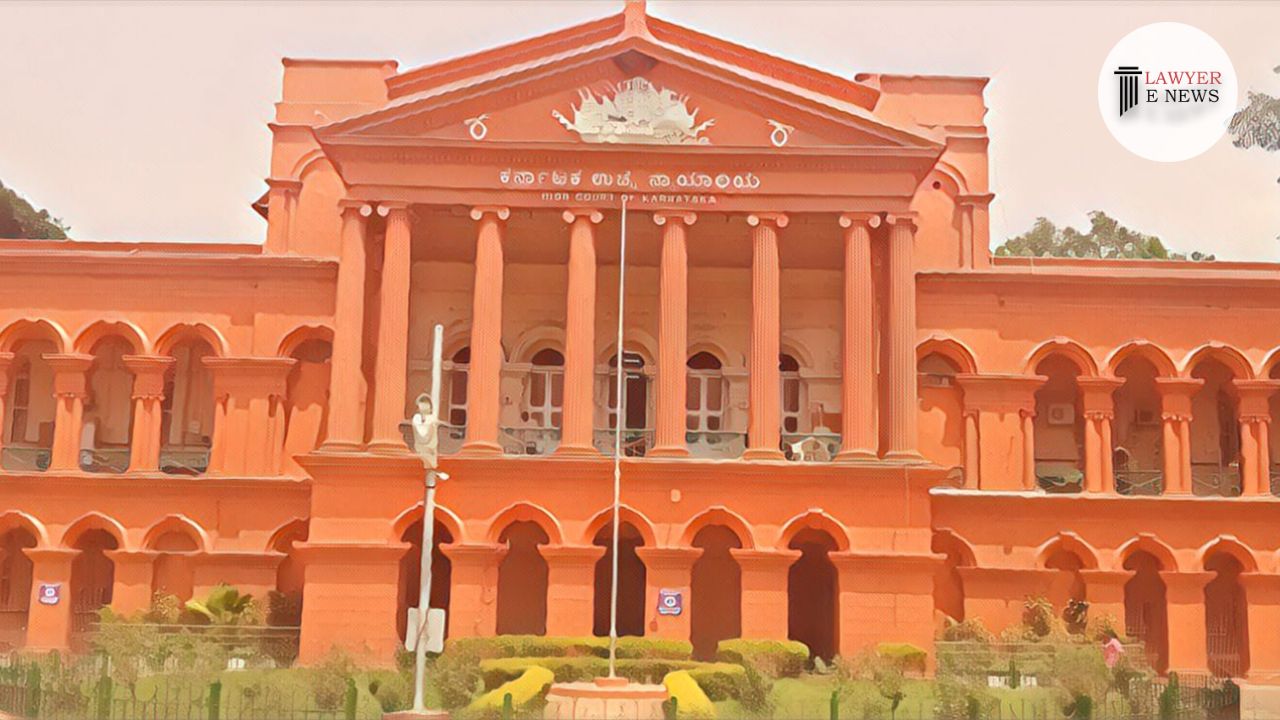
In a recent judgment, the High Court of Karnataka at Bengaluru upheld the conviction of an individual under Section 307 of the Indian Penal Code (IPC) for the attempted murder. The Court, in Criminal Appeal No. 932 of 2012, sentenced the appellant, accused of assaulting with a chopper and causing grievous injuries, to rigorous imprisonment for five years along with a fine of Rs. 5,000. In default, the accused faces a further one-year simple imprisonment.

The appellant, in an incident dating back to 2011, was convicted of assaulting the victim, identified as PW3 in the case, in a fit of enmity. The Court noted in its judgment, "The evidence of PW1, PW3, and PW5 will establish that appellant - accused No.1 assaulted PW3 with a chopper and caused injuries" (Para 8). The judgment clearly elaborated on the sequence of events and the role of the accused in the crime.

However, in a significant turn, the Court acquitted the co-accused, initially charged under Section 114 read with Section 307 of IPC. The acquittal of accused Nos. 2 and 3 came due to insufficient evidence against them. The Court observed, "The trial Court has erred in convicting appellant - accused Nos. 2 and 3 for the offence under Section 114 read with Section 307 of IPC" (Para 12).

This ruling is a reminder of the justice system's rigor in examining the available evidence and its implications. The detailed judgment, delivered by the Hon'ble Mr. Justice Shivashankar Amarnnavar, sheds light on the complexities involved in criminal trials, especially in cases involving multiple accused with varying degrees of involvement.                                                                                      

Date of Decision: 22 January, 2024

HARISH VS STATE OF KARNATAKA

 

Latest Legal News