-
by sayum
25 August 2026 11:12 PM







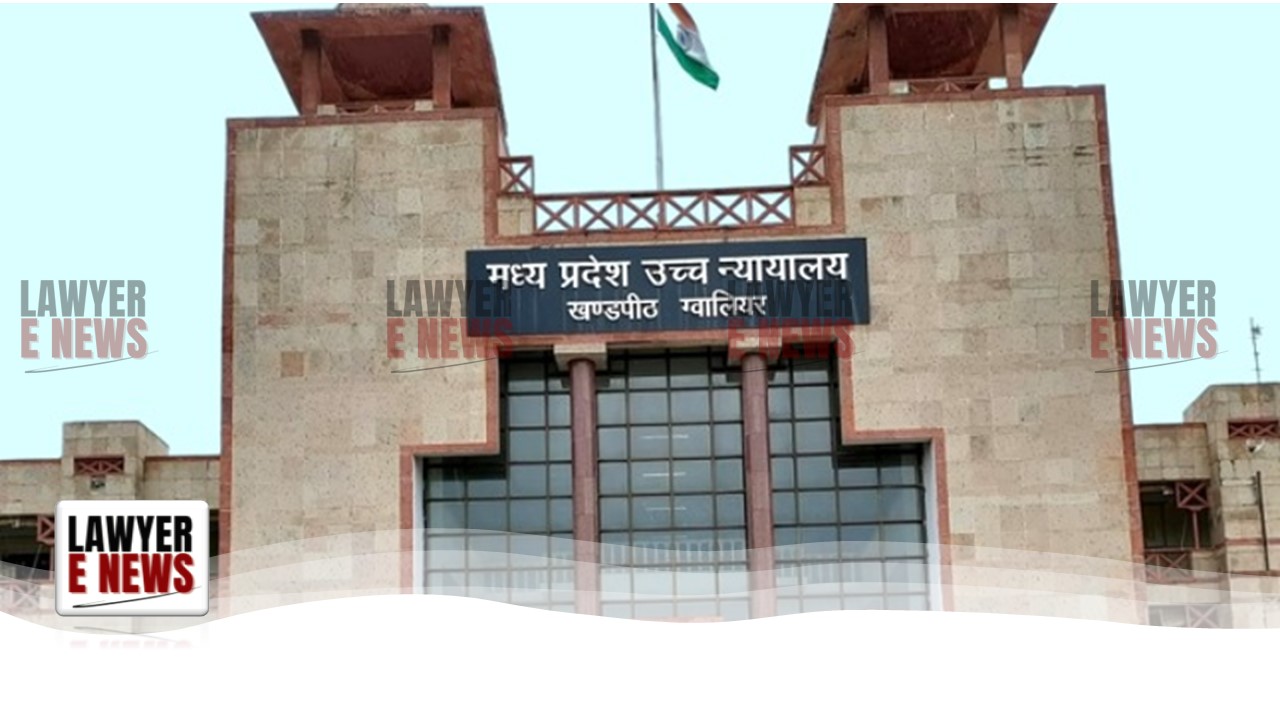
Madhya Pradesh High Court rejects appeal, emphasizing the validity of the prosecution's evidence despite hostile witnesses.
The Madhya Pradesh High Court has affirmed the conviction of Ravikant Thakkar, a Lower Division Clerk, for corruption under Section 7 of the Prevention of Corruption Act, 1988. The judgment, delivered by Justice Subodh Abhyankar, upheld the trial court's decision, emphasizing the corroborative strength of documentary evidence and witness testimonies despite the complainant's hostility.
In 2000, Ravikant Thakkar, while serving as a Lower Division Clerk in the office of the Naib Tehsildar in Betma, was caught accepting a bribe of Rs. 2,000 from the complainant, Meharban Singh. Singh had filed applications under the M.P. Land Revenue Code regarding a land dispute with his brother. Thakkar demanded the bribe to issue further notices in the case. A complaint was lodged with the Lokayukt police, leading to a trap and Thakkar's arrest on October 3, 2000 .
The High Court stressed the importance of documentary evidence in establishing the case against Thakkar. "The applications filed by the complainant under the M.P. Land Revenue Code and the complaint to the Lokayukt, with admitted signatures, form a consistent chain of evidence against the appellant," the judgment noted .
The court addressed the issue of the complainant turning hostile. "Despite Meharban Singh's hostility, the admissions in his deposition and the supporting testimonies from other witnesses validate the prosecution's case," observed Justice Abhyankar. The court highlighted that the initial complaint and subsequent documents bore Singh's signatures, which he did not contest .
The court extensively discussed the principles of evidence evaluation in corruption cases, particularly when witnesses turn hostile. Citing the Supreme Court's decision in Neeraj Dutta vs. State, it emphasized that the prosecution can rely on other corroborative evidence to prove demand and acceptance of bribes. "The complainant's initial statements and the corroborative documentary evidence suffice to establish the guilt of the accused," the judgment asserted .
Justice Subodh Abhyankar remarked, "The demand and acceptance of the bribe have been proved beyond reasonable doubt, and it is a clear case of corruption as the appellant was caught red-handed with the bribe money of Rs. 2,000."
The High Court's decision reinforces the judiciary's stance on corruption, highlighting the admissibility of documentary evidence and initial witness testimonies, even when witnesses turn hostile. This judgment serves as a precedent in ensuring that corruption cases are not derailed by witness intimidation or hostility, thereby upholding the integrity of the judicial process.
Date of Decision: May 6, 2024
Ravikant Thakkar vs. The State of Madhya Pradesh