-
by sayum
02 October 2026 8:27 AM







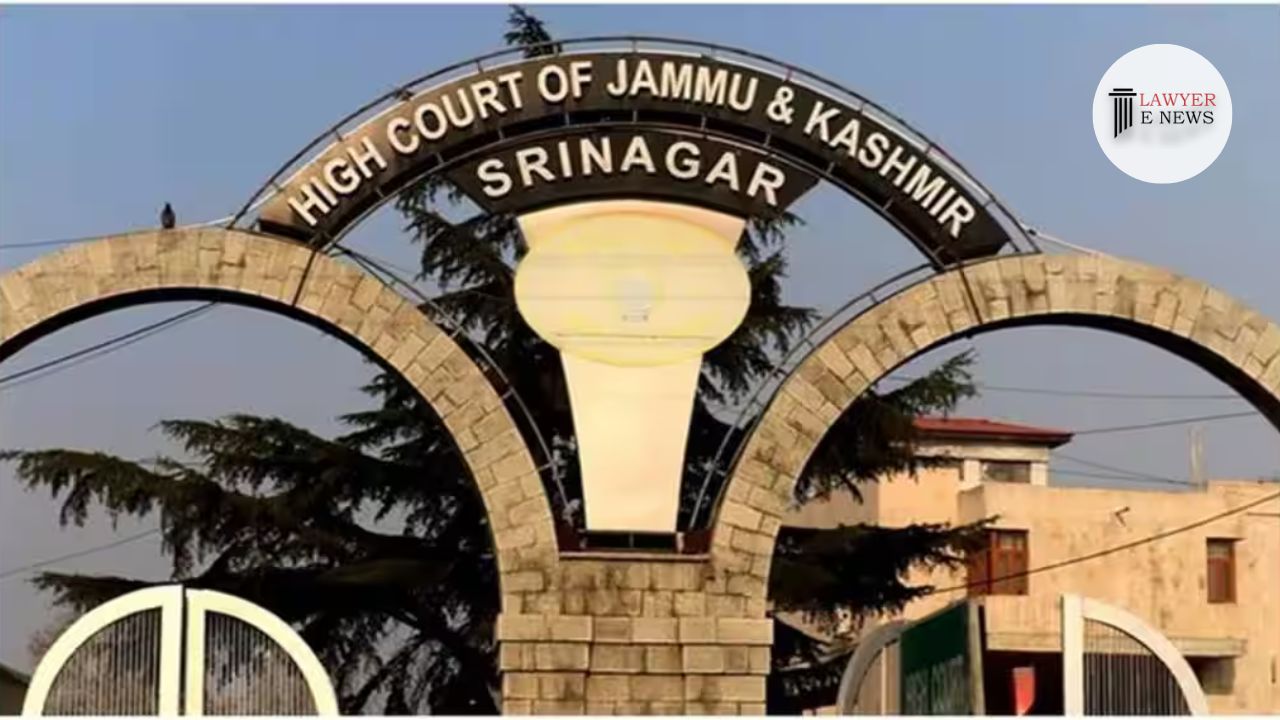
In a significant ruling, the High Court of Jammu & Kashmir and Ladakh at Jammu has set aside a preventive detention order, emphasizing serious procedural violations and lack of application of mind. The judgment, pronounced on June 16, 2023, highlights the importance of safeguarding fundamental rights and ensuring diligence on the part of the government and public authorities.
“The preventive detention of the petitioner is inherently illegal… The entire preventive detention exercise with respect to the petitioner collapses under its own weight.” (Para 26)
Quoting Greek philosopher Plato, the court stated, “The worst form of injustice is pretended justice.” The judgment emphasizes that when a citizen’s fundamental right to life and personal liberty is at stake, the government has a heightened responsibility to ensure adherence to the established procedure. It also underscores that the fundamental right to life and personal liberty should not be taken lightly by the authorities.
The case WP(Crl) No. 31/2023 involved Ashfaq Ahmed, who was subjected to preventive detention under the Jammu and Kashmir Public Safety Act, 1978. The detention order was based on a dossier submitted by the Senior Superintendent of Police (SSP), Ramban, alleging the petitioner’s association with a militant organization and potential harm to the peace and tranquility of the region.
However, the court found serious flaws in the grounds of detention. The District Magistrate, Ramban, had mentioned the name of a different person, Sadam Hussain Ganie, instead of the petitioner in the operative part of the grounds. This error raised concerns about the lack of application of mind and adherence to the established procedure.
The court questioned how the mistake went unnoticed by the SSP and the Superintendent of the District Jail when they read and explained the grounds of detention to the petitioner. It observed that the entire preventive detention exercise appeared to be a farce due to the contradictions and inherent flaws in the detention order.
“In terms of communication… the petitioner was meant to be apprised of the grounds of detention… to be read over to him… then how the operative part of the grounds of detention… came to be read over and explained to the petitioner is just a matter of puzzle for prudence to understand,” the court remarked.
High court held the preventive detention order as inherently illegal and set it aside, directing the immediate release of the petitioner. It expressed concern over the lack of diligence and accountability on the part of the District Magistrate and the government in approving a flawed detention order.
This landmark judgment serves as a reminder that the deprivation of fundamental rights should be done with utmost care and in strict adherence to the established procedure. The court’s decision reinforces the constitutional trust bestowed upon the government and public authorities to safeguard citizens’ rights.
Date of Decision: June 16, 2023
Ashfaq Ahmed vs UT of J&K and Ors.