Renewal Is Not Extension Unless Terms Are Fixed in Same Deed: Bombay High Court Strikes Down ₹64.75 Lakh Stamp Duty Demand on Nine-Year Lease Fraud Vitiates All Solemn Acts—Appointment Void Ab Initio Even After 27 Years: Allahabad High Court Litigants Cannot Be Penalised For Attending Criminal Proceedings Listed On Same Day: Delhi High Court Restores Civil Suit Dismissed For Default Limited Permissive Use Confers No Right to Expand Trademark Beyond Agreed Territories: Bombay High Court Enforces Consent Decree in ‘New Indian Express’ Trademark Dispute Assam Rifles Not Entitled to Parity with Indian Army Merely Due to Similar Duties: Delhi High Court Dismisses Equal Pay Petition Conspiracy Cannot Be Presumed from Illicit Relationship: Bombay High Court Acquits Wife, Affirms Conviction of Paramour in Murder Case Bail in NDPS Commercial Quantity Cases Cannot Be Granted Without Satisfying Twin Conditions of Section 37: Delhi High Court Cancels Bail Orders Terming Them ‘Perversely Illegal’ Article 21 Rights Not Absolute In Cases Threatening National Security: Supreme Court Sets Aside Bail Granted In Jnaneshwari Express Derailment Case A Computer Programme That Solves a Technical Problem Is Not Barred Under Section 3(k): Madras High Court Allows Patent for Software-Based Data Lineage System Premature Auction Without 30-Day Redemption Violates Section 176 and Bank’s Own Terms: Orissa High Court Quashes Canara Bank’s Gold Loan Sale Courts Can’t Stall Climate-Resilient Public Projects: Madras High Court Lifts Status Quo on Eco Park, Pond Works at Race Club Land No Cross-Examination, No Conviction: Gujarat High Court Quashes Customs Penalty for Violating Principles of Natural Justice ITAT Was Wrong in Disregarding Statements Under Oath, But Additions Unsustainable Without Corroborative Evidence: Madras High Court Deduction Theory Under Old Land Acquisition Law Has No Place Under 2013 Act: Punjab & Haryana High Court Enhances Compensation for Metro Land Acquisition UIT Cannot Turn Around After Issuing Pattas, It's Estopped Now: Rajasthan High Court Private Doctor’s Widow Eligible for COVID Insurance if Duty Proven: Supreme Court Rebukes Narrow Interpretation of COVID-Era Orders Smaller Benches Cannot Override Constitution Bench Authority Under The Guise Of Clarification: Supreme Court Criticises Judicial Indiscipline Public Premises Act, 1971 | PP Act Overrides State Rent Control Laws for All Tenancies; Suhas Pophale Overruled: Supreme Court Court Has No Power To Reduce Sentence Below Statutory Minimum Under NDPS Act: Supreme Court Denies Relief To Young Mother Convicted With 23.5 kg Ganja Non-Compliance With Section 52-A Is Not Per Se Fatal: Supreme Court Clarifies Law On Sampling Procedure Under NDPS Act MBA Degree Doesn’t Feed the Stomach: Delhi High Court Says Wife’s Qualification No Ground to Deny Maintenance

High Court Grants Divorce on Grounds of Cruelty - Allegations of Serious Nature Proven.

04 September 2024 10:02 AM

By: Admin


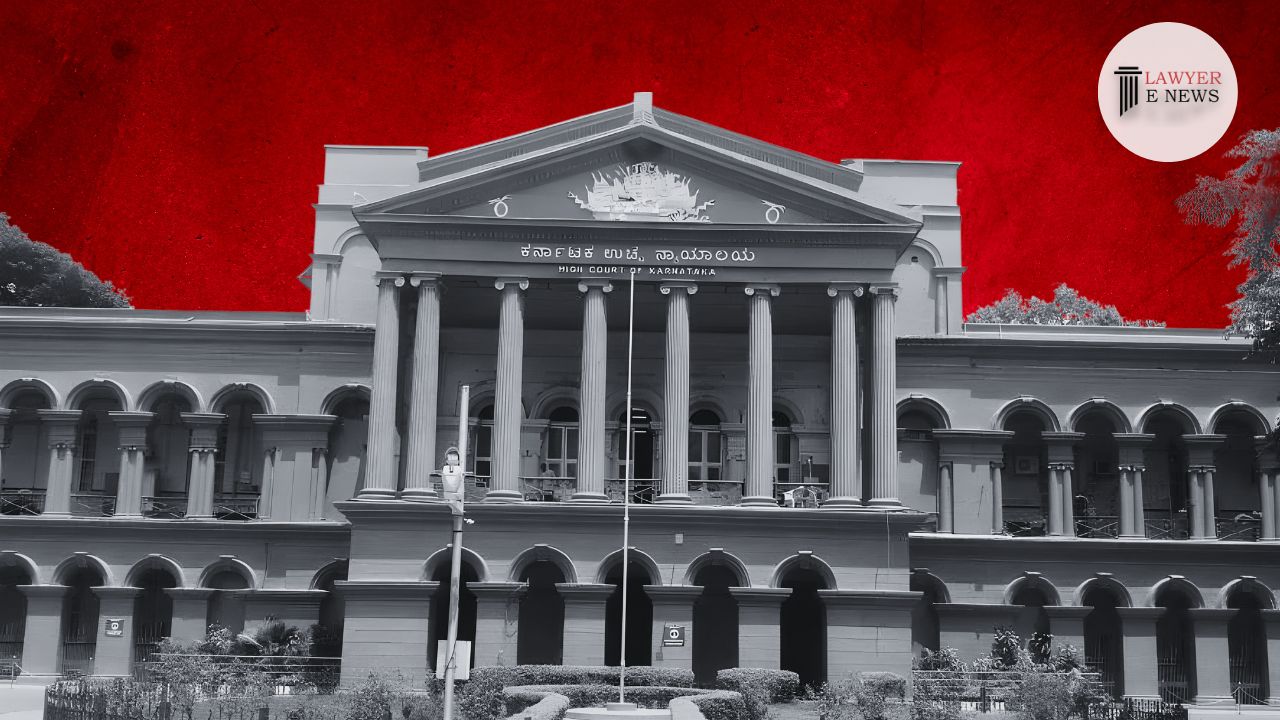
In a groundbreaking ruling, the High Court of Karnataka, Dharwad Bench, has granted a divorce decree to Smt. Pradnya, emphasizing that "allegations of cruelty referred supra are of serious in nature and consistent." The judgment, delivered by Hon'ble Mr. Justice S G Pandit and Hon'ble Mr. Justice Vijaykumar A. Patil, sets a significant precedent for cases involving marital cruelty.

The case, titled Miscellaneous First Appeal No. 103166 of 2022, centered around the allegations made by Smt. Pradnya against her husband. The appellant-wife alleged that after their marriage in July 2017, Shri Shivakumar Hiremath began subjecting her to mental and physical cruelty. According to the judgment, the respondent-husband would "come to the house at late hours by consuming alcohol, quarrel with the appellant every day" and engage in abusive behavior.

The court documents reveal distressing details of the alleged mistreatment. The appellant-wife stated that her husband "put cloth in the mouth of the appellant, pulled her hair and insisted for bringing dowry" and "insisted for forceful sex every day." The respondent also expressed dissatisfaction upon learning about her pregnancy, stating he was "worrying whether the appellant would give birth to male or female child" and emphasizing that she should give birth to a male child only.

Despite her ill health during pregnancy, the appellant-wife claimed that neither the respondent nor his family members provided any assistance with household work. After the birth of their female child, the respondent allegedly refused to take responsibility and demanded that the child be left at the in-laws' house. These incidents, coupled with continuous mental harassment and cruelty, led the appellant-wife to seek dissolution of the marriage on the ground of cruelty.

The court, after careful scrutiny of the pleadings and evidence, concluded that the allegations of cruelty were "specific assertions of cruelty referred supra" and were not properly disputed or contradicted by the respondent-husband. The court cited legal precedents to emphasize that when a party fails to cross-examine witnesses or adduce evidence, the statements of witnesses are considered true.

Setting aside the earlier judgment of the family court, the High Court granted a decree of divorce, stating, "the appellant has proved the grounds of cruelty to dissolve the marriage." The judgment highlighted the seriousness of the allegations and the consistent nature of the cruelty from the beginning of the marriage until the appellant-wife started living with her parents.

This landmark judgment showcases the court's commitment to protecting individuals facing cruelty within a marital relationship and will have far-reaching implications for future divorce cases involving similar circumstances.

Date of Decision: June 30, 2023                 

SMT. PRADNYA VS . ABHIJIT WAINGANKAR

Latest Legal News