-
by sayum
05 October 2026 9:18 AM







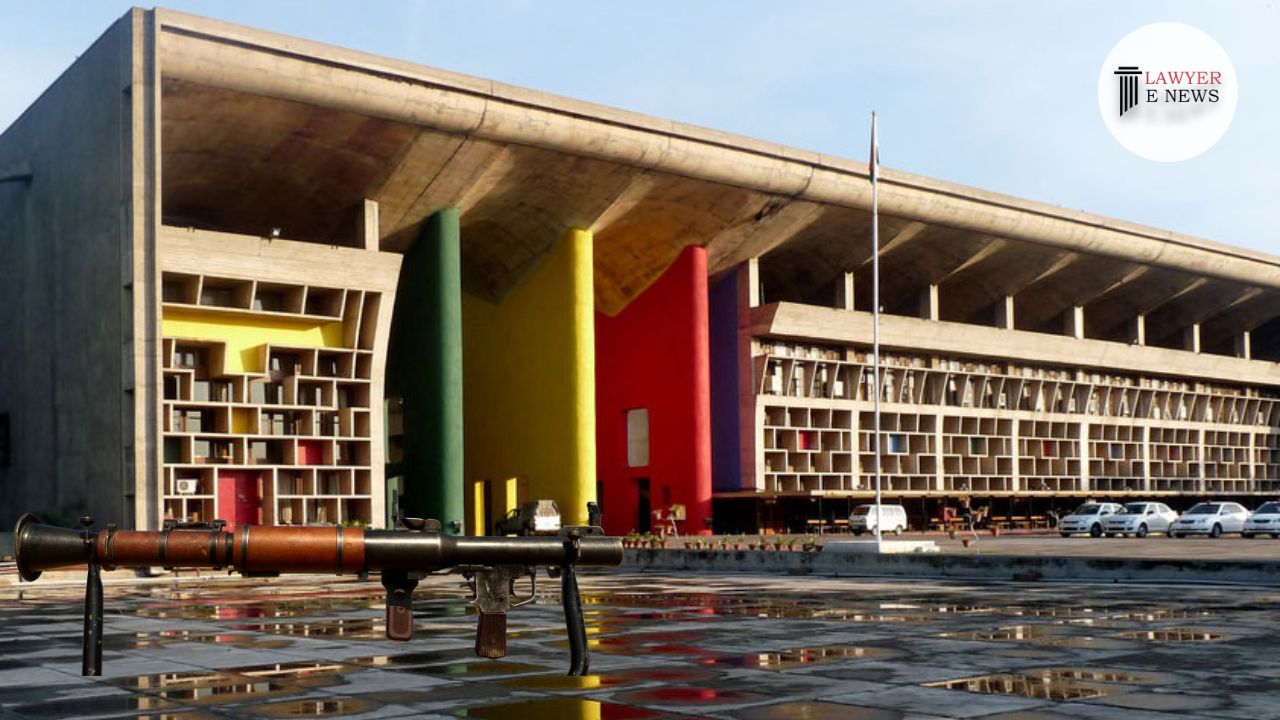
In a significant ruling, the High Court of Punjab and Haryana has dismissed a petition seeking pension entitlement from the respondent bank, citing lack of territorial jurisdiction. The petitioner, Jasbir Singh Gill, had approached the court to direct the respondents to grant him pension effective from 01.06.2005, the date of his retirement.
The bench, presided over by Hon’ble Mr. Justice Jagmohan Bansal, emphasized the importance of territorial jurisdiction in adjudicating such matters. "No cause of action has arisen within the jurisdiction of this Court," Justice Bansal noted, underscoring the court's inability to entertain the petition under Articles 226/227 of the Constitution of India.
The petitioner, who retired from the Zonal Office, Mumbai of the respondent-bank, filed an application for pension, but the respondents reportedly did not respond. The court observed, "The petitioner has invoked the jurisdiction of this Court on the sole ground that the petitioner is a resident of the State of Punjab and initially he had joined the respondent-bank at Punjab." However, the bench found this reasoning insufficient to establish the court's jurisdiction.
Referring to the Supreme Court ruling in Alchemist Ltd. v. State Bank of Sikkim, Justice Bansal highlighted that "a part of the cause of action must arise within the High Court’s jurisdiction to invoke writ jurisdiction." The bench also cited similar instances from past judgments, including a Full Bench decision of the Kerala High Court and a previous decision of the Punjab and Haryana High Court, to support its conclusion.
The court's decision to dismiss the petition aligns with the legal precedents that emphasize the necessity of a part of the cause of action occurring within the court’s territorial jurisdiction. This ruling reaffirms the principle that for a High Court to exercise its jurisdiction under Article 226, the person or authority against whom the writ is issued must be within those territories.
The petitioner has been granted the liberty to avail remedies as permissible by law. However, this ruling serves as a crucial reminder of the legal limitations imposed by territorial jurisdiction in the context of the High Courts' power to adjudicate under the Constitution of India.
Date of Decision: 25.01.2024
JASBIR SINGH GILL vs UCO BANK AND ANOTHER