-
by sayum
25 August 2026 11:12 PM







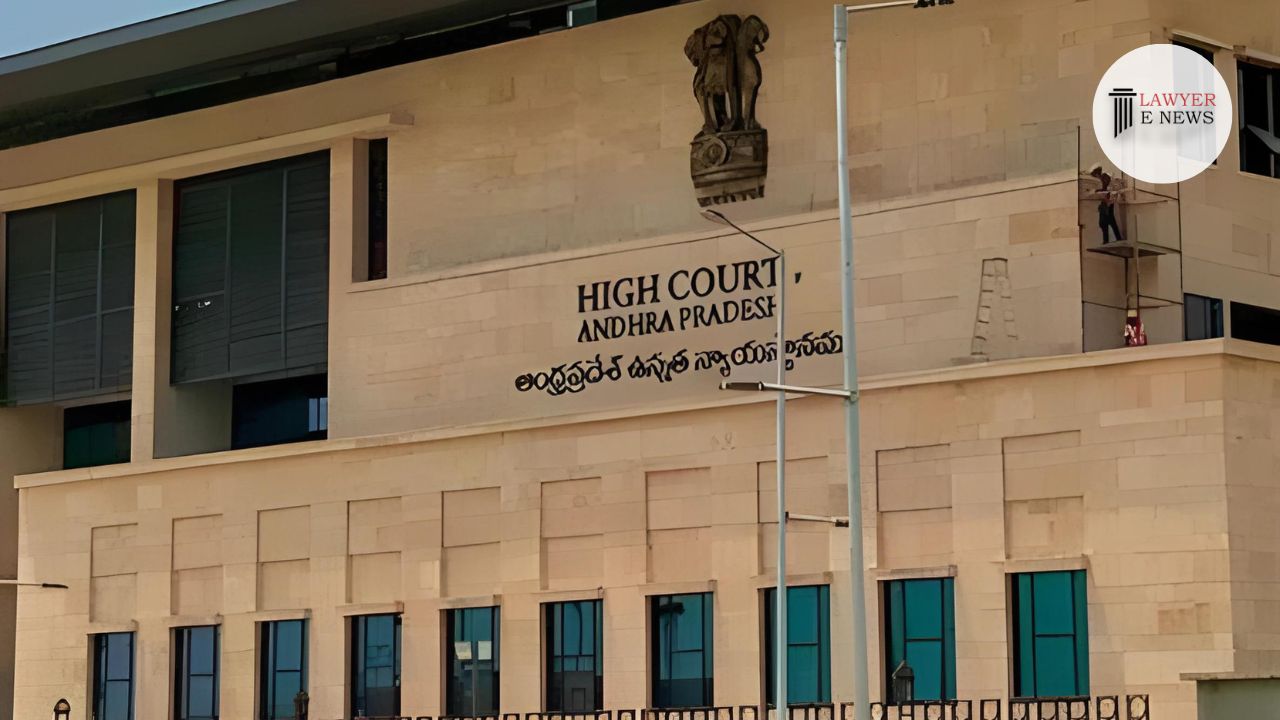
Defendant’s appeal dismissed as High Court reaffirms the trial court’s findings on the validity and discharge of promissory notes. The Andhra Pradesh High Court has dismissed an appeal challenging the trial court’s decision in a suit for recovery of money based on several promissory notes. The judgment, delivered by Justice Venuthurumalli Gopala Krishna Rao, emphasized the credibility of handwriting comparisons under Section 73 of the Indian Evidence Act and upheld the trial court’s findings regarding the execution and discharge of the promissory notes.
The respondent, Dogiparti Venkata Satyanarayana, filed a suit for recovery of ₹1,95,615 based on promissory notes executed by the appellant, Lolla Suryanarayana Murthy, on various dates in 1991 and 1992. The appellant acknowledged the execution of the notes but claimed that he had discharged his debt through various payments, including a disputed amount of ₹71,867. The trial court found the endorsements on the notes to be genuine and rejected the appellant’s defense of discharge as unsupported by credible evidence.
The court highlighted the importance of handwriting comparison under Section 73 of the Indian Evidence Act. “The Court’s duty to compare writings and come to its own conclusion cannot be avoided by recourse to the statement that the court is not an expert,” noted Justice Gopala Krishna Rao, referencing the Supreme Court’s directive in Murari Lal v. State of M.P.
Justice Gopala Krishna Rao affirmed the trial court’s assessment of witness credibility. The plaintiff’s testimony was consistent and corroborated by documentary evidence. The court noted that the defendant failed to provide substantial proof to support his claims of discharge through payments allegedly endorsed on the promissory notes.
The judgment extensively discussed the principles of evaluating evidence, particularly in cases involving documentary proof and handwriting comparisons. The court found that the defendant’s purported endorsements on the promissory notes were not credible and were likely fabricated. The plaintiff’s evidence, including admissions by the defendant regarding partial payments, was deemed reliable.
Justice Gopala Krishna Rao remarked, “The trial court’s finding that the endorsement in question is not genuine is supported by a detailed examination of the handwriting. The defense’s inability to substantiate their claims of discharge demonstrates the lack of credibility in their assertions.”
The High Court’s dismissal of the appeal underscores the judiciary’s commitment to upholding meticulous examination of documentary evidence. By affirming the lower court’s judgment, the decision sends a strong message regarding the reliability of handwriting comparisons and the necessity of credible evidence in financial disputes. This judgment is expected to reinforce legal standards in evaluating promissory notes and other financial instruments in future cases.
Date of Decision: June 26, 2024
Lolla Suryanarayana Murthy vs. Dogiparti Venkata Satyanarayana