
-
by sayum
26 August 2026 1:49 PM







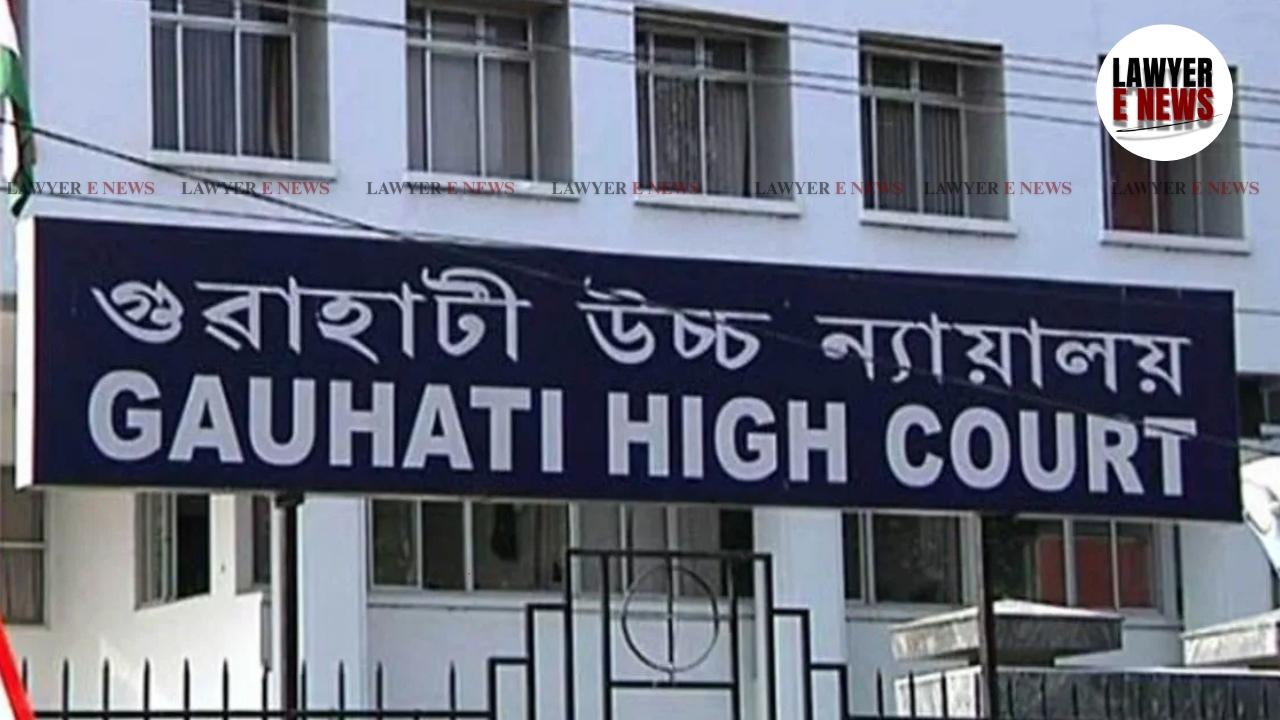
“Cancellation of registration entails serious civil consequences” — In a significant judgment Gauhati High Court held that the cancellation of a GST registration under Section 29(2)(c) of the Central Goods and Services Tax Act, 2017 due to non-filing of returns cannot be treated as irreversible, even when the statutory revocation period has expired — provided the assessee complies with the conditions laid out in the proviso to Rule 22(4) of the CGST Rules, 2017.
The Court observed that the “power to cancel GST registration must be exercised judiciously and not mechanically, especially when cancellation leads to serious civil consequences affecting the livelihood and continuity of business.”
Justice Sanjay Kumar Medhi emphasized that once a taxpayer clears all tax dues, interest and late fees, and files pending returns, the proper officer is expected to consider dropping cancellation proceedings in terms of Rule 22(4) proviso, notwithstanding technical lapses such as expiry of the online revocation window.
“GST Law Does Not Permit Permanent Closure of Registration for Technical Delay When Substantive Compliance is Achieved” — Gauhati High Court Directs Restoration
Court rules that expiration of revocation period on portal cannot override the statutory mandate of Rule 22(4) when dues are paid and returns are filed
The petitioners, a sole proprietorship firm operating under the name M/S Dhirghat Hardware Stores, approached the High Court after their GST registration was cancelled by the Superintendent, Dhubri-1 on 22.03.2023, under Section 29(2)(c) of the CGST Act, due to non-filing of returns for over six months. The cancellation was done ex parte following a show cause notice dated 15.01.2023, which allegedly failed to notify a specific date for hearing.
The petitioner contended that he was not conversant with the online GST portal procedures, and by the time he discovered the notice, the cancellation order had already been uploaded. Though an appeal was preferred, it was dismissed on 09.10.2025. In the meantime, the petitioner filed all pending returns up to March 2023, cleared all tax dues, and sought revocation, but the GST portal refused access, citing that the 270-day revocation window had expired.
The High Court noted that the petitioner's inability to meet the portal’s timeline could not defeat the larger object of the law. Referring to the proviso to Rule 22(4) of the CGST Rules, the Court explained:
"Where the person... furnishes all the pending returns and makes full payment of the tax dues along with applicable interest and late fee, the proper officer shall drop the proceedings and pass an order in FORM GST REG-20."
The Court also cited its earlier ruling in Sanjoy Nath vs. Union of India [WP(C) No. 6366/2023, dated 11.10.2023], where it had similarly granted relief to a taxpayer who had complied with all statutory obligations despite missing the technical revocation deadline.
Justice Medhi stressed that:
“Having regard to the fact that the GST registration of the petitioner has been cancelled under Section 29(2)(c)... and the provisions contained in the proviso to sub-rule (4) of Rule 22... cancellation of registration entails serious civil consequences, this Court is of the considered view that... the officer duly empowered may consider to drop the proceedings and pass an appropriate order.”
The Court further clarified that mere procedural limitations cannot override the mandatory consideration required under the Rule, once the taxpayer shows readiness and compliance.
Court Issues Directions for Restoration of Registration
The High Court directed the petitioners to approach the concerned GST authority within two months of the judgment. If the petitioners file the required application and fulfil all conditions under the proviso to Rule 22(4), the authority is to consider restoration of registration in accordance with law, expeditiously.
Crucially, the Court held:
“The petitioners herein would also be liable to make payment of arrears i.e. tax, penalty, interest and late fees... The period as stipulated under Section 73(10) shall be computed from the date of the instant order, except for the financial year 2024-25 which shall be governed by Section 44 of the CGST Act.”
Thus, the judgment not only permits a route to revival of cancelled GST registrations but also ensures that tax authorities may proceed with recovery or scrutiny under Section 73 from a fresh date, post this order — thereby harmonizing tax administration with taxpayer compliance.
The Gauhati High Court has laid down an important precedent affirming that technical barriers on the GST portal cannot thwart substantive rights, especially where an assessee is willing to regularize defaults in full.
By ruling that the proviso to Rule 22(4) must be given effect even after the lapse of revocation timelines, the Court has expanded the space for equitable tax enforcement and safeguarded the business continuity of small taxpayers, who may fall foul of complex procedural norms.
This judgment stands as a reminder that administrative convenience cannot override legislative intent, and tax officers must apply the law with fairness, flexibility, and reasonableness.
Date of Decision: 17 October 2025





