-
by sayum
29 August 2026 7:20 AM







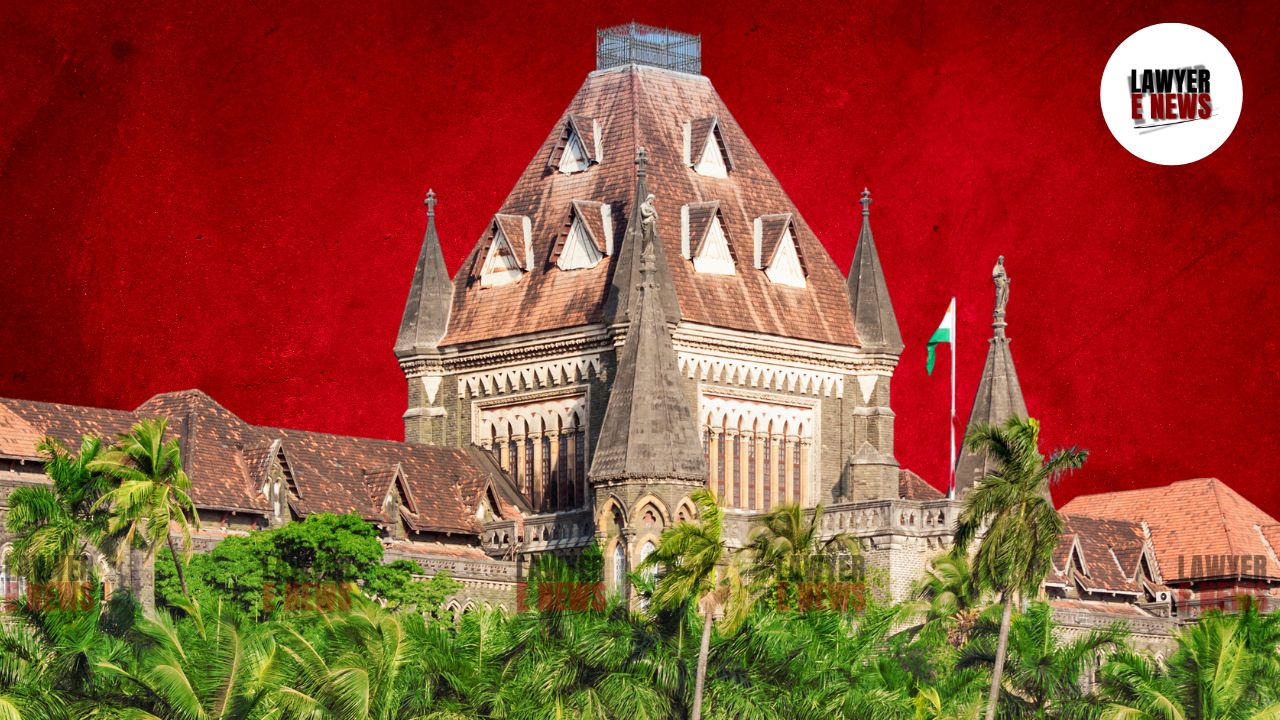
"Plaintiff is Not a Coparcener — Suit Based on Obstructed Heritage Is Not Maintainable Without Mother Claiming Partition Herself", Bombay High Court at Aurangabad Bench quashed a civil suit filed by a woman seeking partition and share in her maternal grandfather’s ancestral property, holding that a granddaughter has no locus standi to claim partition during the lifetime of her mother, who is a living coparcener but has chosen not to claim any share.
Justice Shailesh P. Brahme observed: “The plaintiff has not acquired any birth right. Therefore, there is no unobstructed heritage. She is not a lineal descendant of a paternal ancestor. She is claiming partition of the lands of her maternal grandfather. It’s a case of obstructed heritage.”
The Court allowed a revision application under Order VII Rule 11 of CPC, rejecting the plaint on the grounds of lack of cause of action, non-maintainability, and absence of legal right, thereby reversing the lower court’s order dated 28.02.2023 which had refused to reject the plaint.
“Right to Partition Cannot Be Claimed Through Clever Drafting” — Court Calls the Suit a Misuse of Legal Process
The plaintiff, Sunanda, had filed Regular Civil Suit No. 224/2022 seeking declaration, partition, possession, perpetual injunction, and mesne profits, claiming half of the 1/8th share that would belong to her mother (defendant no. 1) in the undivided property of her maternal grandfather, Namdev Nikam.
However, the Court found that the mother was alive, had not claimed any share, and was not a plaintiff in the suit. In this backdrop, the Court held that the plaintiff lacked locus standi, and the entire suit was premature and unsustainable in law.
“During lifetime of mother, plaintiff cannot claim any partition. It is incomprehensible as to why her mother is unable to file suit for partition and possession,” the Court said, terming the cause of action as “illusory”.
“Coparcenary Does Not Extend Through Maternal Lineage” — Clarifies Distinction Between Paternal and Maternal Inheritance Under Hindu Law
Justice Brahme delivered a detailed exposition on Hindu Succession Law, holding that coparcenary rights by birth do not extend to maternal grandfather’s property.
The Court held:
“Plaintiff is the granddaughter and she is not placed at par with daughter. As per Section 6(1)(a) of the Hindu Succession Act, 1956, only a daughter can become a coparcener in her own right in the same manner as the son.”
Relying on the landmark decision in Vineeta Sharma v. Rakesh Sharma [(2020) 9 SCC 1], the Court emphasized that coparcenary property must descend from the paternal male line. The plaintiff’s reliance on her maternal ancestry rendered the case one of obstructed heritage, which only arises after the death of the person entitled to the share — in this case, her mother.
The Court further held: “She is not a lineal descendant of a paternal ancestor. She is claiming partition of the lands of maternal grandfather. It’s a case of obstructed heritage.”
“No Right by Birth in Maternal Grandfather’s Property” — Privy Council’s 1937 Judgment Reaffirmed
To strengthen the conclusion, the Court invoked the historic Privy Council decision in Mohammad Husain Khan v. Kishva Nandan Sahai [AIR 1937 PC 233], where it was held:
“The estate which was inherited by Ganesh Prasad from his maternal grandfather cannot… be held to be ancestral property in which his son had an interest jointly with him.”
The Bombay High Court applied the same principle to the present facts, holding that property descending from the maternal grandfather cannot be treated as ancestral property granting automatic birthrights to the next generation.
"Even Section 14 of Hindu Succession Act Cuts Plaintiff’s Claim" — Court Notes That Only the Mother Would Become Absolute Owner
The Court observed that if the mother (defendant no. 1) were ever allotted a share, then by virtue of Section 14 of the Hindu Succession Act, she would become the absolute owner, and the plaintiff would only inherit if the mother died intestate.
“Due to Section 14, the plaintiff cannot be said to have any vested right or interest in the property or share allottable to her mother.”
Thus, even if the mother were to later seek partition, the plaintiff’s rights would arise only after her death, and that too only if no will existed.
“Bar of Law Camouflaged by Devious and Clever Drafting” — Court Calls Out Misuse of Judicial Time
Rejecting the arguments of the plaintiff’s counsel and criticizing the trial court’s refusal to dismiss the plaint, the Court observed:
“The bar of law is camouflaged by devious and clever drafting of a plaint… permitting the Trial Court to proceed with the suit would be an exercise in futility.”
Accordingly, the High Court quashed the order dated 28.02.2023, allowed the application under Order VII Rule 11 CPC, and rejected the plaint in RCS No. 224/2022 as not maintainable in law.
Date of Decision: 03.09.2025