Writ Jurisdiction Not Appropriate For Adjudicating Complex Title Disputes; Mutation Entries Do Not Confer Ownership: Madhya Pradesh High Court Joint Account Holder Not Liable Under Section 138 NI Act If Not A Signatory To Dishonoured Cheque: Allahabad High Court Private Individuals Accepting Money Can Be Prosecuted Under MPID Act; Nomenclature As 'Loan' Irrelevant: Supreme Court Nomenclature Of Transaction As 'Loan' Irrelevant; If Ingredients Met, It Is A 'Deposit' Under MPID Act: Supreme Court Pleadings Must State Material Facts, Not Evidence; Deficiency In Pleading Cannot Be Raised For First Time In Appeal: Supreme Court Denial Of Remission Cannot Rest Solely On Heinousness Of Crime; Justice Doesn't Permit Permanent Incarceration In Shadow Of Worst Act: Supreme Court Second Application For Rejection Of Plaint Barred By Res Judicata If Earlier Order Attained Finality: Supreme Court Section 6(5) Hindu Succession Act Is A Saving Clause, Not A Jurisdictional Bar To Partition Suits: Supreme Court Sale Of Natural Gas Via Common Carrier Pipelines Is An Inter-State Sale; UP Has No Jurisdiction To Levy VAT: Supreme Court Mediclaim Reimbursement Not Deductible From Motor Accident Compensation; Tortfeasor Can’t Benefit From Claimant’s Prudence: Supreme Court Rules Of Procedure Are Handmaid Of Justice, Not Mistress; Striking Off Defence Under Order XV Rule 5 CPC Is Not Mechanical: Supreme Court Power To Strike Off Tenant's Defense Under Order XV Rule 5 CPC Is Discretionary, Not To Be Exercised Mechanically: Supreme Court Areas Urbanised Before 1959 Don't Require Separate Notification To Fall Under Delhi Rent Control Act: Delhi High Court Police Cannot Freeze Bank Accounts To Perform Compensatory Justice; Direct Nexus With Offence Essential: Bombay High Court FSL Probe Before Electronic Evidence Meets Section 65B Admissibility Standards: Gujarat High Court Court Shouldn't Adjudicate Rights At Stage Of Granting Leave Under Section 92 CPC, Only Prima Facie Case Required: Allahabad High Court Right To Seek Bail Based On Non-Furnishing Of 'Grounds Of Arrest' Applies Only Prospectively From November 6, 2025: Madras High Court Prior Exposure To Accused Before TIP Renders Identification Meaningless: Delhi High Court Acquits Four In Uphaar Cinema Murder Case No Particular Format Prescribed For 'Proposed Resolution' In No-Confidence Motion; Intention Of Members To Be Gathered From Document As A Whole: Orissa High Court Trial Court Cannot Grant Temporary Injunction Without Adverting To Allegations Of Fraud And Collusion: Calcutta High Court "Ganja" Definition Under NDPS Act Excludes Roots & Stems: Karnataka High Court Grants Bail As Seized Weight Included Whole Plants Right To Speedy Trial Under Article 21 Doesn't Displace Section 37 NDPS Mandate In Commercial Quantity Cases: Orissa High Court

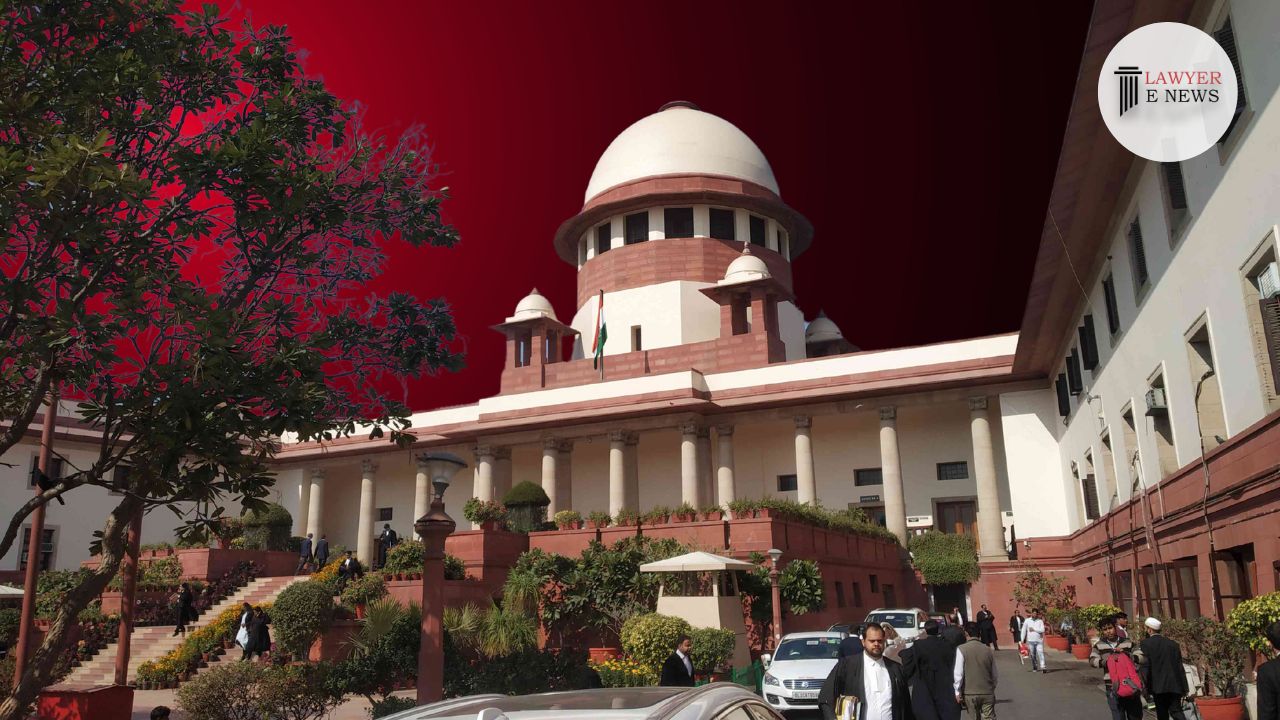
Gender No Ground for Bail in Serious Offences: Supreme Court of India Rejects Bail Appeal of Chhattisgarh Deputy Secretary

07 May 2024 8:19 AM

By: Admin


In a significant ruling, the Supreme Court of India today dismissed the bail appeal of Saumya Chaurasia, the Deputy Secretary in the Office of the Chief Minister of Chhattisgarh, in connection with her arrest under charges of the Prevention of Money Laundering Act, 2002 (PMLA) and the Indian Penal Code (IPC). The apex court, led by Justices Aniruddha Bose and Bela M. Trivedi, upheld the High Court of Chhattisgarh's decision to reject her bail application, stating, "No compelling reason for granting bail observed," as noted in paragraph 30 of the judgment.

The bench criticized the appellant for attempting to mislead the court by presenting incorrect statements in the Special Leave Petition (SLP), aimed at challenging the order of the High Court. The judgment, in paragraph 12, stated, "There was a bold attempt made by and on behalf of the appellant to misrepresent the facts for challenging the impugned order."

Further elaborating on the need for accurate representation in legal proceedings, the judgment emphasized the responsibility of advocates in ensuring the sanctity of legal processes. "It is unbelievable that the battery of lawyers... did not notice the apparent fact that when the chargesheet and cognizance order were not in existence before the High Court when the arguments were concluded and the judgment was reserved, non-consideration of the same by the High Court could not be made the basis for challenging the said order in the SLP before this Court," the court observed in paragraph 13.

The court also discussed the discretion under Section 45 of the PMLA regarding the granting of bail to women, highlighting that the involvement of the appellant in serious offences and the evidence against her did not warrant bail despite her gender. The judgment reads, "There is sufficient evidence collected... to prima facie come to the conclusion that the appellant... was actively involved in the offence of Money Laundering as defined in Section 3 of the PMLA" (paragraph 25).

This ruling reinforces the importance of integrity and accuracy in legal representations and the need for the legal community to maintain high standards of professionalism, especially when dealing with cases of significant public interest.

The Supreme Court has also imposed a cost of Rs. 1 lakh on the appellant, to be deposited before the Supreme Court Legal Services Authority within two weeks. The judgment, in its finality and depth, sets a precedent for future cases involving money laundering and the professional conduct of advocates in India's highest court.

Date of Decision: 14th December 2023

SAUMYA CHAURASIA VS DIRECTORATE OF ENFORCEMENT

Latest Legal News