-
by sayum
09 August 2026 1:53 PM







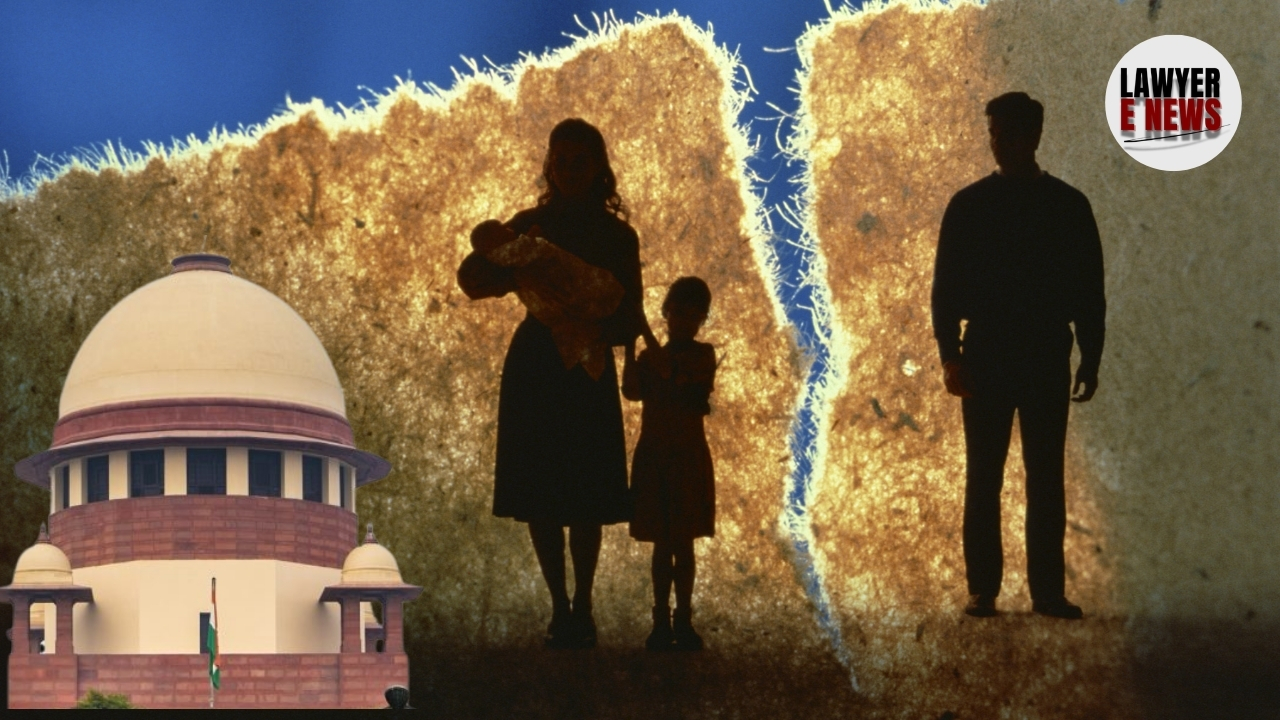
“Law Cannot Be Weaponized For Vengeance After Irretrievable Breakdown Of Marriage,” In a landmark ruling Supreme Court of India exercised its extraordinary powers under Article 142 of the Constitution to dissolve a marriage marred by 16 years of separation and futile litigation. Division Bench of Justice Vikram Nath and Justice Sandeep Mehta allowed the husband’s appeal, overturning the decisions of the Family Court and Delhi High Court, which had earlier dismissed his divorce petition on grounds of cruelty.
Despite rejecting the husband’s claims of cruelty, the Supreme Court underscored that “the continuance of marriage shall only fuel animosity and litigation between the parties,” and ordered dissolution of marriage on the principle of irretrievable breakdown, enhancing maintenance to the wife and their minor child to ₹15,000 per month.
The appellant-husband, Pradeep Bhardwaj, married the respondent-wife, Priya, on 7th May 2008 under Hindu rites. A male child was born in March 2009, but the matrimonial relationship deteriorated quickly, and the couple had been living separately since October 2009.
In 2010, the appellant sought divorce under Section 13(1)(a) of the Hindu Marriage Act, 1955, citing cruelty, including allegations of physical assault by the wife on himself and his ailing mother, extra-marital affairs, and false criminal accusations. The wife refuted all allegations and counter-claimed neglect and non-provision of maintenance by the husband.
The Family Court dismissed the divorce petition in 2017, terming the husband's claims as “uninspiring and unworthy of acceptance,” a decision later affirmed by the Delhi High Court in 2019.
The principal legal question before the Supreme Court was whether, despite the husband’s failure to substantiate cruelty, the long and irreparable rupture of marital ties justified dissolution of marriage under the doctrine of irretrievable breakdown.
The Court meticulously reviewed the facts and judicial precedents and framed two pivotal considerations:
First, that the appellant-husband and his family were acquitted in criminal proceedings initiated by the wife under Sections 498A, 406, and 34 IPC.
Second, that the couple had lived separately for over 16 years, marking a complete cessation of matrimonial cohabitation.
“Marriage Must Be Rooted In Dignity And Companionship”: The Court’s Emphasis on Human Dignity
Reiterating the guiding philosophy of matrimonial law, the Court observed: “The institution of marriage is rooted in dignity, mutual respect and shared companionship, and when these foundational aspects are irreparably lost, forcing a couple to remain legally bound serves no beneficial purpose.”
Relying on Amutha v. A.R. Subramaniam (2023 SCC OnLine SC 611), the Court stressed the need to prioritise welfare and dignity over mere legal formalities, noting that compelling a “dead marriage” to continue inflicts mental agony and imposes an unwarranted societal burden.
“A Daylight Clear Case Of Irretrievable Breakdown”: Court Relies on Factual Irreversibility
The Court pointed out: “Both parties have spent the prime years of their youth entangled in this marital discord… there is no possibility of reconciliation, and the marriage has become defunct for all practical purposes.”
Significantly, the Court noted that multiple attempts at mediation, including at the Supreme Court Mediation Centre, had failed. The husband’s acquittal in the criminal case was held as an indicator of the toxic nature of the relationship, preventing any meaningful revival of marital life.
Concurrent Findings On Cruelty Not Disturbed But Divorce Granted Under Article 142
The Court made it clear that while it would not interfere with the concurrent findings rejecting cruelty, the equitable jurisdiction under Article 142 could be invoked to do “complete justice.” The Court stated:
“This Court finds it a fit case to exercise its power under Article 142… the continuance of marriage would only perpetuate hostility, contrary to the ethos of matrimonial harmony envisioned by law.”
Maintenance Enhanced In View Of Child’s Welfare
Taking note of the wife’s role as primary caregiver to their 16-year-old son and the husband’s private employment, the Court enhanced monthly maintenance to ₹15,000 for the wife and child, revising previous orders under Section 125 CrPC.
“Considering the financial status and responsibilities, we deem it equitable to enhance the maintenance to ₹15,000 per month in favour of the respondent and their minor son,” the Court ordered.
Summing up, the Supreme Court held: “It is in the best interest of both parties and their minor child that they be allowed to lead their lives independently and peacefully, free from the shadow of prolonged and futile legal battles.”
Accordingly, the Court set aside the High Court’s judgment, granted a decree of divorce under Article 142 on the ground of irretrievable breakdown of marriage, and directed enhanced maintenance.
This judgment reaffirms the Supreme Court’s growing jurisprudence recognizing irretrievable breakdown as a valid ground for divorce where continuation of marital ties serves no constructive purpose but only results in avoidable misery and protracted litigation.
Date of Decision: 15th July 2025