-
by sayum
29 August 2026 6:23 AM







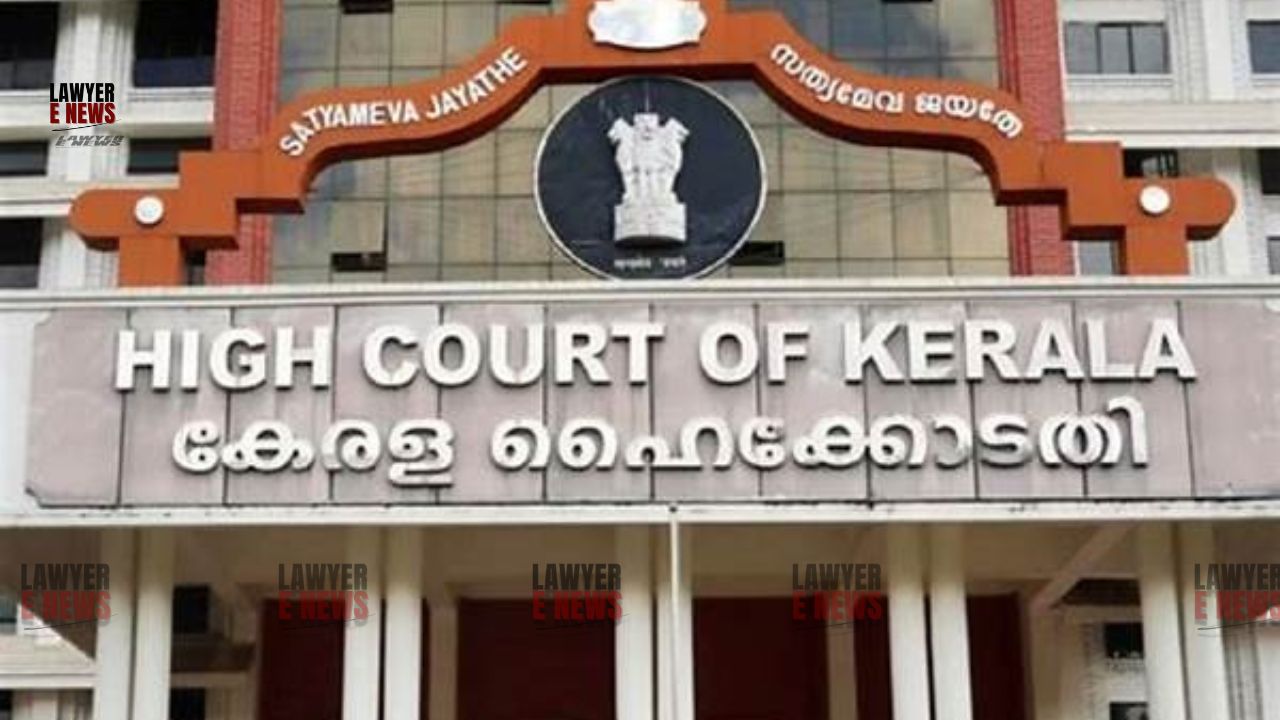
“Once Online Classes Were Attended, Two-Year CRMI Becomes Inevitable—Public Interest Outweighs Individual Grievances” - In a significant decision impacting hundreds of foreign medical graduates (FMGs) affected by the COVID-19 pandemic and the Russia-Ukraine war, the Kerala High Court dismissed a writ petition filed by 27 MBBS graduates from Bukovinian State Medical University, Ukraine, seeking exemption from the two-year Compulsory Rotational Medical Internship (CRMI) mandate.
Justice N. Nagaresh held that the petitioners, having undergone online classes for any duration during their medical education, are bound to complete a two-year internship in India as per the National Medical Commission (NMC)'s binding guidelines.
“In view of the specific stand taken by the NMC... FMGs who have attended their classes online for any duration are required to qualify the FMG Examination and undergo CRMI for two/three years,” the Court observed, adding that the Kerala State Medical Council was justified in enforcing this requirement.
“Certificates Claiming Offline Compensation Are Unreliable”: Court Backs NMC’s Decision to Reject Foreign Declarations
The petitioners argued that they had attended physical, offline classes throughout their course, and presented certificates from Bukovinian State Medical University and Ukraine’s Ministry of Public Health to that effect. They relied on an earlier NMC public notice dated 19.06.2024, which permitted FMGs to undergo only one-year CRMI if they had “sufficiently compensated classes in physical onsite mode.”
However, the NMC later issued a clarificatory public notice on 07.06.2024, explicitly disallowing any such certificates from foreign medical universities, citing widespread misuse: “The National Medical Commission found that such certificates did not reflect the true facts and were being issued indiscriminately,” the Court noted.
Consequently, NMC issued Annexure R3(d) directing that any student who attended online classes for any duration must undergo a two/three-year internship. This was reiterated in the NMC’s Circular dated 09.05.2023, forming the basis for Kerala Medical Council's decision to issue provisional registration for a two-year internship only.
“Policy Framed in Public Interest Cannot Be Circumvented by Selective Enforcement”: Court Rejects Petitioners' Equivalence Argument
The petitioners placed on record multiple certificates (Exhibits P5 to P22) to show that other State Medical Councils like those in Uttar Pradesh, Karnataka, Gujarat, Delhi, Himachal Pradesh, Goa, and Rajasthan had granted one-year CRMI based on the same documents.
But the Kerala High Court refused to allow this “selective implementation” as a ground to invalidate the NMC’s policy:
“The 3rd respondent has only followed the directions of the NMC. The decision has been taken on the basis of larger public interest,” said Justice Nagaresh.
The Court held that individual State Councils wrongly granting one-year CRMI cannot bind or override the centrally mandated policy, especially when the petitioners had already accepted provisional registration clearly stating that the certificate was valid for two years of internship.
“The petitioners are now trying to circumvent the conditions in the certificate,” the Court remarked, rejecting the argument that they were unfairly discriminated against.
“No Merit in the Writ Petition”: High Court Declines to Interfere With Uniform CRMI Policy
Justice Nagaresh emphasized that the policy requiring two-year CRMI was created in response to an extraordinary global situation, and thus, medical graduates from foreign institutions during 2016–2022 had to comply.
“It is not in dispute that the petitioners had their course period when Covid-19 pandemic and Russia-Ukraine war occurred. The petitioners had admittedly undergone online classes during their course period,” the Court concluded.
With these observations, the Court dismissed the writ petition, upholding the NMC’s directive and Kerala Medical Council’s compliance with the same.
Date of Decision: 15.09.2025