Conviction Under Section 409 IPC Postulates Strict Proof Of Entrustment; Suspicion However Grave Cannot Substitute Proof: Supreme Court Criminal Prosecution Emanating From Past Matrimonial Relationship Ought Not To Linger After Divorce: Supreme Court Negligence Of Previous Counsel Not A Ground To Reopen Concluded Pre-Charge Evidence Under Section 311 CrPC: Allahabad High Court Unregistered Agreement To Sell Cannot Protect Tenant's Possession Under Section 53A Transfer Of Property Act: Delhi High Court Certified Copies Of Registered Sale Deeds Admissible As Secondary Evidence Without Proving Loss Of Original: Gauhati High Court Counsel Representing Deceased Party Must Inform Court Of Death Under Order XXII Rule 10-A CPC: J&K High Court Son Staying In Father's House Out Of Love And Affection Is A Mere Licensee, Cannot Challenge Father's Title: Delhi High Court Conviction For Murder Cannot Stand Where Single Blow Inflicted In Sudden Fight Without Premeditation: Uttarakhand High Court Inability To Trace Suppliers Or Buyers No Ground For Custodial Interrogation Once Recovery Is Effected: Punjab & Haryana High Court Right To Assemble Peacefully To Celebrate Association Anniversary Is A Fundamental Right; Unlawful Assembly Per Se Not An Offence: Madras High Court Marriage Photographs Can Be Relied Upon To Estimate Quantity Of Gold Ornaments In Matrimonial Disputes: Kerala High Court POCSO Act Not Confined To Securing Convictions, Soul Of Law Lies In Preserving Childhood Dignity & Healing: Madras High Court Special Appeal Maintainable If Single Judge's Order Relates To Authority Acting Without Statutory Appellate Jurisdiction: Allahabad High Court Recall Of Witness For Cross-Examination Permissible On Newly Framed Issue Post-Remand Even If Disposal Timeline Is Fixed: Karnataka High Court Litigant Cannot Overcome Law Of Limitation By Shifting Blame On Counsel Through Inconsistent Stands: Madras High Court Cross-Cases Cannot Be Clubbed If Co-Accused In Complaint Case Is Absconding & Complainant Delayed Process: Allahabad High Court Cross-Cases Cannot Be Clubbed If Co-Accused In Complaint Case Is Absconding & Complainant Delayed Process: Allahabad High Court Preventive Detention Not Warranted If Person Can Be Dealt With Under Ordinary Laws; No Effort To Arrest In Pending Cases: Supreme Court Accused Languishing In Jail For 9 Years Deserves Bail; Right To Speedy Trial Under Article 21 Violated: Supreme Court Custodial Death | Pendency Of Criminal Trial No Bar For Awarding Compensation Under Public Law Remedy: Gauhati High Court Suit For Possession Under Section 6 Specific Relief Act Barred If Filed Beyond Six Months Of Dispossession: Madras High Court Subsequent Purchaser Is Representative Of Judgment Debtor, Separate Suit Challenging Execution Sale Barred Under Section 47 CPC: Kerala High Court Statutory Bail Restrictions Melt Down When Pre-Trial Detention Is Prolonged & Trial Is Unlikely To Conclude Soon: Delhi High Court Failure To Apprise Accused Of Right Under Section 50 NDPS Act Vitiates Search & Recovery: J&K & Ladakh High Court Section 12(5) Arbitration Act Inapplicable To Proceedings Commenced Before 2015 Amendment; Executing Court Can't Apply Neutrality Norms Retrospectively: Punjab & Haryana High Court Banks Can Share Sale Proceeds Of Secured Assets Outside Liquidation Estate With Homebuyers Under Compromise Agreement: Kerala High Court Election Disputes Must Be Resolved Expeditiously; Long Stays Render Adjudication A Mockery Of Justice: Madras High Court Delhi High Court Suspends LOC, Permits Businessman To Travel Abroad For Healthcare Conferences; Cites Roots In Society & Past Compliance Section 138 NI Act Complaint Not Maintainable By Third Party Who Is Neither Payee Nor Holder In Due Course: Allahabad High Court

FIR Quashed: Need To Curb The Unnecessary Turning Of A Civil Matter Into A Criminal Case: Supreme Court

07 May 2024 8:19 AM

By: Admin


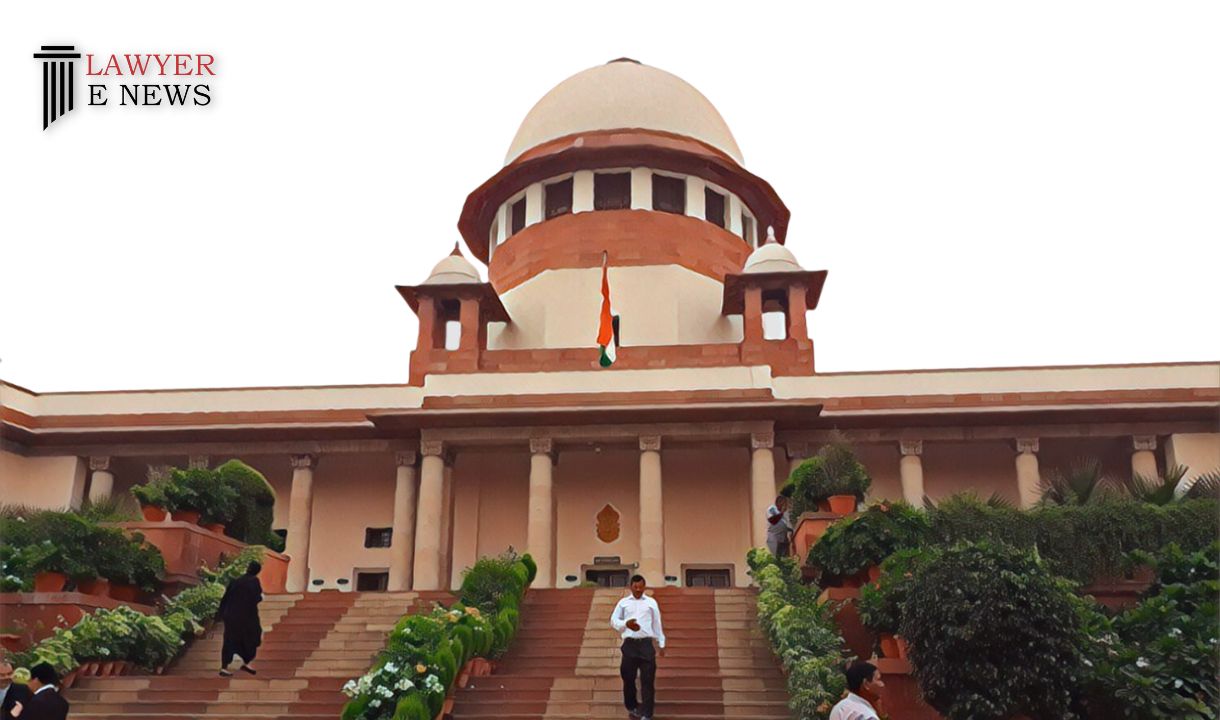
In a landmark judgment, the Supreme Court of India quashed the criminal proceedings against Dinesh Gupta and Rajesh Gupta in a case that stemmed from a commercial dispute, thereby setting a precedent against the misuse of the criminal justice system for personal vendettas in civil matters.

The apex court, led by Justices Vikram Nath and Rajesh Bindal, overturned the decision of the lower court, emphasizing the need to curb the “unnecessary turning of a civil matter into a criminal case.”

The bench remarked, “Unscrupulous litigants should not be allowed to go scot-free. They should be put to strict terms and conditions including costs.”

The judgment highlighted the malicious intent of the complainant, who filed the criminal case under false pretenses, misrepresenting a commercial transaction as a criminal offense.

The case involved financial transactions and agreements between private companies and the complainant, where investments were misrepresented as loans, leading to allegations of cheating and forgery.

The Supreme Court noted that the complainant had deliberately provided misleading information to manipulate jurisdiction and create a false narrative.

This decision is a significant step in preventing the misuse of the legal system and ensuring that criminal charges are not used as tools for personal gain in civil disputes.

The court has imposed a fine of ₹25 lakhs on the complainant, Karan Gambhir, for misusing the legal system, marking a strong stance against frivolous litigation.

The judgment reinforces the principle that commercial disputes should be resolved through civil litigation or arbitration, not criminal prosecution.

Legal experts have lauded the judgment for its clarity and firm stance against the misuse of legal processes.

The imposed fine is directed to be used for the development and benefit of the legal community, further emphasizing the court’s commitment to upholding the integrity of the legal system.

The Supreme Court’s ruling in this case serves as a stern warning against the misuse of criminal proceedings in commercial disputes, reaffirming the sanctity of the legal system and the need for its correct application. The decision underscores the importance of distinguishing between civil and criminal jurisdictions, ensuring that the criminal justice system is not burdened with cases stemming from personal vendettas or commercial disagreements.

Date of Decision: 11th January 2024

DINESH GUPTA VS THE STATE OF UTTAR PRADESH & ANR.

 

Latest Legal News