-
by sayum
06 August 2026 1:57 PM







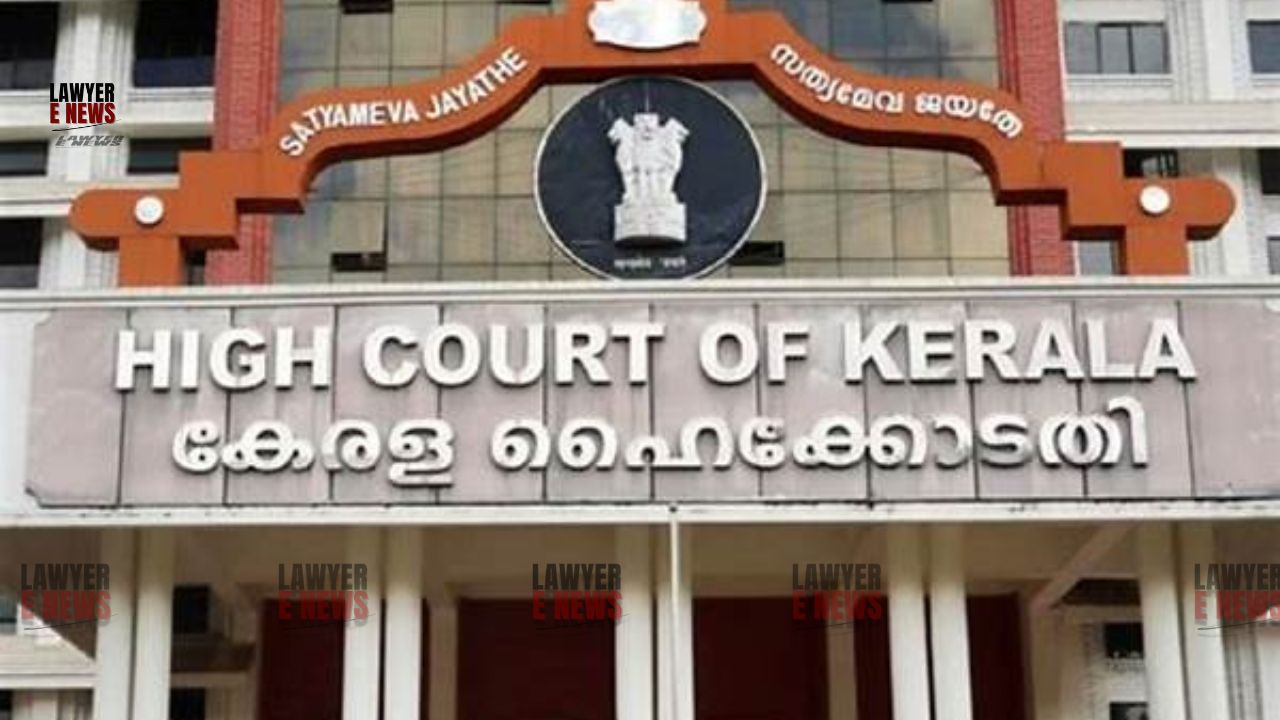
“When an advocate declares a person to be ‘personally known’ and that person is later proved to be an impersonator, a prima facie case of conspiracy arises” – In a strongly worded ruling Kerala High Court dismissed Criminal Revision, filed by an advocate and the 8th accused in a ₹44 lakh loan fraud case involving the Kerala Financial Corporation (KFC). The Court upheld the Special Court’s refusal to discharge him, observing that false attestation of identity in a statutory affidavit cannot be dismissed as a mere formality and that prima facie complicity in criminal conspiracy is made out.
Justice A. Badharudeen, while rejecting the plea, made a critical observation: “There is no compulsion for a lawyer to attest a declaration unless he is satisfied of the identity of the person. When an advocate falsely declares someone as ‘personally known,’ and that attestation facilitates impersonation and cheating, criminal complicity must be inferred at the pre-trial stage.”
“From Legal Gatekeeper to Alleged Conspirator: Advocate’s Attestation Enabled Impersonation in ₹44 Lakh Loan Fraud”
The case arises from C.C. No. 5 of 2016 before the Vigilance Court, Muvattupuzha, concerning a complex web of fraud orchestrated to secure a loan of ₹44 lakh from KFC between 2000 and 2001. The 8th accused, T.P. Mathew, is alleged to have attested a false declaration dated 22.02.2001, certifying that both deponents—Jossy Varghese (A3) and Muhammed Iqbal (CW1)—were personally known to him.
However, investigation revealed that Muhammed Iqbal never signed or submitted the declaration, nor did he authorize anyone to apply for the loan or offer his property as collateral. The impersonation was carried out by the 5th accused, using forged documents. The loan was ultimately sanctioned, and the money allegedly misappropriated.
“Attestation of a declaration by an advocate is not a ceremonial act. The declaration was used as a critical document for disbursing a ₹44 lakh loan. The false certification directly enabled impersonation and misrepresentation.”
“False Identity Attestation Facilitated Cheating – Prima Facie Offences Made Out Under IPC and Prevention of Corruption Act”
The Court upheld the Special Judge’s finding that the attestation went beyond mere procedural error: “This is prima facie assisting the 5th accused in personating CW1, thereby making the 8th accused a party to the agreement between the 4th and 5th accused in committing the offences of impersonation and cheating.”
“Discharge Denied Despite Claim of Innocence – Matter of Evidence, Not Assumption”
Mathew argued that his attestation was based on good faith, and that Section 3 of the Oaths Act, 1969, allows lawyers to administer oaths. He relied on the Supreme Court’s ruling in CBI v. K. Narayana Rao, (2012) 9 SCC 512, where a panel advocate’s incorrect legal opinion was held not to attract criminal liability.
However, Justice Badharudeen drew a sharp distinction: “Giving a mistaken legal opinion is on a different footing from certifying a false declaration after identifying a fictitious person as ‘personally known’. In the latter, the lawyer assumes personal responsibility for the identity, which becomes a key enabler of fraud.”
The Court held that whether Mathew acted inadvertently or knowingly is a matter for trial, not a basis for pre-trial discharge:
“It is difficult to hold at the pre-trial stage that the petitioner is innocent… prima facie the allegations against the petitioner are made out.”
“No Parity With Co-Accused’s Discharge – Different Roles, Different Evidence”
The petitioner also contended that since the 1st accused (a KFC official) was discharged, he too deserved discharge on parity.
The Court dismissed this argument:
“The allegation against the 8th accused is totally different from that of the 1st accused… the 8th accused had falsely attested the declaration in the name of a person impersonated by the 5th accused.”
Justice Badharudeen clarified that discharge of one accused does not create automatic immunity for others, especially when distinct factual allegations and documentary evidence exist.
Discharge Plea Rejected – Advocate to Face Trial for Role in Loan Fraud
The High Court upheld the Special Court’s view that a prima facie case exists against the 8th accused, warranting trial under both IPC and the Prevention of Corruption Act. The interim stay on trial proceedings was vacated, and the matter was remanded for trial on merits.
“The observations in this order are intended to address the plea of discharge alone… The Special Court shall decide the case on merits on evaluation of the evidence to be adduced.”
This judgment stands as a cautionary precedent against professional misconduct by legal practitioners who casually attest critical documents without due verification, especially when such attestation plays a direct role in enabling fraud, impersonation, and corruption.
Date of Decision: 09.09.2025