-
by sayum
14 August 2026 3:21 PM







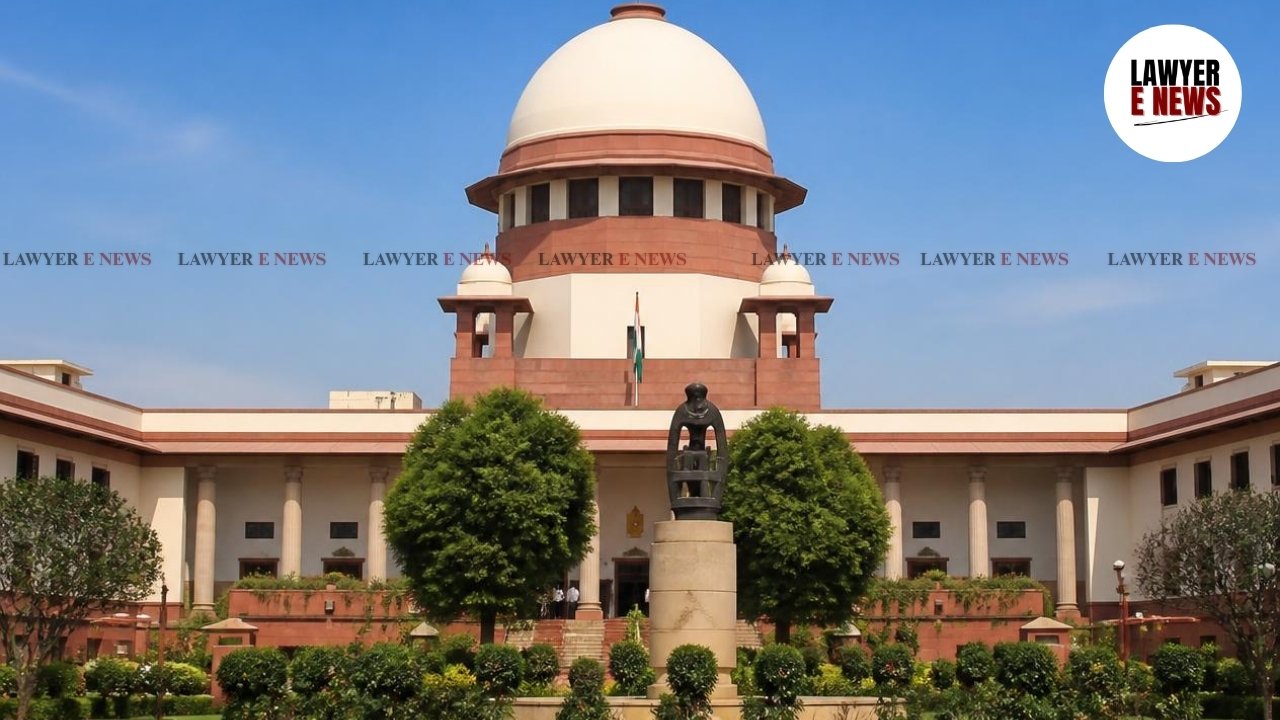
"The fairness required of the Corporations cannot be carried to the extent of disabling them from recovering what is due to them... Fairness is not a one-way street, more particularly in matters like the present one." Supreme Court, in a significant ruling dated July 9, 2026, held that the statutory power of a Financial Corporation to auction property under Section 29 of the State Financial Corporations Act, 1951 (SFC Act) cannot be thwarted by procedural irregularities when the borrower is a persistent defaulter.
A bench comprising Justice Sanjay Karol and Justice Nongmeikapam Kotiswar Singh observed that the "doctrine of fairness" does not obligate corporations to resurrect sick industries at the cost of public funds, especially when borrowers employ dilatory tactics to evade repayment.
The dispute arose when Ranjeet Motel (the borrowers) defaulted on loans sanctioned by the Bihar State Financial Corporation (BSFC) between 1982 and 1984. Despite multiple opportunities, repayment schedules fixed by the High Court, and notices issued under Sections 29 and 30 of the SFC Act, the borrowers failed to clear their dues, leading to an auction sale of the mortgaged property in 1996. The Trial Court and the Patna High Court had concurrently set aside the auction sale, citing the absence of a prior valuation report and alleging unfairness in the Corporation's conduct.
The primary question before the court was whether the concurrent findings of the lower courts setting aside the auction sale on grounds of procedural irregularities and unfairness could be sustained in law. The court was also called upon to determine if the suit was barred by the principles of Res Judicata or Section 69(2) of the Indian Partnership Act, 1932.
Fairness Is Not A One-Way Street
The Court emphasized that while State instrumentalities must act fairly, this obligation is reciprocal. Referring to the precedent in Haryana Financial Corpn. v. Jagdamba Oil Mills (2002), the bench noted that a Corporation dealing with public money must ensure regular realization of installments to maintain the equilibrium of financial arrangements.
The bench observed that the Corporation cannot be "shackled hand and foot" in the name of fairness when a borrower has no genuine intention to repay. The judges remarked that where a borrower adopts pretexts and ploys to avoid payment, they cannot later complain that the Corporation did not act fairly, provided the requisite statutory procedures were followed.
"Where the borrower has no genuine intention to repay and adopts pretexts and ploys to avoid payment, he cannot make the grievance that the Corporation was not acting fairly, even if requisite procedures have been followed."
Scope Of Judicial Review Under Section 29 SFC Act
Citing U.P. Financial Corpn. v. Gem Cap (India) (P) Ltd. (1993), the Supreme Court reiterated that the relationship between the Corporation and the borrower is that of a creditor and a debtor. The Court's role in exercising judicial review is limited to two specific situations: where there is a statutory violation or where the Corporation acts with extreme unreasonableness or mala fides.
The bench clarified that the High Court, while exercising jurisdiction under Article 226, does not sit as an appellate authority over the administrative decisions of a Financial Corporation. It held that unless the action is shown to be purely arbitrary or in violation of statutory provisions, the courts should not substitute their own commercial judgment for that of the Corporation.
Absence Of Valuation Report Not Always Fatal To Auction Sale
Addressing the lower courts' finding that the lack of a valuation report vitiated the sale, the Supreme Court held that in the "peculiar facts" of this case, such an omission alone was insufficient to set aside the auction. The Court noted that the borrowers had previously been offered the chance to match the auction price—calculated on the Balance Outstanding (BOS)—and had even undertaken to do so before the High Court.
The bench reasoned that since the borrowers themselves had tried to avail the benefit of the specific terms offered to the auction purchaser, they were estopped from later contending that the absence of a valuation report caused them prejudice. The Court emphasized that "reasonableness is to be tested against the dominant consideration to secure the best price," which can be achieved through public auction, tenders, or negotiations.
"Having tried to avail the benefit of those specific terms, it does not lie in their mouth at a subsequent stage to contend that the absence of a valuation report, by itself, vitiated the entire process and caused them prejudice."
Dilatory Tactics Amount To Abuse Of Process
The Supreme Court took a stern view of the borrowers' conduct, noting that they had initiated successive rounds of litigation over eight years to obstruct recovery. The bench referred to Orissa State Financial Corpn. v. Hotel Jogendra (1996), stating that public money is meant to be recycled and that the court process should not become an "instrument of abuse" for defaulting entrepreneurs.
The Court observed that once an auction is confirmed and the purchaser has remained in possession for nearly three decades, the rights crystallized cannot be lightly unsettled. The bench found that the borrowers' conduct of embarking on multiple litigations while the dues remained unpaid disentitled them from claiming any equitable relief.
Statutory Bar Under Partnership Act and Res Judicata
On the technical legal challenges, the Court agreed with the lower courts that the suit was not barred by Section 69(2) of the Partnership Act or Res Judicata. It held that the suit was a challenge to statutory action under the SFC Act rather than an enforcement of a contract with a third party. However, this finding did not save the borrowers' case on merits.
The Supreme Court concluded that the BSFC had acted within its statutory rights under Section 29 of the SFC Act given the borrowers' status as "recalcitrant defaulters." The bench set aside the judgments of the Patna High Court and the Trial Court, thereby upholding the validity of the 1996 auction sale. The appeals filed by the Corporation and the Auction Purchaser were allowed.
Date of Decision: July 9, 2026