-
by sayum
05 August 2026 5:12 AM







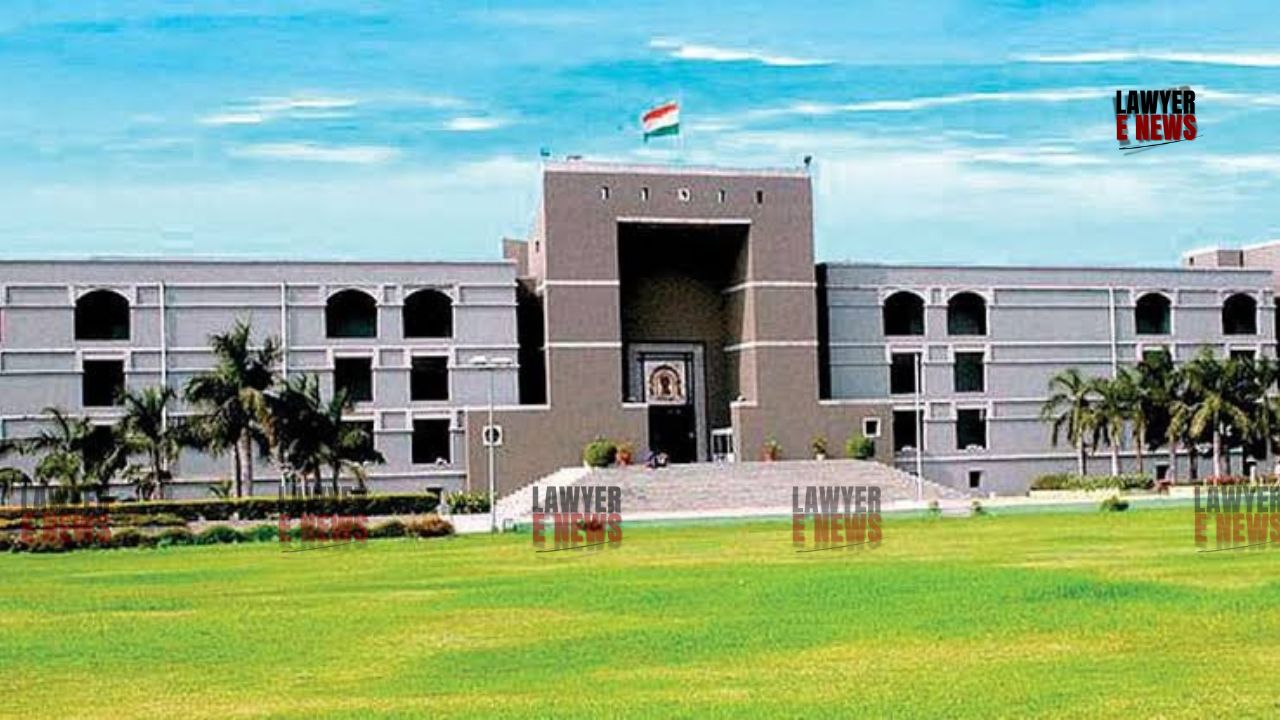
“When the Supply Is for Export and Revenue-Neutral, Levy of 160% Compensation Cess Is Unjustified and Contrary to the Spirit of Zero-Rated Taxation”, - Gujarat High Court in a detailed and consequential judgment stayed the recovery of Compensation Cess at the rate of 160% on the supply of branded tobacco products made to merchant exporters under concessional GST rate notifications. The Bench comprising Justices Bhargav D. Karia and D.N. Ray held that such supplies qualify as “export of goods” under Section 2(5) of the Integrated Goods and Services Tax Act, 2017 and are, therefore, zero-rated under Section 16 of the IGST Act.
The Court ruled that, “in a transaction of taking goods out of India, more than one leg of supply may be classified as export if the intention and movement of goods remain uninterrupted and directed towards actual export.” Accordingly, it concluded that supply by the manufacturer to the merchant exporter under a structured and controlled export regime is a zero-rated transaction.
“In the Absence of Revenue Loss, the Levy of Compensation Cess Becomes Arbitrary and Oppressive” – Court Finds Cess Demand Contrary to GST Principles
The case arose from a challenge to the order-in-original confirming a tax demand of ₹18.63 crores in Compensation Cess along with interest and penalty on grounds that the exemption granted via Notifications No. 40/2017 and 41/2017 for GST did not extend to Compensation Cess. The petitioners contended that the levy was both revenue-neutral and inconsistent with the GST Council’s clear intent to exempt export supplies from tax burdens.
The Court agreed with the petitioners' contention that, “the entire exercise of imposing Compensation Cess on supplies made to merchant exporters results in revenue neutrality, as the cess, if paid, would be refunded to the exporters under Section 54 of the CGST Act.” It further observed that the levy imposed a working capital burden contrary to the foundational policy of the GST regime, which is to ensure that taxes are not exported.
“The Purpose of Compensation Cess Is to Offset Loss of Domestic Revenue – No Purpose Is Served When the Tax Is Refunded on Export”
Highlighting the objective of the Goods and Services Tax (Compensation to States) Act, 2017, the Court noted that its sole purpose was to compensate States for revenue losses resulting from GST implementation. It ruled, “the amount which cannot be credited to the Compensation Fund for States as per the Act's purpose cannot be levied at the threshold stage.”
Referring to the lack of any exemption notification under the Compensation Cess Act akin to the GST exemption notifications, the Court remarked that “such a legislative vacuum creates an unintended anomaly that defeats the very purpose of zero-rated supply.” Noting that the Compensation Cess Act incorporates the provisions of the CGST and IGST Acts mutatis mutandis, it stated emphatically, “the exemption regime under GST must be read to extend to the Compensation Cess to avoid arbitrary differentiation and legislative inconsistency.”
“Once Goods Are Sealed and Moved from Factory to Port for Export, the Chain Is Complete and the Supply Qualifies as Export”
In its factual analysis, the Court found that the petitioners had strictly complied with the procedural safeguards under Rule 19 of the Central Excise Rules and the conditions under Notifications No. 40/2017 and 41/2017. The goods were moved directly from the factory to the port without diversion and were earmarked for actual export.
The Court drew support from the Apex Court's rulings in Amritsar Sugar Mills Co. Ltd. and Lord Krishna Sugar Mills, reiterating that “actual delivery for export, though effected in stages through different entities, maintains its essential character as an export supply.”
“Anomalies in Exemption Notifications Must Be Addressed – Strong Recommendation to GST Council for Policy Correction”
While the High Court declined to issue a writ of mandamus for extending exemption benefits to Compensation Cess in the absence of a specific notification, it took the rare step of strongly urging the GST Council to rectify the policy inconsistency.
Citing the Supreme Court’s direction in Union of India v. VKC Footsteps India Pvt. Ltd., the Court held: “We strongly urge the GST Council to consider recommending exemption from levy of Compensation Cess on supply of goods to merchant exporters at par with GST and IGST, as intended in the 22nd Meeting of the GST Council held on 6.10.2017.”
Final Ruling – Impugned Demand Stayed, No Recovery Till GST Council
In conclusion, the Gujarat High Court held that: “The impugned action of levy of Compensation Cess at the rate of 160% on the supply of goods by the petitioners to merchant exporters for export is required to be kept in abeyance and the matter is referred to the GST Council to decide the issue...”
Further, the Court ordered that “no further coercive steps shall be taken against the petitioners if they comply with the exemption notification conditions and submit an undertaking to pay cess if the Council does not recommend exemption.”
The judgment is poised to have far-reaching implications across industries exporting products covered by high Compensation Cess rates, such as tobacco, pan masala, and aerated drinks, where working capital burdens due to cess payments have remained a contentious issue.
Date of Decision: 9 May 2025