Auction Purchaser Has No Vested Right Without Sale Confirmation: Calcutta HC Upholds Borrower’s Redemption Right Under Pre-Amendment SARFAESI Law Mere Breach of Promise to Marry Doesn’t Amount to Rape: Delhi High Court Acquits Man in False Rape Case Father Is the Natural Guardian After Mother’s Death, Mere Technicalities Cannot Override Welfare of Child: Orissa High Court Restores Custody to Biological Father Assets of Wife and Father-in-Law Can Be Considered in Disproportionate Assets Case Against Public Servant: Kerala High Court Refuses Discharge Identification Without TIP, Electronic Records Without 65B Certificate – Conviction Set Aside: Patna High Court Nothing Inflicts A Deeper Wound On Our Constitutional Culture Than A State Official Running Berserk Regardless Of Human Rights: Jharkhand High Court Orders ₹1.5 Lakh Interim Compensation Dishonour Due to ‘Account Blocked’ Not Attributable to Drawer—No Offence Under Section 138 NI Act: Delhi High Court Quashes Criminal Proceedings Presumption Under Section 139 NI Act Cannot Be Rebutted By Mere Assertions: Delhi High Court Affirms Conviction In 32-Year-Old Cheque Bounce Case Signature Alone Doesn’t Prove Debt: Kerala High Court Upholds Acquittal in Cheque Bounce Case, Rejects Blanket Presumption Under Section 139 NI Act Justice Cannot Be Left to Guesswork: Supreme Court Mandates Structured Judgments in Criminal Trials Across India Truth Must Be Proven Beyond Doubt—Not Built On Flawed FIRs, Tainted Witnesses And Investigative Gaps: Supreme Court Acquits Man in POCSO Rape-Murder Case Once parties agree and reconciliation is impossible, a fault-based decree is unnecessary: Supreme Court Sets Aside Divorce on Desertion No Escape from Statutory Ceiling: Exclusive Expenditure by Foreign Head Offices Also Attracts Section 44C Income Tax: Supreme Court Loss Of A Child Cannot Be Calculated In Rupees, But Law Must At Least Offer Dignity In Compensation: Supreme Court Enhances Compensation Sessions Court Cannot Direct Life Imprisonment Till Natural Life Without Remission: Supreme Court Reasserts Limits on Sentencing Powers of Subordinate Courts ‘Continuously Means Without a Single Break’: Supreme Court Bars Expired-and-Renewed Licences From Police Driver Recruitment Chief Justice’s Power Under Section 51(3) Is Independent and Continuing: Supreme Court Upholds Kolhapur Bench Notification Last Seen Evidence Alone Cannot Sustain Conviction: Supreme Court Acquits Accused in Murder Case No Cultivation on Forest Land Without Central Clearance: Supreme Court Cancels Lease Over 134 Acres, Orders Reforestation Appointment from Rank List Must Respect Communal Rotation: SC Declines Claim of SC Waitlisted Candidate After Resignation of Appointee Supreme Court Dissolves 20-Year Estranged Marriage Under Article 142 Despite Wife’s Objection Murder Inside Temple Cannot Be Treated Lightly: Supreme Court Cancels Bail of Father-Son Convicts in Group Killing Case No Notice, No Blacklist: Calcutta High Court Quashes Debarment Over Breach of Natural Justice Prosecution Must Elevate Its Case From Realm Of ‘May Be True’ To Plane Of ‘Must Be True: Orissa High Court Strict Compliance Is the Rule, Not Exception: Himachal Pradesh High Court Dismisses Tenant's Plea for Late Deposit of Rent Arrears When Accused Neither Denies Signature Nor Rebuts Presumption, Conviction Must Follow Under Section 138 NI Act: Karnataka High Court A Guardian Who Violates, Forfeits Mercy: Kerala High Court Upholds Natural Life Sentence in Stepfather–POCSO Rape Case Married and Earning Sons Are Legal Representatives Entitled to Compensation: Punjab & Haryana High Court Enhances Motor Accident Award to ₹14.81 Lakh Driver Must Stop, Render Aid & Report Accident – Flight from Scene Is an Offence: Madras High Court Convicts Hit-And-Run Accused Under MV Act Delay May Shut the Door, But Justice Cannot Be Locked Out: Gauhati High Court Admits Union of India’s Arbitration Appeal Despite Time-Bar Under Section 30 PC Act | Mere Recovery of Money Is Not Enough—Demand and Acceptance Must Be Proved Beyond Reasonable Doubt: Delhi High Court Allahabad High Court Slams Bar Council of U.P. for Ex Parte 10-Year Suspension of Advocate

“Excessive Costs Cannot Be a Barrier to Fair Hearing”: Madras High Court Reduces Rs.25,000 Condition to Rs.5,000 for Setting Aside Ex Parte Order

11 September 2025 2:42 PM

By: sayum


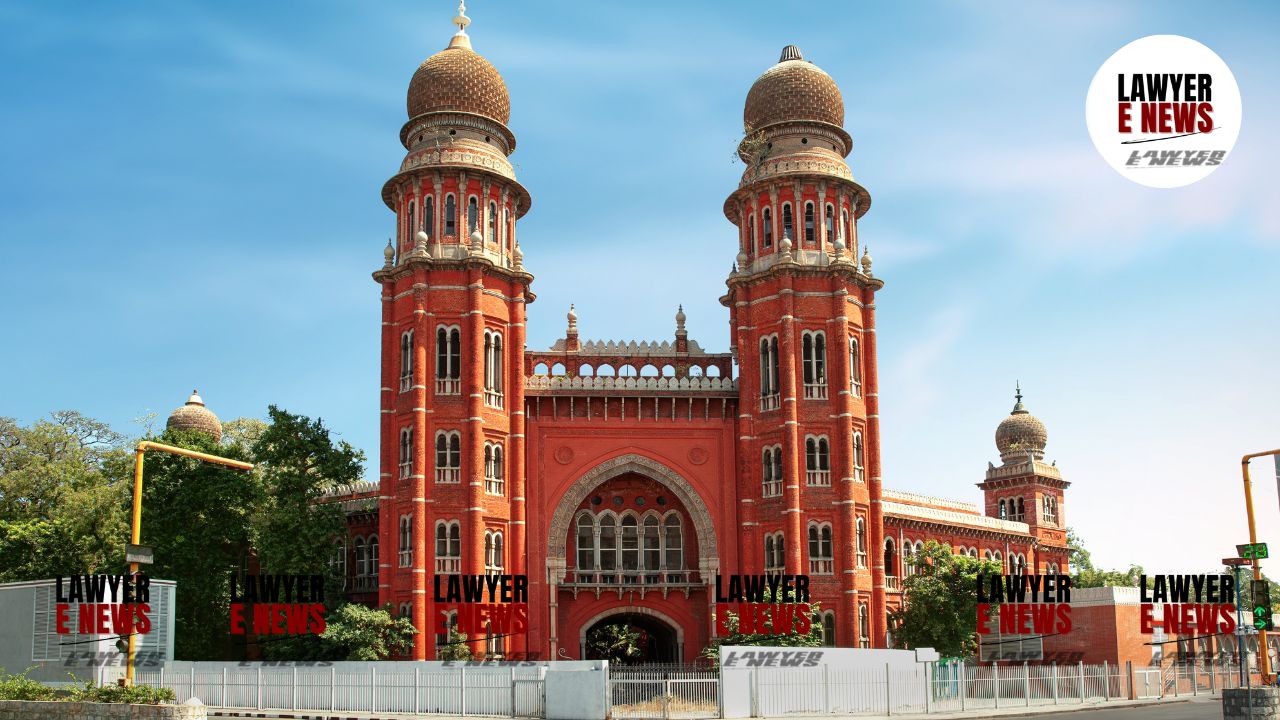
“An opportunity must be provided to the defendants to defend their case in a manner known to law” – observed the Madras High Court while setting aside a conditional order of the Principal District Court, Ariyalur, which had imposed a cost of Rs.25,000/- for allowing cross-examination of a witness after an ex parte order. Justice M. Jothiraman, exercising powers under Article 227 of the Constitution, held on September 8, 2025, that the condition was “excessive, unaffordable, and not inconsonance with law.”

In C.R.P.No.4237 of 2025, the Court reduced the condition to Rs.5,000/-, allowing the petitioner to cross-examine the plaintiff’s witness in a civil suit seeking damages of Rs.18,00,000/-, thereby safeguarding the right to fair adjudication and preventing denial of justice due to procedural rigidity.

“Supervisory Jurisdiction Under Article 227 Can Be Invoked Where Trial Court Discretion is Arbitrary”: High Court Intervenes to Prevent Miscarriage of Justice

The petitioner, Glory, who was the 1st Defendant in a civil suit (O.S.No.58 of 2021), had sought to cross-examine PW1 after an ex parte order was passed due to non-representation on 02.04.2025. Though the trial court later allowed her application under Order 9 Rule 7 CPC, it imposed a condition to pay Rs.25,000/- to the plaintiff, failing which the application would stand dismissed. The petitioner failed to deposit the amount, and the application was dismissed.

Challenging this, she approached the High Court, stating that the amount was excessive and prohibitive, and that she was willing to pay Rs.5,000/- instead.

Justice Jothiraman observed: “Considering the stage of the case and the nature of lis pending between the parties, this Court is inclined to grant an opportunity to the defendants to defend their case in a manner known to law.” [Para 8]

The Court, invoking its supervisory jurisdiction under Article 227, noted that while conditional costs may be imposed to prevent abuse of process or delay, the quantum must not defeat substantive justice.

“Fixation of costs must not be disproportionate or punitive to the point of denying access to a fair hearing.”

The underlying suit involved a claim for damages of Rs.18,00,000/- filed by a minor, Mathumathi, represented by her mother Mahalakshmi, against school authorities including the petitioner, a Warden, and other school officials, relating to events at Annai Lourdes Girls Higher Secondary School in Ariyalur District.

After the defendants failed to appear for cross-examination of the plaintiff’s witness (PW1) on 19.03.2025 and 27.03.2025, the trial court passed an ex parte order and posted the case for judgment. The defendants later filed an application under Order 9 Rule 7 r/w Section 151 CPC to reopen the matter and cross-examine the witness, which was allowed on a hefty condition of Rs.25,000/-.

“Procedural Rules are Handmaidens of Justice”: Madras High Court Reduces Cost, Restores Right to Cross-Examine

Justice Jothiraman held that courts must strike a balance between discipline in procedure and the right to be heard. Imposing onerous costs for procedural lapses, especially in civil trials, must not result in closing the doors of justice altogether.

“Opportunity must be given to defend the case, and fixation of costs must not result in denial of access to court,” the Court noted while reducing the condition to Rs.5,000/-.

“Accordingly, a direction is issued to the defendants to pay a sum of Rs.5,000/- to the first respondent/plaintiff on or before 12.09.2025.” [Para 9]

The High Court set aside the order dated 04.07.2025, restored the opportunity to cross-examine, and posted the matter for reporting compliance on 15.09.2025.

Date of Decision: 08.09.2025

Latest Legal News