-
by sayum
14 August 2026 3:21 PM







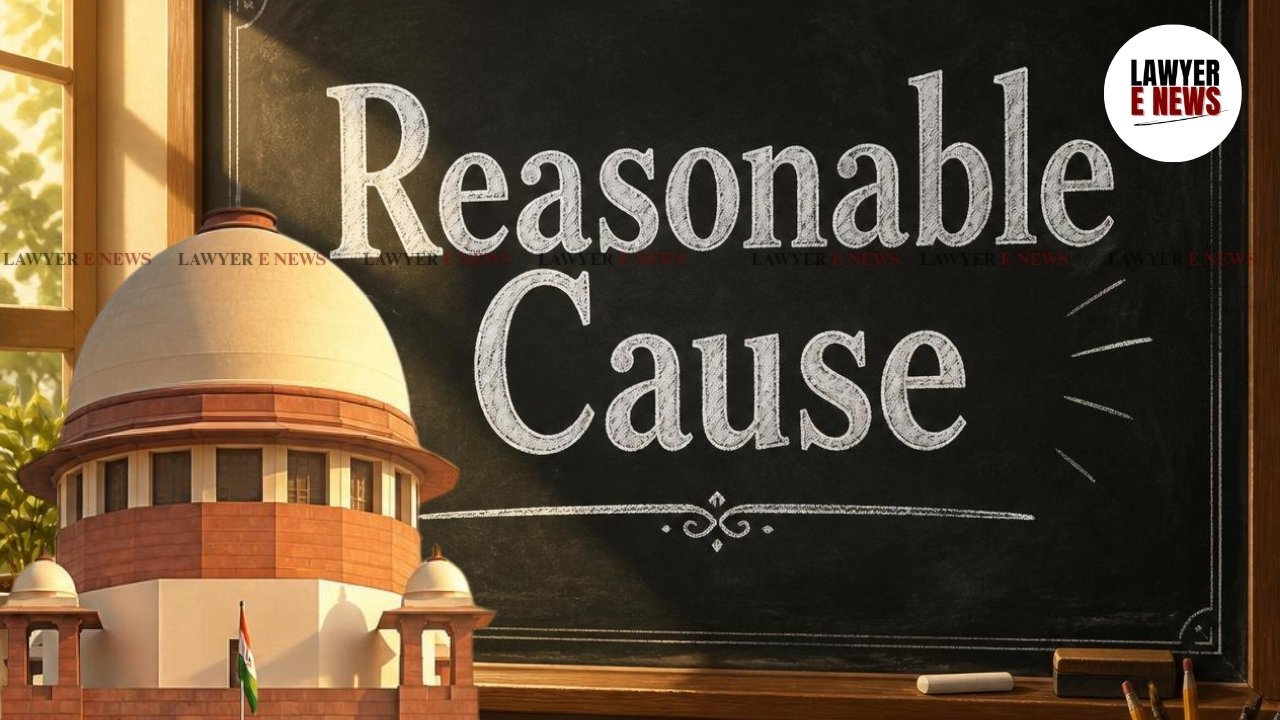
"Evidence, however voluminous, cannot water down the statutory intent and rigours of the statute... What cannot be countenanced is a stop and go or a piecemeal approach." Supreme Court, in a significant judgment dated July 09, 2026, held that while the standard of ‘reasonable cause’ for filing additional documents in commercial suits may be a lower threshold than ‘sufficient cause,’ it still requires a well-established justification.
A bench of Justice Sanjay Karol and Justice Nongmeikapam Kotiswar Singh observed that the Commercial Courts Act, 2015, was conceived to promote the ease of doing business through the expediency of high-stakes dispute resolution.
The Court emphasized that litigants in commercial disputes cannot be permitted to adopt a "piecemeal approach" to evidence, especially when the documents were already in their possession at the time of filing the suit. The bench noted that even if a party argues for a lower threshold of scrutiny, the lack of a bona fide explanation for an inordinate delay would be fatal to an application for placing additional documents on record.
The primary question before the court was whether the 'reasonable cause' standard for filing additional documents under Order XI of the CPC (as amended by the CCA) was satisfied by the appellant. The court was also called upon to determine if the rigours of the Commercial Courts Act apply to suits that were initiated before the Act's enforcement but subsequently transferred or renumbered.
Distinction Between 'Reasonable Cause' And 'Sufficient Cause'
The Court addressed the appellant’s contention that the High Court erroneously applied the ‘sufficient cause’ standard instead of ‘reasonable cause.’ Referring to the precedent in Sudhir Kumar vs. Vinay Kumar G.B., the bench clarified that under Order XI Rule 1(4) and (5) of the CPC, a plaintiff must establish a ‘reasonable cause’ for the non-disclosure of documents at the time of filing the plaint.
While the Court conceded that the appellant might be correct that ‘reasonable cause’ rests on a lower threshold than ‘sufficient cause,’ it refused to interfere with the High Court’s findings. The bench noted that even through the lens of this lower threshold, no justification emerged for the delay, as the plaintiff failed to show any diligence in producing documents that were already in its possession.
"Reasonable cause and justification explaining the subsequent discovery thereof needs to be well established."
Expediency Is The Underlying Intent Of The Commercial Courts Act
Analyzing the scheme of the Commercial Courts Act, 2015, the Court highlighted that the legislature intended to create a positive environment for investment by ensuring the speedy resolution of commercial disputes. The bench cited Ambalal Sarabhai Enterprises Ltd. v. K.S. Infraspace LLP to reiterate that courts must adopt a pro-active approach and adhere to strict timelines to prevent the adjudicatory process from being delayed.
The Court observed that the timelines contemplated in the Act are "clear as daylight" and geared toward the expeditious culmination of proceedings. It held that any interpretation of the procedural law that allows for long delays would fly in the face of the legislative intent to enhance the ease of doing business in India.
"Disputes of a commercial hue, must be extinguished with the highest level of expedition."
Prohibition Against A Piecemeal Approach To Litigation
The Court expressed strong disapproval of the appellant’s attempt to introduce documents in stages. It noted that the suit was filed in 2015, and as of 2026, the trial was still at the stage of plaintiff’s evidence. The bench remarked that "even a snail may question the speed at which this trial is proceeding," emphasizing that a "stop and go" approach cannot be countenanced in commercial litigation.
The bench found that the documents sought to be produced in 2023 were in the appellant's possession since the inception of the suit. Allowing such an application would amount to condoning a piecemeal approach, which would undermine the very purpose of the special procedure designed for commercial suits.
"What cannot be countenanced is a stop and go or a piecemeal approach. Voluminous evidence too, is entirely an uninspiring ground."
Application Of CCA To Pending And Transferred Suits
The Court rejected the argument that the strict nature of the Commercial Courts Act should not apply to the present dispute because it originated in 2015. Referring to Section 15 of the CCA, the bench held that the statute makes its application to pending matters abundantly clear. Once a suit is transferred or renumbered as a commercial suit, the procedures of the CCA apply in their entirety.
The bench concluded that the appellant had more than five years between the first and second applications for additional documents but failed to provide any justifiable explanation for the wait. The Court affirmed that the statutory rigours cannot be watered down simply because the evidence is voluminous or because the party claims a lack of prejudice to the opponent.
The Supreme Court dismissed the appeal, affirming the High Court’s order. The bench held that the appellant failed to meet the ‘reasonable cause’ test required under Order XI Rule 1 of the CPC as amended by the CCA. The Court directed the trial court to decide the suit as expeditiously as possible, emphasizing that commercial disputes must not be allowed to linger indefinitely through procedural maneuvers.
Date of Decision: July 09, 2026