
-
by sayum
29 August 2026 3:15 PM







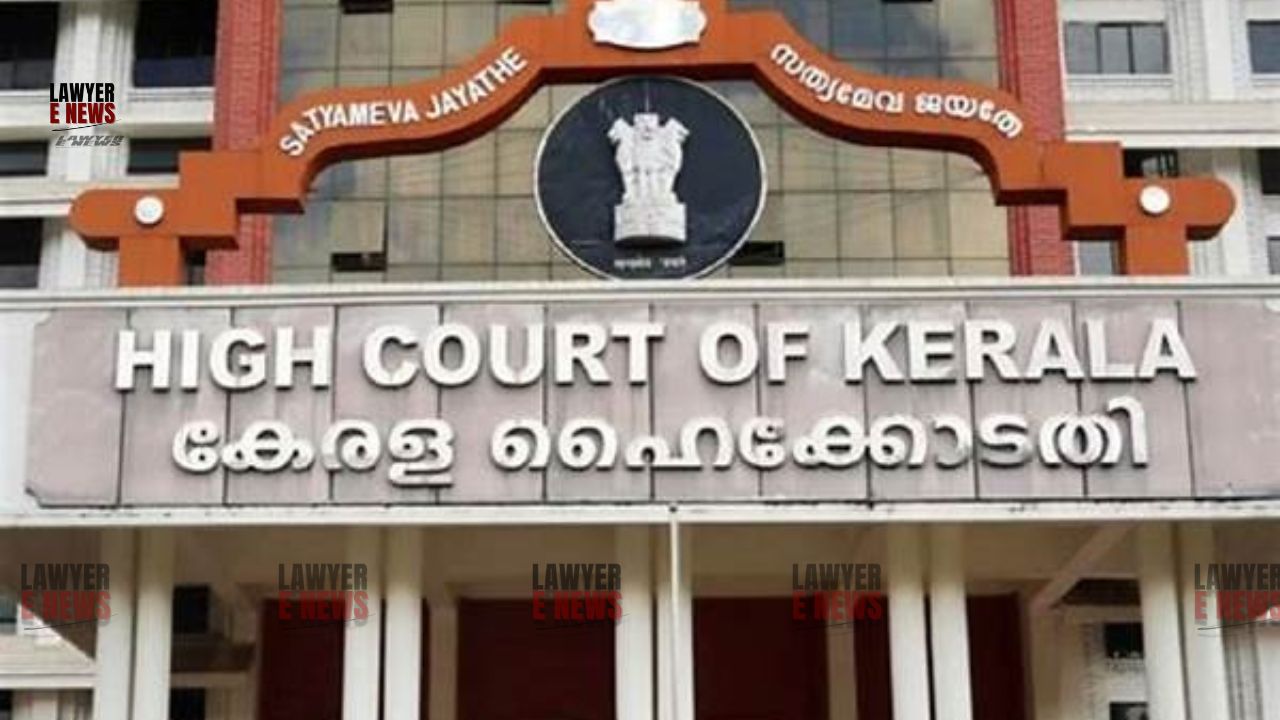
“Grant of Anticipatory Bail in a Case of Huge Misappropriation Would Be Fatal to the Investigation” – Kerala High Court declined to grant anticipatory bail to the former Secretary of the Kollam Co-operative Building Society, accused of misappropriating over ₹43 lakh, forging cheques, and engaging in financial fraud. Justice A. Badharudeen observed that economic offences of this magnitude “require effective custodial questioning to trace funds” and that pre-arrest bail at this stage would “impede the investigation and jeopardise the interests of the victims.”
The case arose from allegations that the petitioner, while serving as Secretary of the Society, collected large deposits from third parties on the pretext of depositing them into the Society’s accounts, but instead diverted the funds for her own benefit. When depositors demanded repayment, she allegedly issued twelve cheques forged with the Society President’s signature, knowing that such cheques would only be honoured when signed jointly by the President and the Secretary.
The FIR initially invoked provisions of the Bharatiya Nyaya Sanhitha, 2023, but was later corrected to offences under the Indian Penal Code as the acts took place before April 2024, namely Sections 406, 409, 420, 465, 468 and 471. Offences under Section 13(1) read with Section 13(2) of the Prevention of Corruption (Amendment) Act, 2018 were also added. The Vigilance and Anti-Corruption Bureau was requested to take over the probe, as the case involved alleged corruption in a cooperative institution.
Justice Badharudeen noted that the petitioner’s role was not merely alleged but partially admitted. The prosecution relied on an Annexure A11 letter sent by the petitioner to the Chief Minister of Kerala, where she acknowledged that she had engaged in “some illegal activities” under the directions of the Administrative Committee and the Society’s President, and was “ready to face the consequences.” The Court found that such a statement, coupled with other materials, established a prima facie case that required thorough custodial interrogation.
On the petitioner’s medical plea, supported by an MRI report from 2022 indicating a mild disc bulge, the Court was not persuaded. It remarked that these ailments “are not reasons to see any serious ailment” because she continued to work actively in the Society until May 2025. Health grounds, therefore, did not justify anticipatory bail.
The Court also took note of “twenty complaints with similar allegations” pending against the petitioner and another criminal case already registered, which suggested a continuing pattern of financial misconduct.
“In such a case involving misappropriation of a huge sum, grant of anticipatory bail to the petitioner would be fatal to the investigation and the interest of the victims who lost the amount, so also the same would impede successful prosecution.”
Justice Badharudeen emphasised that economic offences, particularly in the cooperative sector, necessitate custodial questioning to locate and recover public money. The Court underscored that granting pre-arrest bail at the preliminary stage could result in the accused threatening or coercing witnesses and obstructing the tracing of funds.
The petition was therefore dismissed with a direction to the petitioner to surrender before the Investigating Officer forthwith. Failure to do so would entitle the police to arrest her in accordance with law.
By refusing anticipatory bail in this high-value cooperative misappropriation case, the Kerala High Court reaffirmed that financial crimes involving public funds warrant a stricter judicial approach. The ruling makes it clear that partial admissions, the gravity of allegations, the scale of loss, and the need for custodial interrogation outweigh pleas based on dated medical conditions.
Date of decision: 25/07/2025