-
by sayum
19 August 2026 12:01 PM







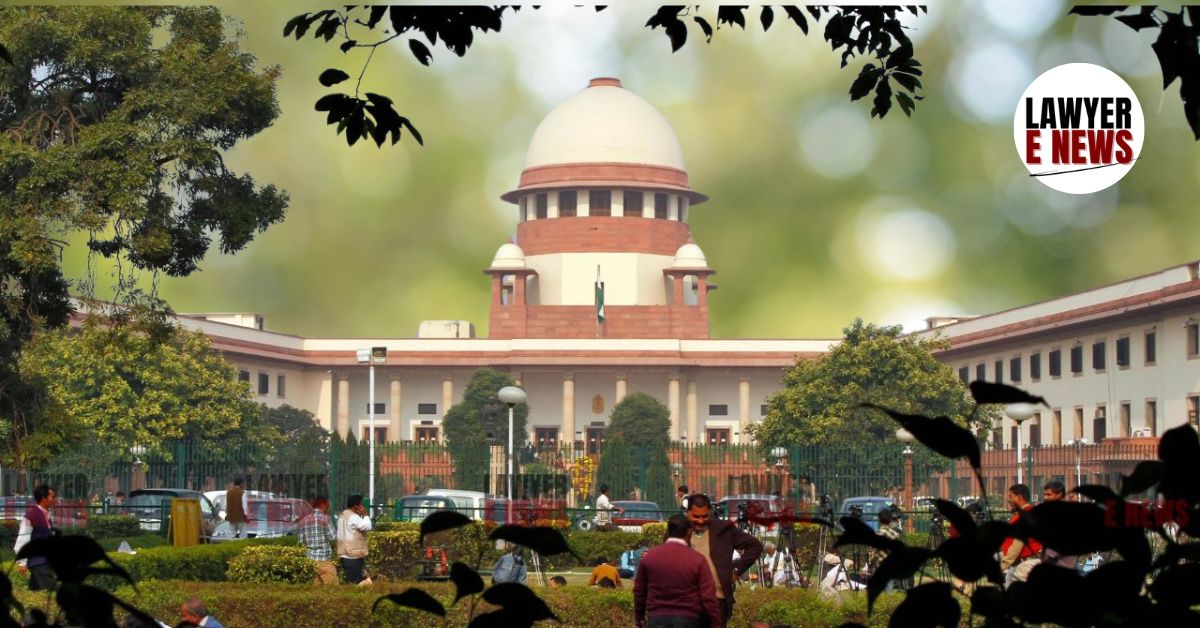
“Public Servant Complaints Stand on a Different Pedestal” – In a significant reportable judgment set aside the Kerala High Court’s order quashing criminal complaints under the Drugs and Cosmetics Act, 1940.
The Bench of Justice Ahsanuddin Amanullah and Justice S.V.N. Bhatti addressed crucial questions concerning limitation under Sections 468 and 469 CrPC, the mandatory nature of inquiry under Section 202 CrPC when the accused resides beyond territorial jurisdiction, and vicarious liability of Directors under Section 34 of the Drugs and Cosmetics Act.
Restoring the summoning orders, the Court held that the High Court had erred in computing limitation from the wrong date and in quashing the complaint solely for alleged non-compliance with Section 202 CrPC.
Alleged Misbranding of Pentavalent Vaccine
The prosecution stemmed from a complaint dated 05.01.2006 by one Mr. Joy Mandi, who alleged that although he had purchased “Easy Five Pentavalent Vaccine” for his child, the vial inside the carton was labelled “Tetravalent Vaccine Easy Four.”
The outer carton claimed inclusion of five vaccines including Hepatitis B (HbSAg 10 mcg), whereas the inner vial did not contain the Hepatitis component. The Drugs Inspector conducted inspections on 21.01.2006 and subsequently traced the supply chain through wholesalers and distributors. Statements were recorded indicating that certain vials were “wrongly labelled” and returned due to improper labelling.
On 18.04.2006, certified invoices and credit notes were obtained from various entities in the distribution chain, enabling the Competent Authority to identify the full array of accused. The formal complaint was filed on 20.01.2009 for offences under Sections 17(b), 17(c), 18(a)(i) read with Rule 96, punishable under Section 27(d) of the Act.
The Chief Judicial Magistrate took cognizance and issued summons. The High Court later quashed the complaint on the ground that the Magistrate had not conducted a mandatory inquiry under Section 202 CrPC since the accused resided beyond territorial jurisdiction.
“Section 469(1)(c) Applies – Limitation Begins When Identity of Offender Is Known”
The central controversy revolved around limitation. Since the offence under Section 27(d) is punishable with imprisonment up to two years, the limitation period under Section 468(2)(c) CrPC is three years.
The High Court had earlier computed limitation from 21.10.2005. The Supreme Court rejected this approach, holding that Section 469(1)(c) CrPC governed the case.
The Court observed that where “it is not known by whom the offence was committed,” the limitation period commences from “the first day on which the identity of the offender is known” to the investigating authority.
In the present case, although suspicion arose in January 2006, the complete identity of all accused crystallised only on 18.04.2006 after inspection of suppliers and distributors.
The Court held:
“Section 469(1)(c) of the Code clearly contemplates that the identity of the offender may emerge during investigation into the offence.”
Since the complaint was filed on 20.01.2009, within three years from 18.04.2006, cognizance was not barred by limitation. The Court unequivocally held that “the limitation bar does not come in the way.”
“Public Servants Stand on a Different Pedestal” – Section 202 CrPC
The second issue concerned Section 202 CrPC. After the 2005 amendment, it is mandatory for a Magistrate to postpone issuance of process and conduct inquiry where the accused resides outside territorial jurisdiction.
The High Court quashed the complaint on this ground. The Supreme Court disagreed.
Relying on Cheminova India Limited v. State of Punjab, the Bench reiterated:
“The legislature in its wisdom has itself placed the public servant on a different pedestal.”
The Court harmoniously construed Section 202 with the proviso to Section 200 CrPC, which exempts examination of a public servant complainant acting in discharge of official duty.
The object of Section 202, the Court noted, is to prevent harassment of innocent persons. However, when a complaint is filed by a duly authorised Drugs Inspector under Section 32 of the Drugs and Cosmetics Act, supported by official records and investigation, the rigid application of Section 202 as in private complaints is unwarranted.
Distinguishing Birla Corporation Limited v. Adventz Investments and Holdings Limited, the Court clarified that the stricter scrutiny in private complaints does not automatically extend to statutory prosecutions initiated by public servants.
Accordingly, the High Court’s quashing of proceedings solely for non-compliance with Section 202 was held to be erroneous.
Misbranding Allegations: Prima Facie Offence to Go to Trial
The Court refrained from adjudicating on merits but noted that the allegations disclosed prima facie misbranding under Sections 17(b) and 17(c), since the outer carton claimed a pentavalent vaccine while the inner vial bore tetravalent labelling.
The matter was directed to proceed to trial, with the Court clarifying that its observations were confined to procedural issues.
Vicarious Liability of Directors: “Question of Fact to Be Tested at Trial”
In the connected appeal concerning “not of standard quality” hypodermic syringes, the High Court had quashed proceedings against Directors holding that a bald statement of responsibility was insufficient under Section 34 of the Act.
The Supreme Court held that this approach was premature.
Whether Directors were “in charge of” and “responsible to the company for the conduct of its business” is a question of fact requiring trial. The Court observed that such determination cannot be conclusively made at the threshold under Section 482 CrPC.
Thus, proceedings against Directors were restored.
Government Analyst Report and “Not of Standard Quality” Case
In the syringe case, samples drawn on 13.11.2014 were declared “not of standard quality” on 27.01.2016 for failing sterility and extraneous matter tests. The High Court had again quashed proceedings on Section 202 grounds.
In light of its reasoning in the vaccine case, the Supreme Court restored the complaint, reiterating that prosecutions initiated by Drugs Inspectors stand on statutory footing.
The Supreme Court allowed the State’s appeal, set aside the High Court’s orders quashing the complaints, and restored the summoning orders.
In the vaccine case, since the Managing Director had passed away, the Court directed substitution by the person(s) in charge of the company at the relevant time, to be arraigned upon appropriate application.
The connected appeal filed by the accused challenging limitation was dismissed.
The Court clarified that its observations were limited to procedural issues and would not prejudice the trial on merits.
Date of Decision: 26 February 2026