-
by sayum
05 August 2026 5:12 AM







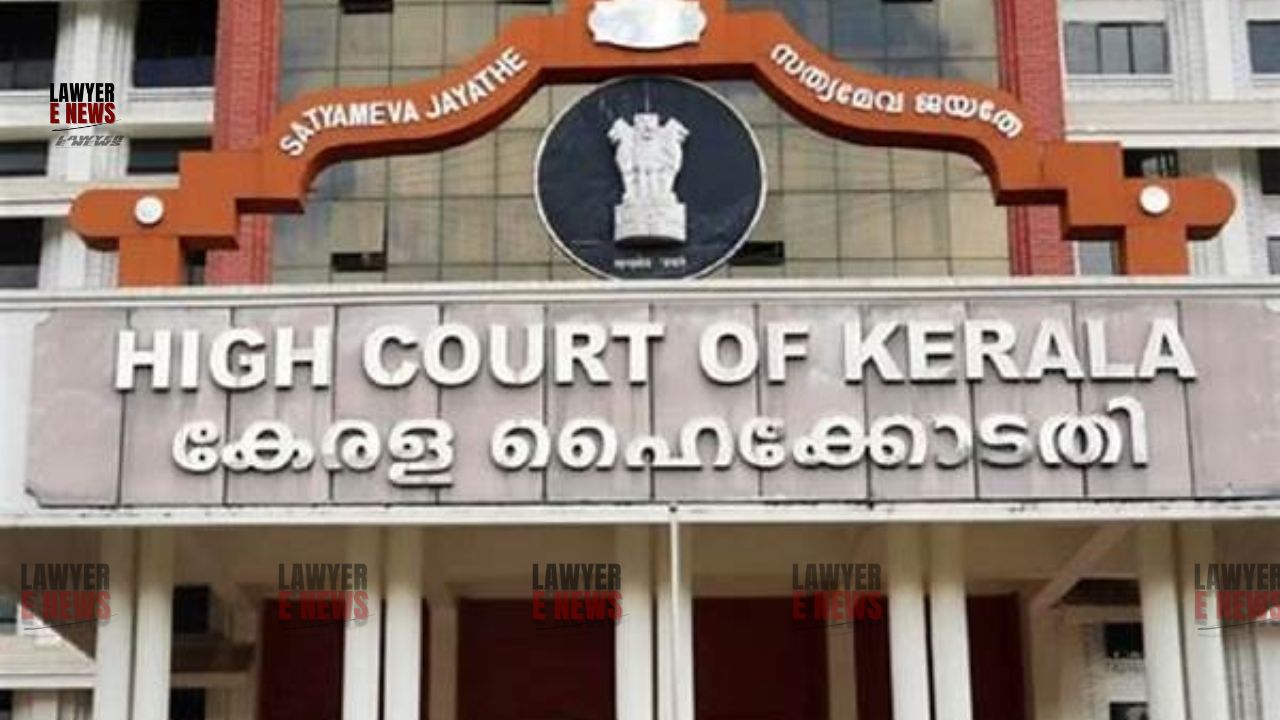
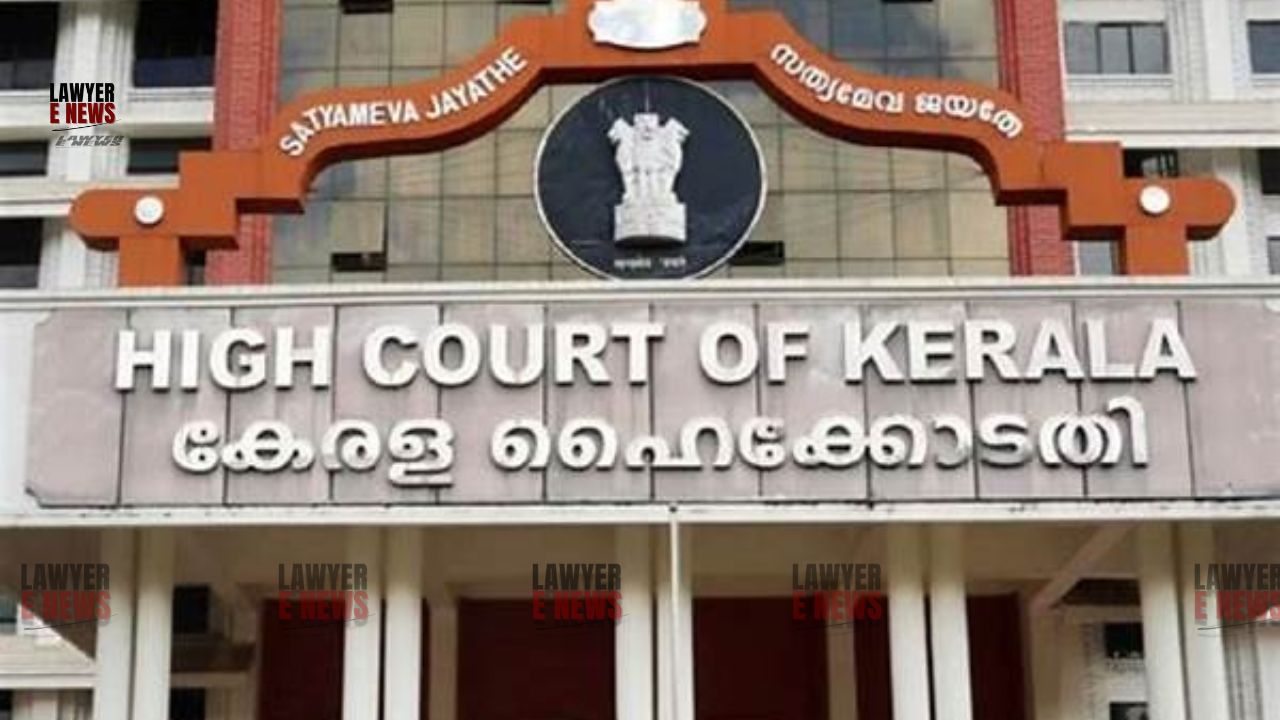
“Omission from Regularisation List Was Inadvertent, Not Disqualifying” – Kerala High Court delivered a significant ruling on the regularisation of temporary employees, reinforcing constitutional principles of parity and fairness. A Division Bench comprising Justice Anil K. Narendran and Justice P.G. Ajithkumar allowed the application filed by the Travancore Devaswom Board (TDB), granting permission to regularise three employees whose names were inadvertently omitted from an earlier list of regularised staff despite being equally qualified under the same criteria.
The Court clarified that their appointments were “irregular but not illegal” and held that “the doctrine laid down in Uma Devi (2006) 4 SCC 1 is often misapplied to deny regularisation to deserving employees.”
The issue stemmed from a 2012 judgment (W.P.(C) No. 6021 of 2011), wherein the High Court had allowed the regularisation of daily wage employees of the Travancore Devaswom Board who had completed five years of continuous service as of 31.03.2012. While 28 such employees were regularised pursuant to that order, three similarly situated employees — M.K. Manoj Kumar, S. Deepu Mon, and D. Nandakishore — were inadvertently excluded.
The TDB later filed the present application under Section 151 of the Code of Civil Procedure, 1908, seeking permission to regularise their services. The claim was opposed by the Kerala State Audit Department and the Kerala Devaswom Recruitment Board, citing the Supreme Court’s ruling in Secretary, State of Karnataka v. Uma Devi.
At the heart of the case was the constitutional requirement of equal treatment and the distinction between illegal and irregular appointments. The respondents argued that after the establishment of the Kerala Devaswom Recruitment Board in 2015, any regularisation outside the statutory recruitment mechanism was impermissible, and that the principles in Uma Devi barred such absorption.
The Court, however, noted that: “The omission from the earlier list was not based on merit or disqualification, but was purely administrative. To treat such inadvertent omission as a bar to regularisation would violate the principle of parity.”
The Bench rejected the contention that these employees were “not temple employees,” clarifying that they were appointed in sanctioned posts at Sabari Estate, which had been under TDB control since 2005.
Citing the Supreme Court’s recent decisions in Jaggo v. Union of India (2024 SCC OnLine 3826), Vinod Kumar (2024) 1 SCR 1230, and Shripal v. Nagar Nigam Ghaziabad (2025 SCC OnLine SC 221), the Court observed:
“It is well established that the decision in Uma Devi does not intend to penalize employees who have rendered long years of service fulfilling ongoing and necessary functions… When appointments were not illegal but merely irregular, and employees had served continuously on sanctioned functions for a considerable period, a fair and humane resolution becomes paramount.”
Further, referring to Jaggo, the Court emphasized: “The judgment in Uma Devi sought to prevent backdoor entries and illegal appointments... However, institutions often misinterpret it to deny legitimate claims of long-serving employees. This selective application distorts the judgment’s spirit and purpose.”
The Court firmly rejected any notion that such employees must suffer administrative neglect indefinitely, stating:
“Subsequent constitution of the Devaswom Recruitment Board cannot be a decisive factor. It is especially so when their regularisation in 2012 did not happen only on account of omission by the Travancore Devaswom Board.”
After a detailed analysis of facts and applicable precedents, the Court held: “The initial appointment of additional respondents 3 to 5 cannot be said to be illegal, but might be irregular... Having regard to the facts and circumstances... respondents 3 to 5 are entitled to get their services regularised.”
The Court ruled that:
All three employees had completed five years of continuous service as of 31.03.2012, the cutoff date adopted in the 2012 judgment.
Their omission from the list was an administrative oversight, not a reflection of illegality or lack of eligibility.
Denying them regularisation would violate the constitutional principle of equal treatment, especially when 28 others were regularised on the same basis.
Ultimately, the Court allowed the application, directing the Travancore Devaswom Board to regularise the services of the three employees.
“Hence, this DBA is allowed. Permission is accorded to the Travancore Devaswom Board to regularise the services of additional respondents 3 to 5.”
The Kerala High Court’s ruling reinforces a vital principle in service jurisprudence: substantive justice must prevail over procedural rigidity, particularly where long-serving employees have been arbitrarily or inadvertently excluded from benefit. The Court has drawn a clear line between “irregular” and “illegal” appointments, providing crucial clarity in the post-Uma Devi landscape.
By aligning its reasoning with the Supreme Court’s recent jurisprudence, the Court ensures that equality, fairness, and administrative accountability remain at the heart of public employment law.
Date of Decision: 02 June 2025