-
by sayum
05 August 2026 5:12 AM







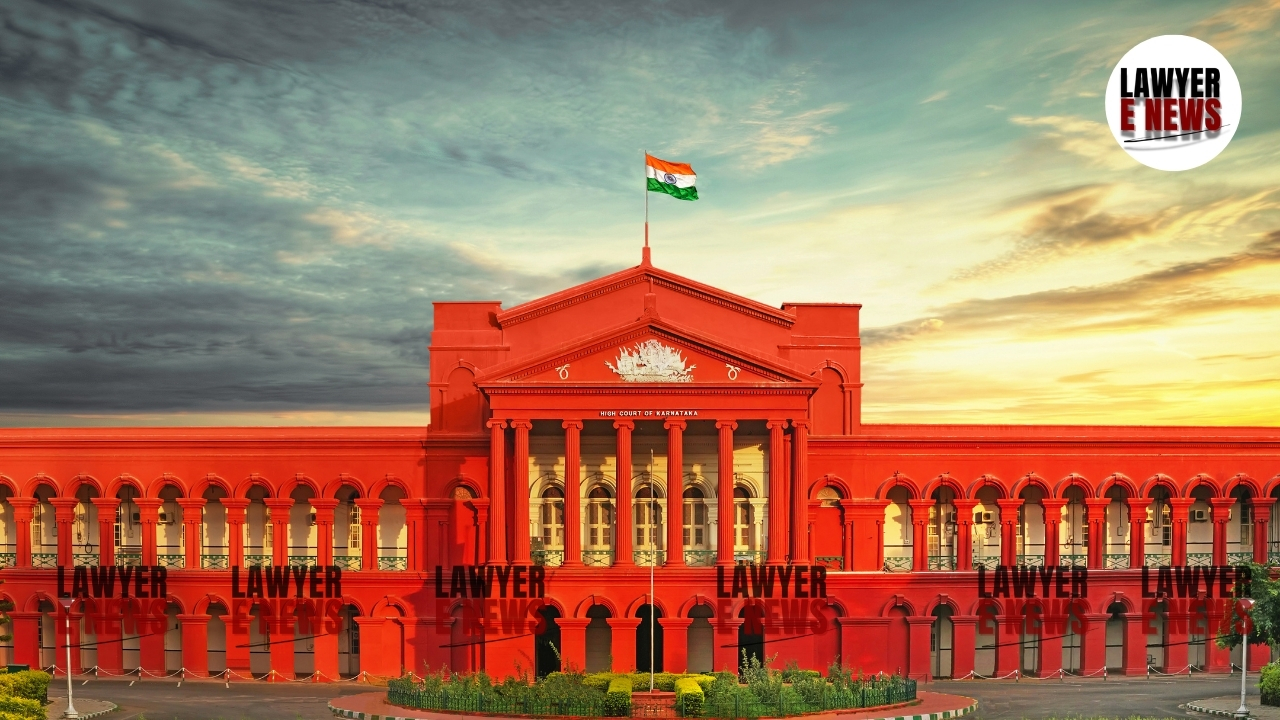
“When the origin of the complaint is a title dispute still pending before a Civil Court, giving it a colour of misconduct is legally impermissible”, In a significant ruling protecting government employees from facing disciplinary proceedings rooted in unresolved civil disputes, the Karnataka High Court quashed the departmental enquiry initiated by the Lokayuktha against an Executive Engineer (Lake), BBMP, over alleged misuse of office during her deputation as Commissioner of Chitradurga Municipal Council.
The division bench of Justice V. Kameswar Rao and Justice Rajesh Rai K. ruled that the proceedings stemmed entirely from a civil title dispute over a property gifted by the petitioner’s mother to her husband, a matter that remains sub judice.
“The origin of the complaint is a subject matter before the trial court… It is a civil dispute which is given the colour of misconduct under the Conduct Rules which is impermissible in law.”
“When You Participate Without Protest, You Can’t Turn Around Later”—Court Rejects Technical Objections to Lokayuktha's Process
Though the petitioner challenged the preliminary enquiry memorandum issued by the Deputy Registrar of Enquiries (and not directly by the Lokayuktha or Upa-Lokayuktha), the Court held that the failure to challenge that memorandum in the writ petition undermined her entire case.
“The memorandum dated 15.06.2018 has not been challenged… the petitioner participated in the proceedings without demur. It is too late in the day to lay a challenge, that too without a prayer in the petition.”
Property Dispute Still Pending in Civil Court—No Room for Parallel Disciplinary Action
The departmental enquiry accused the petitioner of manipulating municipal property records to transfer title of a plot from her mother to her husband. However, the Court found that the same issue—validity of the gift deed and ownership of the property—was already pending in O.S. No. 102/2013 before the II Additional Civil Judge, Chitradurga.
“The complainant has availed a more efficacious remedy before the jurisdictional Civil Court… There arises no occasion for the complainant to approach the Lokayuktha with respect to the same issue.”
“Such parallel proceedings violate Section 8(1)(b) and 9(5)(c) of the Karnataka Lokayuktha Act, 1984.”
“Mandate of Business Rules Ignored”—Court Finds Violation of Karnataka Government’s Procedural Norms
The Court also accepted that the Karnataka Government (Transaction of Business) Rules, 1977 were violated when the entrustment of the enquiry and the second show-cause notice were not issued in the name of the Governor or authenticated by an authorised officer.
“Rule 18 and 19 of the 1977 Rules are mandatory… Orders not issued in the name of the Governor are void.”
Further, the mandatory protocol under Item No. 9 of Schedule II required such disciplinary matters to be submitted to the Chief Minister, which was also ignored.
“Show-Cause Notice Was Prejudiced”—Penalty Was Pre-Decided, Violating Natural Justice
The second show-cause notice issued to the petitioner pre-determined the penalty of compulsory retirement, effectively denying her a genuine opportunity to respond.
“The text and context of the second show-cause notice makes it clear that the penalty was already decided… This is contrary to principles of natural justice and violates Rule 14A(2)(e) of the 1957 Rules.”
By declaring the disciplinary action as procedurally flawed, jurisdictionally incompetent, and legally untenable, the Karnataka High Court delivered a judgment that emphasizes due process, legal demarcation between civil and administrative domains, and the need to protect government employees from vindictive complaints grounded in personal property disputes.
“When the very basis of the disciplinary enquiry is a private civil dispute, it is improper to clothe it with administrative misconduct.”
Date of decision: 19 May 2025