-
by sayum
13 August 2026 1:48 PM







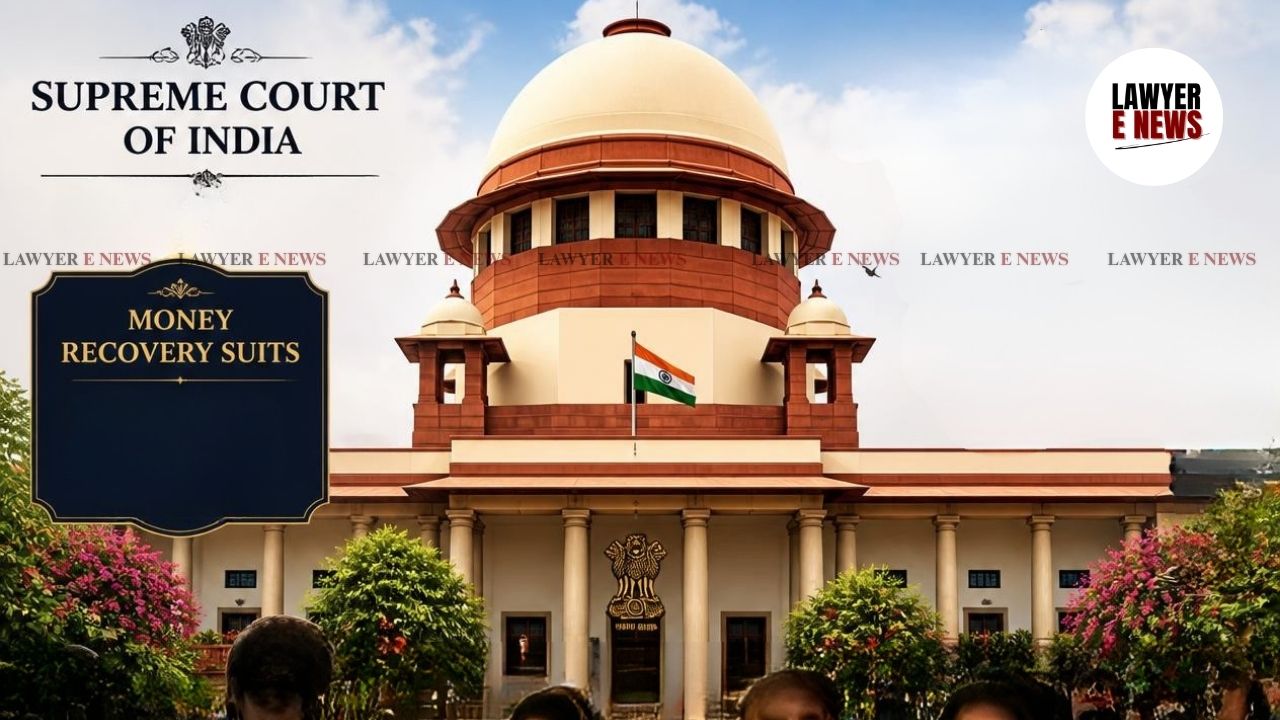
Alas, even after a long-fought legal battle, the appellant was left with only a pyrrhic victory. Such injustice cannot receive judicial approval – Supreme Court of India resolving a 24-year legal battle concerning the denial of promotion and benefits to a retired bank officer. The court condemned the Bank of Baroda's hyper-technical approach and ordered the respondent bank to grant retrospective promotion to Manager Grade-III (MMG/S-III) with effect from July 28, 2001, along with all monetary arrears and 6% interest.
The case centered on the appellant’s grievance that he was denied promotion due to defective disciplinary proceedings, which were later quashed for procedural bias. Despite succeeding in the High Court, the appellant’s efforts to secure compliance with the court’s order resulted in repeated delays and token payments. The Supreme Court, while granting relief, strongly criticized the bank for its failure to act fairly and comply with its obligations in a timely manner.
The appellant, K. Samba Moorthy, joined the Bank of Baroda as a Probationary Officer in 1983 and was promoted to Manager Grade-II (MMG/S-II) in 1992. In 1999, while serving as Branch Manager, disciplinary proceedings were initiated against him for alleged irregularities in loan disbursement.
Despite participating in the promotion process for Scale-III in 2000, his promotion was kept in abeyance pending the outcome of the enquiry. On August 23, 2001, a minor penalty of a one-stage reduction in pay for three years without cumulative effect was imposed. Shortly thereafter, the bank canceled his promotion result, citing the disciplinary action.
In 2008, the appellant challenged the disciplinary proceedings before the Telangana High Court, alleging procedural irregularities, particularly that the enquiry officer was junior to him and a competitor for the same promotion. The High Court, in 2017, quashed the proceedings on the grounds of "real likelihood of bias" and held that the appellant was entitled to "all consequential benefits."
The High Court judgment was not challenged by the bank, which merely sought to keep legal questions open for future cases. Despite this, the bank failed to comply with the judgment’s clear direction to restore the appellant’s promotional benefits, forcing him to file a contempt petition in 2023.
Justice K.V. Viswanathan, writing for the bench, rejected the bank’s contention that consequential benefits did not include retrospective promotion. The court made it clear that the cancellation of the appellant’s promotion result in 2002 was a direct consequence of the flawed disciplinary proceedings, which had already been quashed.
"The term 'consequential benefits' is not a mere legal formality. It encompasses the appellant’s rightful promotion from July 28, 2001, which was unjustly withheld due to a flawed and biased enquiry. Fairness and justice demand that the appellant’s record be rectified to reflect this entitlement," Justice Viswanathan observed.
The court held that the bank’s cancellation of the appellant’s promotion was invalid, as it arose entirely from disciplinary action that was procedurally defective and subsequently struck down. It also rejected the argument that the appellant should have specifically challenged the cancellation order, stating:
"Ends of justice cannot be sacrificed on the altar of technicalities. The expression 'consequential benefits' granted by the learned Single Judge clearly encompasses the rectification of all adverse effects arising from the illegal enquiry."
Failure to Grant Relief Reflects a "Hyper-Technical Approach"
The Supreme Court was particularly critical of the bank’s handling of the appellant’s case, highlighting the prolonged delay and token compliance with court orders. The bench remarked:
"Alas, even after succeeding in a long-drawn and hard-fought legal battle, the appellant was left with only a pyrrhic victory. The payment of a meager sum of Rs. 19,446/-—representing reduced pay for three years—cannot constitute compliance with the High Court’s order."
The court further noted that the bank’s failure to act fairly placed an undue burden on the appellant, who had to run from pillar to post for two decades to secure justice. "The respondent-authorities should have on their own extended the benefits once the writ appeal was disposed of, instead of forcing the appellant to pursue further legal remedies."
The court concluded that the bank’s actions reflected a pattern of hyper-technical arguments designed to delay relief, rather than fulfilling its obligation to ensure justice for its employee.
The judgment also highlights a broader issue of fairness in disciplinary proceedings. Justice Viswanathan pointed out that the procedural defect in the enquiry—appointing a junior officer competing for the same promotion as the enquiry officer—created an inherent bias. The court remarked:
"An employee cannot be penalized for procedural lapses in a flawed enquiry. The employer’s failure to adhere to fair and unbiased practices undermines the integrity of the disciplinary process and creates a grave miscarriage of justice."
While the court granted retrospective promotion to Scale-III, it refrained from adjudicating the appellant’s claims for subsequent promotions to Scale-IV and beyond. The appellant had argued that the denial of further promotions in 2016, 2017, and 2018 was linked to the delay in granting Scale-III benefits.
The court, while acknowledging the possibility of such a link, directed the appellant to pursue available legal remedies for higher-scale promotions. It also protected the appellant against any objection based on limitation or laches, given the protracted litigation history.
The Supreme Court’s ruling not only provides long-overdue relief to the appellant but also sends a strong message to employers about their obligations in implementing judicial decisions. Justice Viswanathan concluded the judgment with a firm directive:
"The appellant is entitled to promotion from MMG/S-II to MMG/S-III with effect from 28.07.2001, along with all monetary arrears and interest at 6% per annum. The respondent bank is directed to pass appropriate orders within four weeks to rectify this long-standing injustice."
The judgment underscores the judiciary’s role as a custodian of fairness, justice, and procedural integrity, ensuring that employees are not penalized for the shortcomings of their employers.
The decision in K. Samba Moorthy vs. Sanjiv Chadha & Others represents a landmark in service law, reaffirming the rights of employees to procedural fairness and timely compliance with judicial orders. For K. Samba Moorthy, the ruling offers closure after two decades of relentless litigation, restoring his dignity and ensuring that justice, though delayed, was not denied.
Date of Decision: January 27, 2025