-
by sayum
29 July 2026 3:29 PM







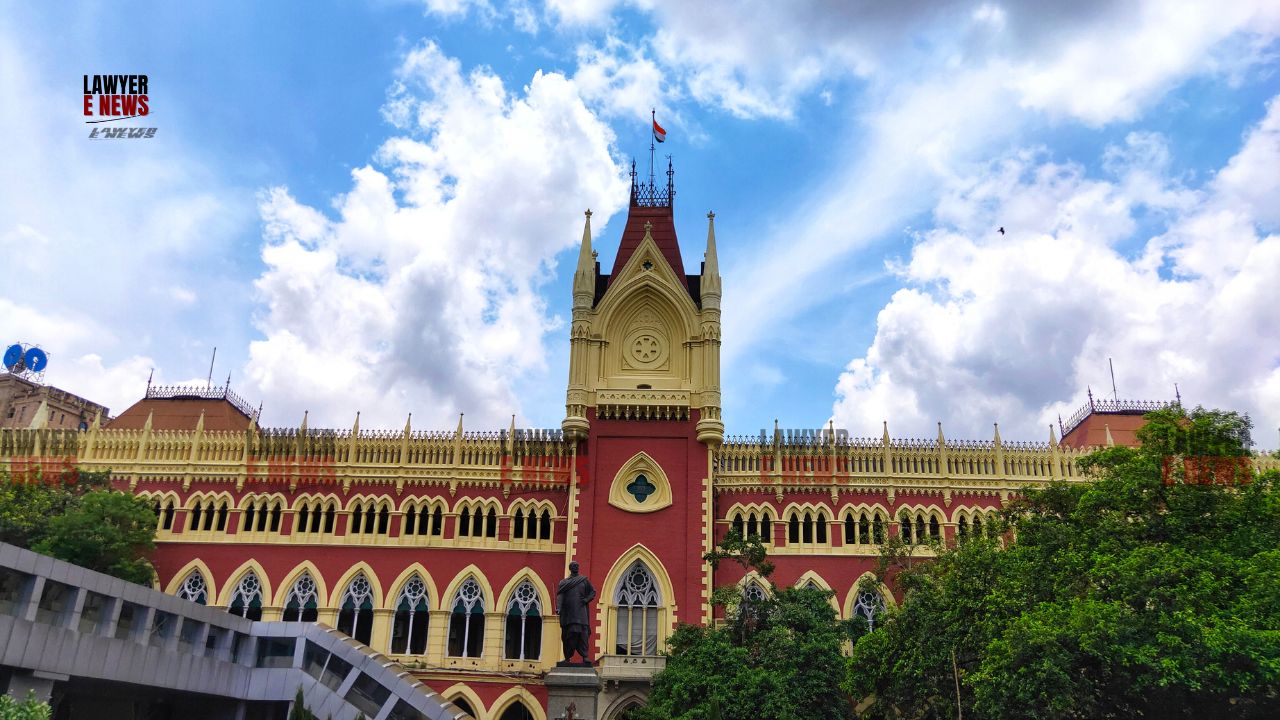
Calcutta High Court, in a significant ruling dated July 7, 2026, held that the temporary delisting of a railway vendor is legally unsustainable if the mandatory procedures for joint sampling and testing are bypassed. Justice Krishna Rao observed that the authorities cannot ignore a reply to a show-cause notice simply because it arrived after a prescribed period if the reply was available on record well before the final order of delisting was passed.
The case involved Surya Alloy Industries Limited, which had participated in a tender floated by East Coast Railway for the manufacture and supply of 'Elastic Rail Clips'. After the materials were inspected by M/s. RITES Limited and supplied, the authorities issued a show-cause notice alleging that samples had failed to meet the required specifications. The petitioners challenged the subsequent delisting order on the grounds of procedural irregularities and violation of natural justice.
The primary question before the court was whether the delisting order was passed in violation of the mandatory inspection and sampling procedures prescribed under the IRS Specifications. The court was also called upon to determine if the respondent authorities were justified in ignoring the petitioners' reply on the grounds of a minor delay in submission.
Mandatory Requirement Of Joint Sampling Under IRS Specifications
The Court meticulously examined Clause 15 of the IRS Specification for ERC T-31-2021, which governs the inspection of materials at the consignee end. The bench noted that Clause 15.1 explicitly requires the purchaser or consignee to pick up and seal sample sets in the presence of the firm’s representative. The court observed that this procedure serves as a safeguard to ensure the integrity of the sampling process.
"As per Clauses 15.1 and 15.4, purchaser/ consignee has to inform the supplier to remain present during pickup of the samples and to witness the test samples but admittedly the same was not followed in the present case."
Failure To Ensure Firm’s Presence During Material Testing
Regarding the testing phase, the court found that the authorities failed to adhere to the guidelines requiring a firm's representative to be present. Justice Rao emphasized that a notice must be served upon the firm informing them of the time of testing. The court held that the absence of such a notice and the subsequent unilateral testing rendered the entire process flawed and prejudicial to the petitioner.
"As per guidelines for testing of the materials, firm’s representative should be present at the time of testing. Before testing of such materials, a notice has to be served upon the firm and inform them to be present... The said procedure has not followed in the present case."
Authorities Bound To Consider Replies Available On Record Before Final Decision
The respondents argued that the petitioners' reply was received after the 30-day window and was thus rightly ignored. However, the court noted that while the deadline expired on September 18, 2025, the reply was received on October 1, 2025, and the final order was only issued on October 9, 2025. The court held that the nine-day gap was sufficient for the authorities to have considered the response.
"The respondents ought to have considered the reply of the petitioners but fail to consider the same... This Court already held that sampling was not done in accordance with law and not in presence of the petitioners."
Delisting Order Must Fall Within Specifically Prescribed Grounds
The court further scrutinized Clause 4.2.2 of the relevant ISO document, which lists the specific conditions under which a vendor can be temporarily delisted. These include repeated failures, directions from law enforcement, or failure to perform quality audits. Upon review, the court found that the reasons cited in the impugned show-cause notice did not fall under any of the categorized clauses for temporary delisting.
"The show cause notice as well as the impugned notice is not covered under any of the clauses for temporary delisting."
Consequently, the High Court set aside the delisting order dated October 9, 2025, and the show-cause notice. The bench, however, granted liberty to the respondent authorities to conduct fresh sampling of the supplied materials in the presence of the petitioners' representatives. The court clarified that if the materials are found to be non-conforming after a lawful test, the authorities remain free to take appropriate action.
Date of Decision: 07 July 2026