Supreme Court Lays Down Comprehensive Guidelines To Prevent Misuse Of POCSO Act In Matrimonial Disputes Land Reforms Act | Joint Application For Pre-Emption By Adjoining Landowners Is Maintainable: Calcutta High Court Ocular Evidence In Conflict With Medical Findings Or Withholding Of Natural Witnesses Vitiates Prosecution Case: Allahabad High Court Compassionate Appointment Claim Must Be Decided Based On Policy Prevalent At Time Of Death: Bombay High Court Section 376 IPC | Failure To Prove Initial Dishonest Intent In Marriage Promise Renders Sexual Relationship Consensual: Allahabad High Court Prolonged Incarceration And Delay In Trial Are Valid Grounds To Invoke Constitutional Right To Speedy Trial Under Article 21 In UAPA Cases: Delhi High Court Motor Vehicles Act | Insurer Liable To Pay And Recover Compensation For Gratuitous Passengers In Goods Vehicles: Gujarat High Court Proof Of Demand And Acceptance Under PC Act Must Be Evaluated Based On Preponderance Of Probabilities In Rebuttal: Kerala High Court Tenancy Claim | Mere Possession Without Lawful Foundation Or Identification Of Tenanted Land Cannot Confer Occupancy Rights: Karnataka High Court 125 CrPC | Maintenance Cannot Be Evaded By Claiming Physical Disability If Conduct Indicates Concealment Of Financial Means: Kerala High Court M.P. Municipal Corporation Act | Locus Standi Under Section 307(5) Limited To Residents Of The Municipal Area: Madhya Pradesh High Court Writ Jurisdiction | Belated Challenge To Disciplinary Action After Superannuation Amounts To Laches; Petition Dismissed: Punjab & Haryana High Court Order 39 Rule 1 & 2 CPC | Mere Pendency Of Partition Suit Does Not Entitle Plaintiff To Injunction Restraining Reconstruction Of Residential Building: Kerala High Court Not A Mere Breach Of Contract: Telangana High Court Refuses To Quash FIR In ₹73 Crore Garment Investment Fraud Section 482 CrPC | High Court Quashes FIR Following Private Compromise In Non-Heinous Dispute Arising From Civil Conflict Mere Involvement In Criminal Case Does Not Constitute Moral Turpitude To Deny Public Appointment: Telangana High Court Pendency Of Investigation Cannot Be A Blanket Ground To Deny Permission For Foreign Travel: Rajasthan High Court Fraudulent Representation By Counsel Vitiates Ex Parte Decree: Punjab & Haryana High Court Holds Professional Misconduct As Evidence Of Fraud Writ Jurisdiction | Suppression Of Material Facts Regarding Pending Criminal And Departmental Proceedings Renders Petition Liable To Dismissal: Orissa High Court Banking Fraud | Failure Of Bank Official To Conduct Physical Inspection Of Collateral Property Constitutes Criminal Conspiracy And Abuse Of Official Position: Madras High Court Fraud Vitiates Judicial Proceedings: Judgment Obtained Through Misrepresentation And Conflict Of Interest Cannot Be Sustained, Holds Punjab And Haryana High Court Discovery Under Section 27 Evidence Act From Publicly Accessible Place Requires Caution: Supreme Court Mere Recovery Of Articles At Instance Of Accused Without Independent Corroboration Cannot Sustain Conviction: Supreme Court DNA Profile Must Be Supported By Other Conclusive Evidence To Prove Guilt: Supreme Court

Delhi High Court Sets Precedent in Deterring Frivolous Litigation with Landmark Judgment

04 September 2024 10:36 AM

By: Admin


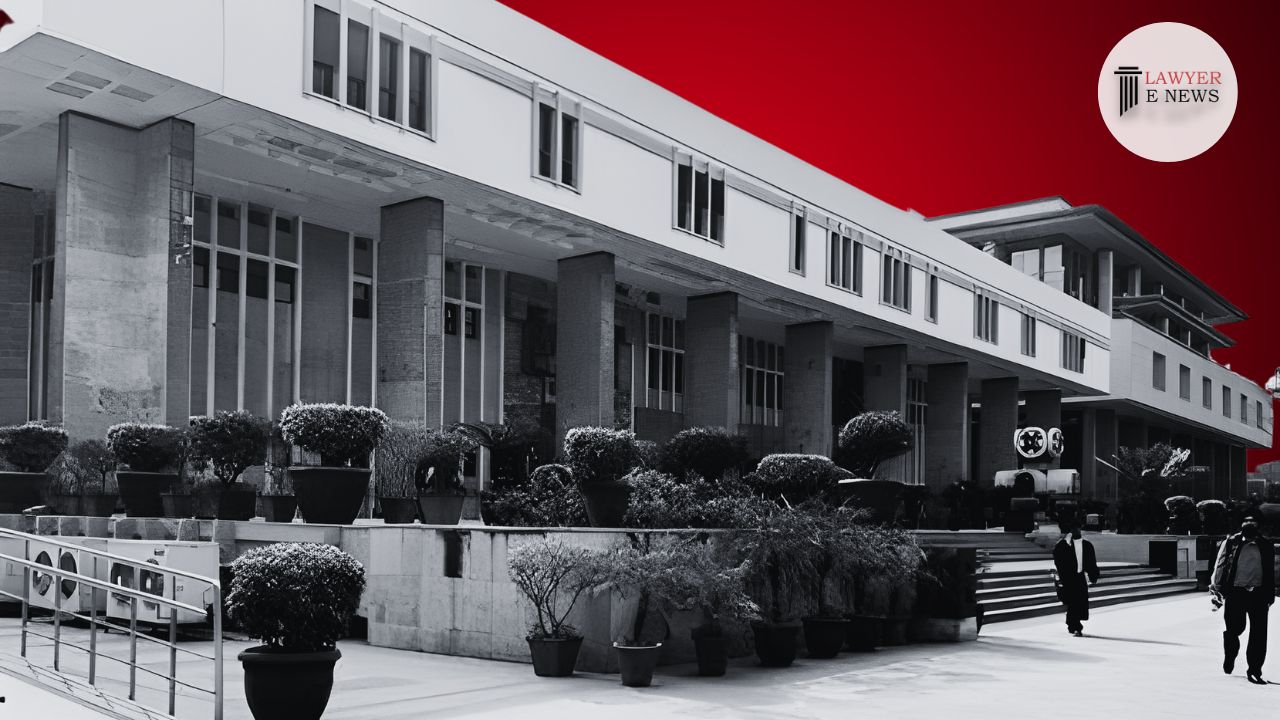
In a significant ruling, the Delhi High Court has delivered a landmark judgment that is poised to set a precedent in deterring frivolous litigation. The judgment, authored by Justice Swarana Kanta Sharma on July 20, 2023, addresses the pressing issue of baseless claims and meritless cases that burden the judicial system, consuming valuable time and resources.

“Frivolous litigation adds to the figures demonstrating a distorted picture of litigation-related problems.”

The court, cognizant of the adverse effects of frivolous litigation, emphasized the need to establish robust measures to discourage the filing of such cases. Justice Sharma, in the judgment, remarked, “Frivolous litigation not only consumes substantial judicial time but also hinders the court’s ability to effectively adjudicate meritorious disputes.” The court highlighted the significance of the rule of law in addressing this problem and preserving the integrity of the legal process.

The judgment underscored the imposition of costs as a strong deterrent against vexatious, frivolous, and speculative litigations or defenses. It recognized that imposing costs not only acts as a deterrent but also provides an indemnity to the successful litigant for the expenses incurred during the litigation. Justice Sharma emphasized, “The potential liability for costs acts as an incentive for parties to carefully evaluate the merits of their case and approach the court in good faith.”

The court further emphasized that the provision of costs safeguards the interests of genuine litigants and ensures that the limited resources of the court are allocated to matters that are genuine and bona fide. It recognized the need to strike a balance between the right to free access to justice and the need to curb frivolous litigation by imposing penalties on baseless claims.

Justice Sharma expressed hope that the Bar Council of India would actively contribute to addressing the issue of frivolous litigation and supporting the efficient functioning of the judiciary. The judgment serves as a call to explore ways to deal with such litigation-related issues and find appropriate responses through new policies while ongoing legal reforms are underway in the country.

In conclusion, the Delhi High Court dismissed the petitions in question, categorizing them as frivolous and devoid of merit. The court imposed a cost of Rs. 30,000/- on each petitioner. The judgment signifies the court’s commitment to ensuring an efficient judicial process and discouraging the misuse of the legal system for frivolous purposes.

DATE OF DECISION: July 20, 2023

NARESH SHARMA vs    UNION OF INDIA & ORS

Latest Legal News