
-
by sayum
26 August 2026 1:49 PM







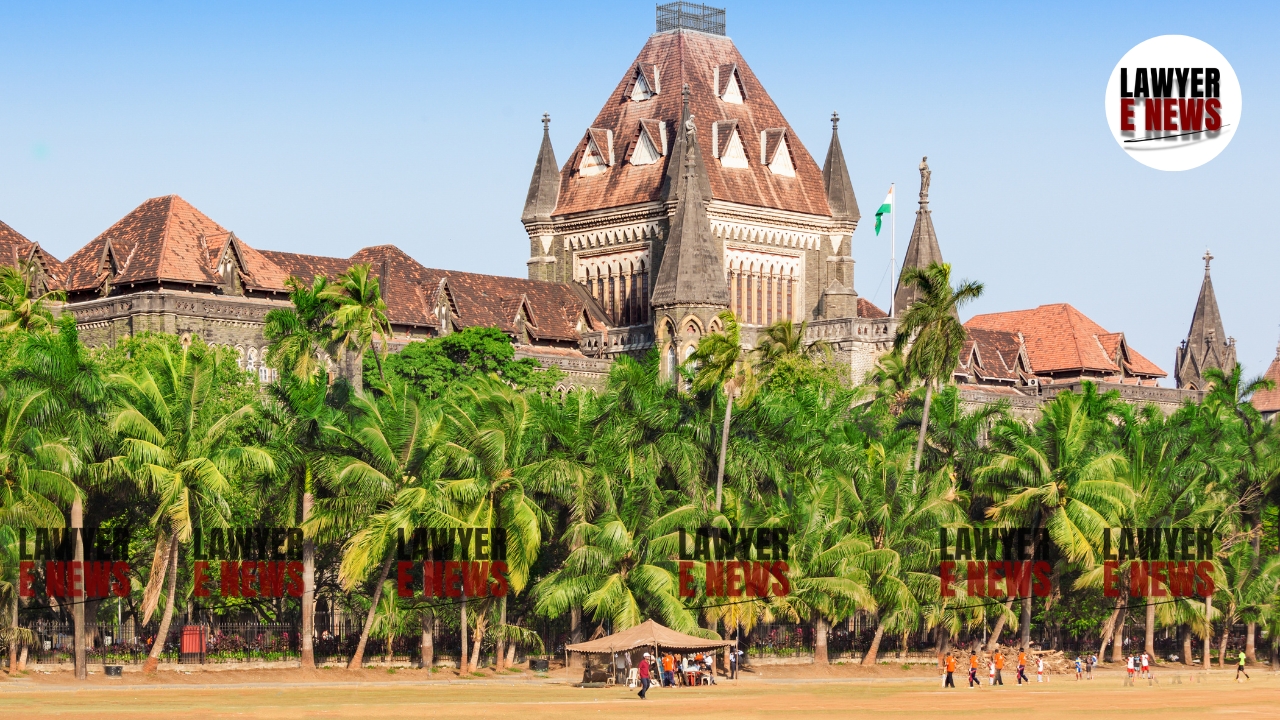
“When Custom is Silent, Constitution Speaks”— In a landmark ruling Bombay High Court emphatically reaffirmed that tribal daughters cannot be denied inheritance rights in ancestral property unless a valid custom excluding them is pleaded and proven by those asserting such exclusion. Justice Pravin S. Patil reversed the concurrent findings of the Trial and Appellate Courts, holding that the burden of proving exclusion lies on the party asserting it—not the daughter claiming her rightful share.
"In view of the constitutional philosophy which seeks to minimize if not eliminate gender discrimination... it would be impermissible for the Court to start with the assumption that the customary law governing the tribe excludes females from inheritance."
The Court remanded the matter for a fresh trial, underscoring that both the lower courts committed a grave legal error by shifting the burden of proof onto the plaintiff—an ST woman from the Gond community—to establish that she had a customary right to inherit property.
Background: Gond Daughter Denied Inheritance, Courts Below Ignored Equality and Burden of Proof Principles
The appellant, Sau. Barula, the daughter of deceased tribal man Ramaji from his first wife, filed a suit for partition and separate possession of her 1/5th share in an ancestral house property in Rajura, Chandrapur, after being denied partition by the second wife and children of Ramaji. It was undisputed that all parties belonged to the Gond Scheduled Tribe, and that the property in question was ancestral.
However, both the Trial Court and the District Appellate Court dismissed her claim, holding that it was the daughter’s burden to prove that there was a customary practice in the Gond community entitling her to inherit. The Trial Court framed the issue squarely against her, stating that since she was seeking partition, she must prove the existence of a favorable custom.
Despite leading evidence—including testimony from relatives and neighbors—that she was indeed the daughter of Ramaji and belonged to the Gond community, the courts rejected her suit purely on the ground that she did not prove any specific custom enabling her inheritance.
High Court: "Customary Exclusion Must Be Proven by Those Who Assert It, Not Assumed Against Women"
Setting aside the judgments, Justice Patil held:
“The finding recorded by both the Courts below that burden to prove custom was on plaintiff is an incorrect finding... and therefore, both the judgments are not sustainable in the eyes of law.”
Relying on the Bombay High Court’s decision in Babulal v. Resmabai, 2019 SCC OnLine Bom 3, and the Supreme Court's ruling in Ram Charan v. Sukhram, 2025 SCC OnLine SC 1465, the Court held that constitutional equality must inform customary interpretation, and no exclusion based on gender can be presumed in the absence of an explicit and proven custom.
In Babulal, a coordinate bench had already clarified:
“It would be the burden of the person who asserts such exclusion from inheritance under the customary law to so plead and prove.”
Supreme Court Precedent: "Denying Women Property Rights When Custom is Silent Violates Article 14"
The High Court also heavily relied on the recent Supreme Court decision in Ram Charan v. Sukhram, which condemned presumptive exclusions of women in matters of inheritance. Quoting from the apex judgment, Justice Patil observed:
“When the custom is silent, others cannot be allowed to take refuge in customs or hide behind them to deprive others of their right.”
“Denying the female heir a right in the property only exacerbates gender division and discrimination, which the law should ensure to weed out.”
The Supreme Court in Ram Charan had unequivocally held that such denial violates Article 14 and amounts to unconstitutional discrimination.
High Court Clarifies: Scheduled Tribes May Be Outside Hindu Succession Act, But Not Outside Constitutional Mandate
Although Section 2(2) of the Hindu Succession Act, 1956 excludes Scheduled Tribes from its application, the Court emphasized that this does not create a legal vacuum, nor does it sanction discrimination. In such cases, customary law must apply, but if no custom is proven, then principles of equity and constitutional equality must prevail.
“In view of law laid down by this Court as well as Hon’ble Supreme Court, it is clear that burden shifts on the Defendants to prove how the plaintiff is excluded from the share of the ancestral property.”
Concurrent Findings Overturned: Matter Remanded for Fresh Decision with Correct Legal Lens
While noting that both the Trial Court and the First Appellate Court had given concurrent findings in favor of the defendants, the High Court held that the core error of law committed by both courts—misplacing the burden of proof and ignoring constitutional principles—vitiated their conclusions.
“Proceedings are decided by both the Courts below by shifting burden on the plaintiff, which is not correct in law.”
The Court thus quashed the judgments and decrees of both courts and remanded the matter to the Trial Court for fresh adjudication, directing it to apply the correct legal standards, and giving liberty to both parties to lead evidence.
A Bold Step Toward Gender Equality in Tribal Customary Law
This ruling marks a crucial advancement in the jurisprudence surrounding women's rights in tribal succession, particularly where statutory law is silent or inapplicable. The Bombay High Court has made it clear that custom cannot be a smokescreen for patriarchal denial of property rights, and where customary exclusion is not proved, the default must be equality, not exclusion.
The judgment affirms that even in matters governed by customary law, the Constitution reigns supreme. Tribal daughters, like all citizens, are entitled to equal protection under Article 14—and cannot be denied property rights merely because of their gender or the silence of custom.
Date of Decision: 10 October 2025





